
7 Wines Made from Varieties Recovered by Familia Torres
By Laura Conde, wine write
This has been a truly remarkable journey: from groundbreaking research to the recovery of a heritage that is deeply ours and which had been relegated to the background far too long. In a way, it has been about innovation taking us back to our origins.
Each variety identified as ancestral undergoes a long and meticulous process. First, cuttings are tested and treated for pathogens and viruses to obtain clean plant material which is then propagated in vitro. The healthy plants are reproduced in a greenhouse and subsequently adapted to the vineyard. The grapes are then vinified in small experimental batches to evaluate their oenological potential. The final step involves registering the variety with the relevant authorities.
- It is a thrilling process that revives a past which now takes on greater urgency than ever before, driven by conviction and a romantic vision rooted in knowledge. After all, a process which is beginning to yield tangible fruit more than thirty years later carries a lot of poetry and idealism at its core.
- Although each variety is certifiably unique, they do have certain attributes in common:
Aromatic intensity, crisp freshness, elegant liveliness. Boasting excellent acidity, they are all resistant to high temperatures and water stress.
Grans Muralles (DO Conca de Barberà)
Like a whisper from the past, the history of Conca de Barberà finds serene and solid expression in Grans Muralles. An echo seeps into the sides of our glass, an echo that also reposes in the slate soils, in the courtyards flanked by endless arches of the Poblet monastery, and in the immutable silence of the great stone wall built by the Cistercian order in the 14th century.
The factors that endow Grans Muralles with its unmistakable identity lie in the rocky llicorella slate soils of the vineyards, in the severe climate, and in a well-established yet innovative winemaking legacy. They also reside in the varieties that comprise this blend, including Garró and Querol — brought back from oblivion by Familia Torres — which join the Mediterranean profile of Garnacha Tinta, Cariñena, and Monastrell.
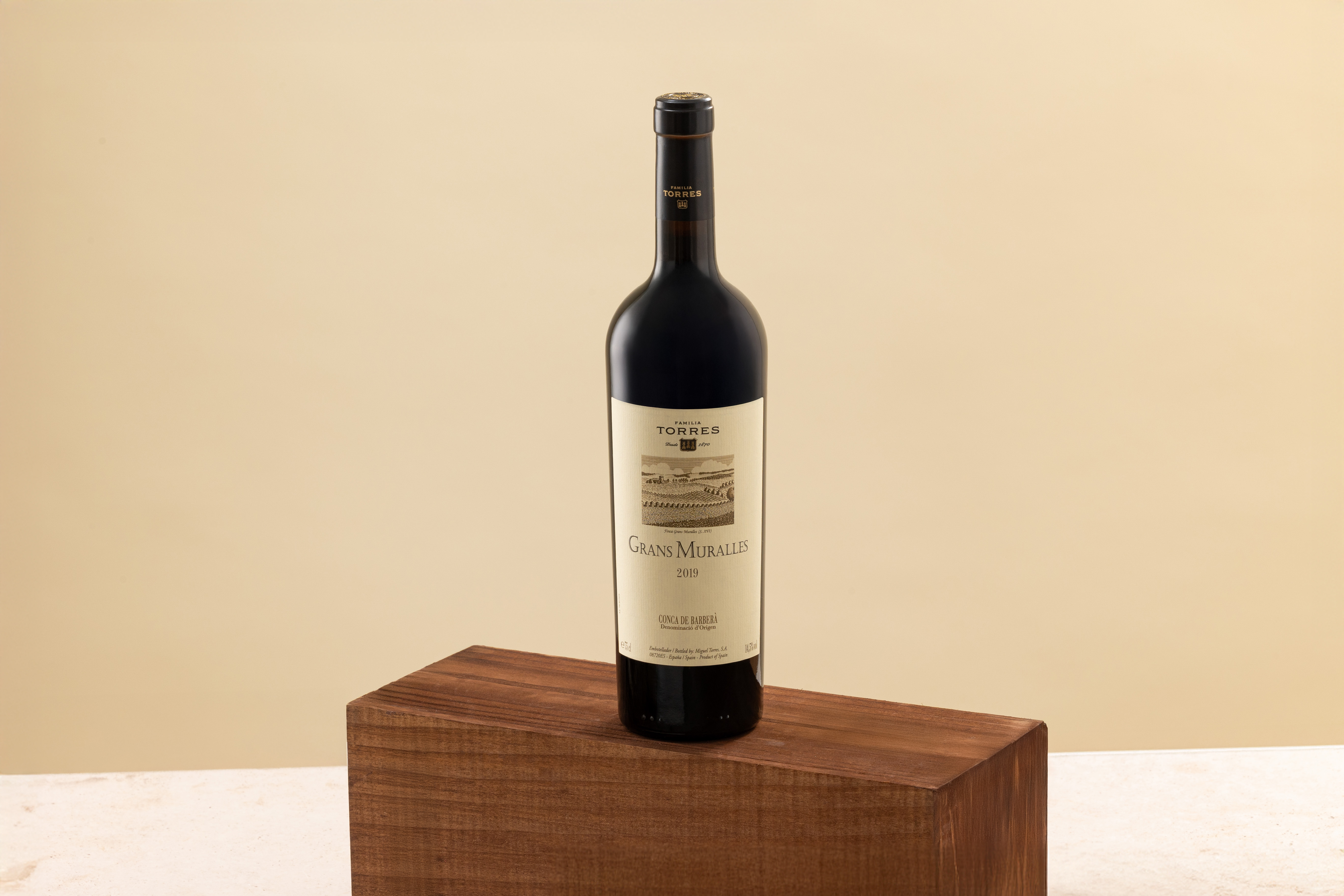
Grans Muralles, DO Conca de Barberà
With the addition of Querol, Grans Muralles has gained complexity and cellaring potential. Querol brings more nerve and more concentrated fruit to the natural elegance of the original coupage, in harmony with the Mediterranean character of Monastrell, Garnacha, and Cariñena.
Tasting Note
- In appearance, the wine boasts a gorgeous dark cherry colour with ochre shimmers indicative of its 18 months in French oak.
- The nose suggests fleshy exuberance along with mature complexity: notes of dried grapes, jam, and lovely aromas reminiscent of spices (pepper and clove); Mediterranean herbs like bay leaf and thyme; and a surprisingly exotic nuance fusing toasty and smoky aromas, vanilla and incense.
- A big wine with great length. Voluminous on the palate, dominated by noticeable yet sweet tannins. As the wine unfolds, echoes of aromatic herbs, resins (incense), and spices (clove) (re)appear, lasting all the way to the long, lingering finish.
Here wine once again transforms into a transmitter of culture, knowledge, and a historic legacy of incalculable value.
Purgatori (DO Costers del Segre)
In style, Purgatori remains a Mediterranean wine with Garnacha as its backbone. This versatile variety contributes aromatic intensity and elegant tannins, and the wine is certified organic.
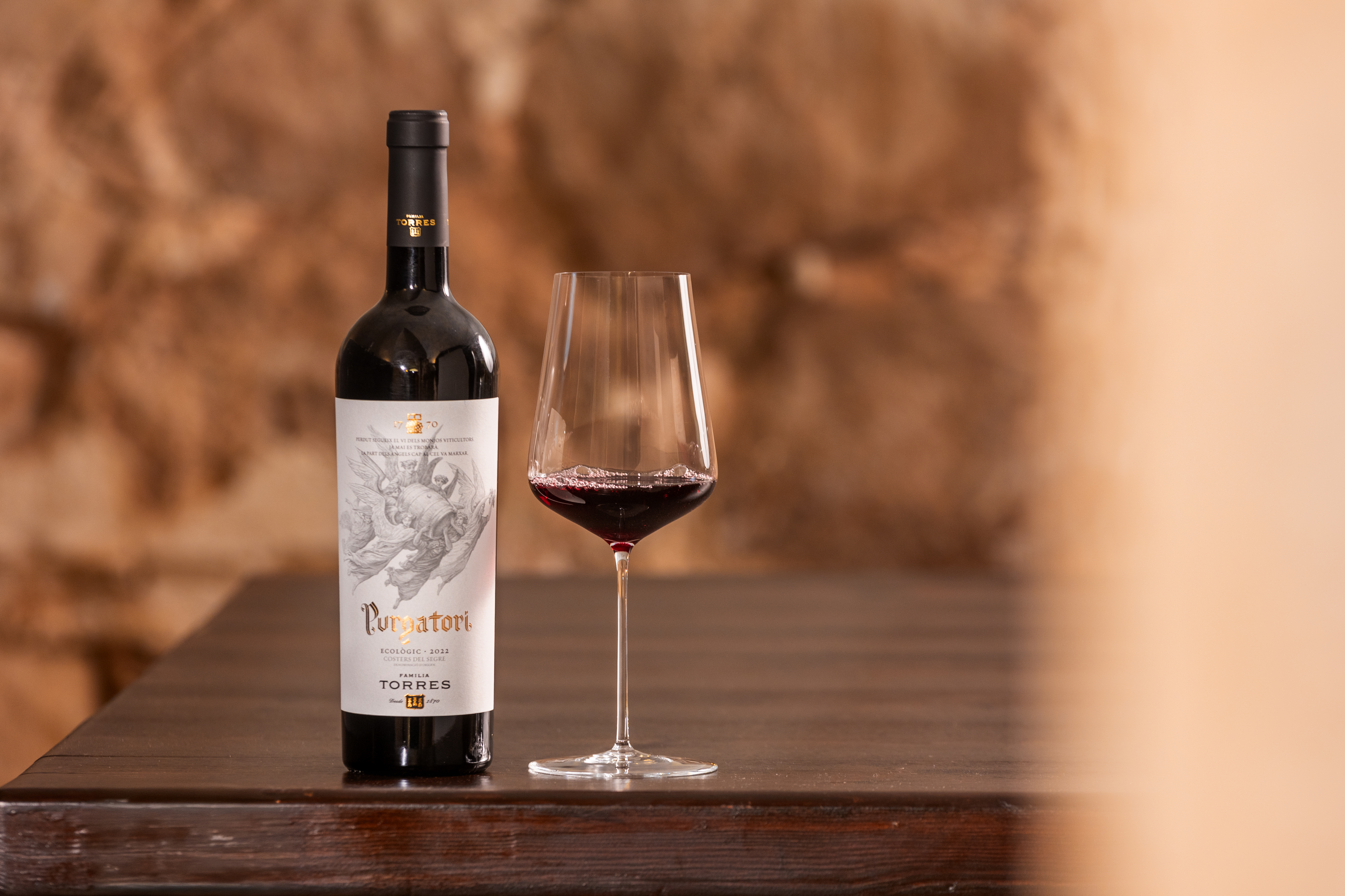
Purgatori, DO Costers del Segre
Gonfaus is the perfect counterpart, adding freshness, spicy notes, and ripe tannins that play a crucial role in the wine’s smoothness.
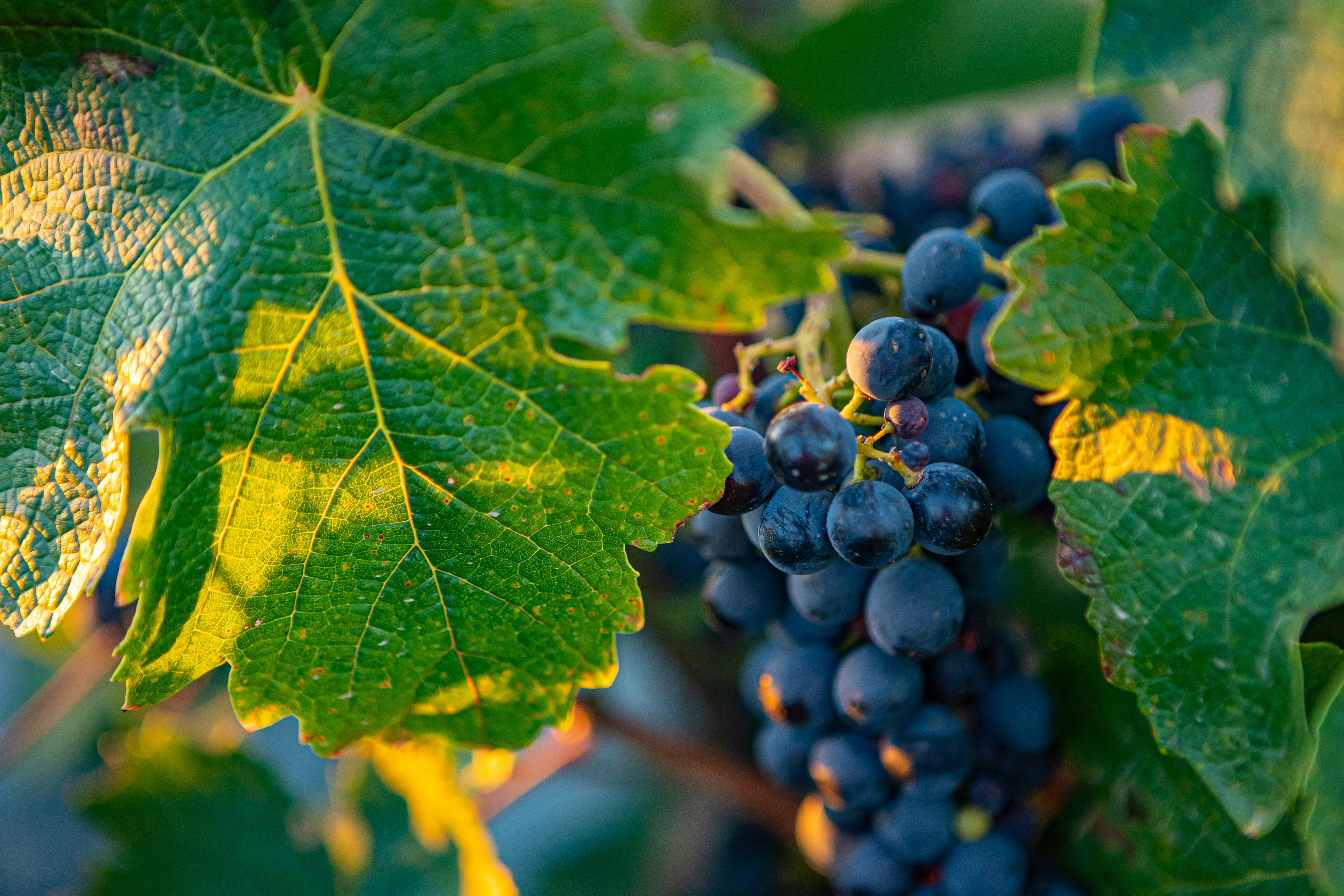
Gonfaus variety growing in DO Costers del Segre
Tasting Note
- Beautiful cherry red colour with garnet highlights. Deep, intense, concentrated nose. Rich fruit notes (red brambles) with smoky undertones (cane cuttings and toast) and pleasant nuances of sun-dried fruit (dates). The palate is flavourful and balanced, warm and spicy (black pepper).
Purgatori oscillates between the human and the divine, the embodiment of the Benedictine vinicultural legacy caught in the resounding echo of an enduring silence.
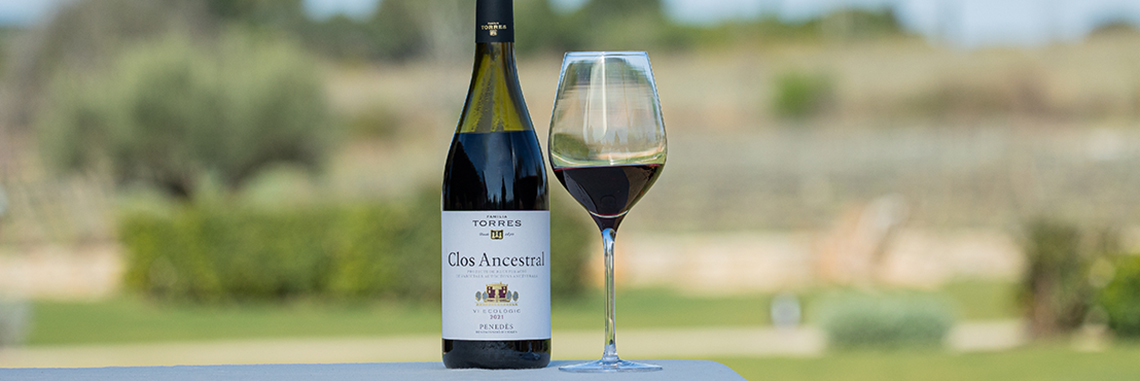
Clos Ancestral Tinto (DO Penedès)
Clos Ancestral is an organic wine, introducing the recovered variety Moneu into a blend of indigenous varieties like Ull de Llebre (Tempranillo) and Garnacha from 30 to 40-year-old vineyards, vinified separately to bring out their maximum potential and varietal expression.
In the case of Moneu, the wine underwent meticulous vinification that involved the use of vats and amphorae during part of the ageing process.
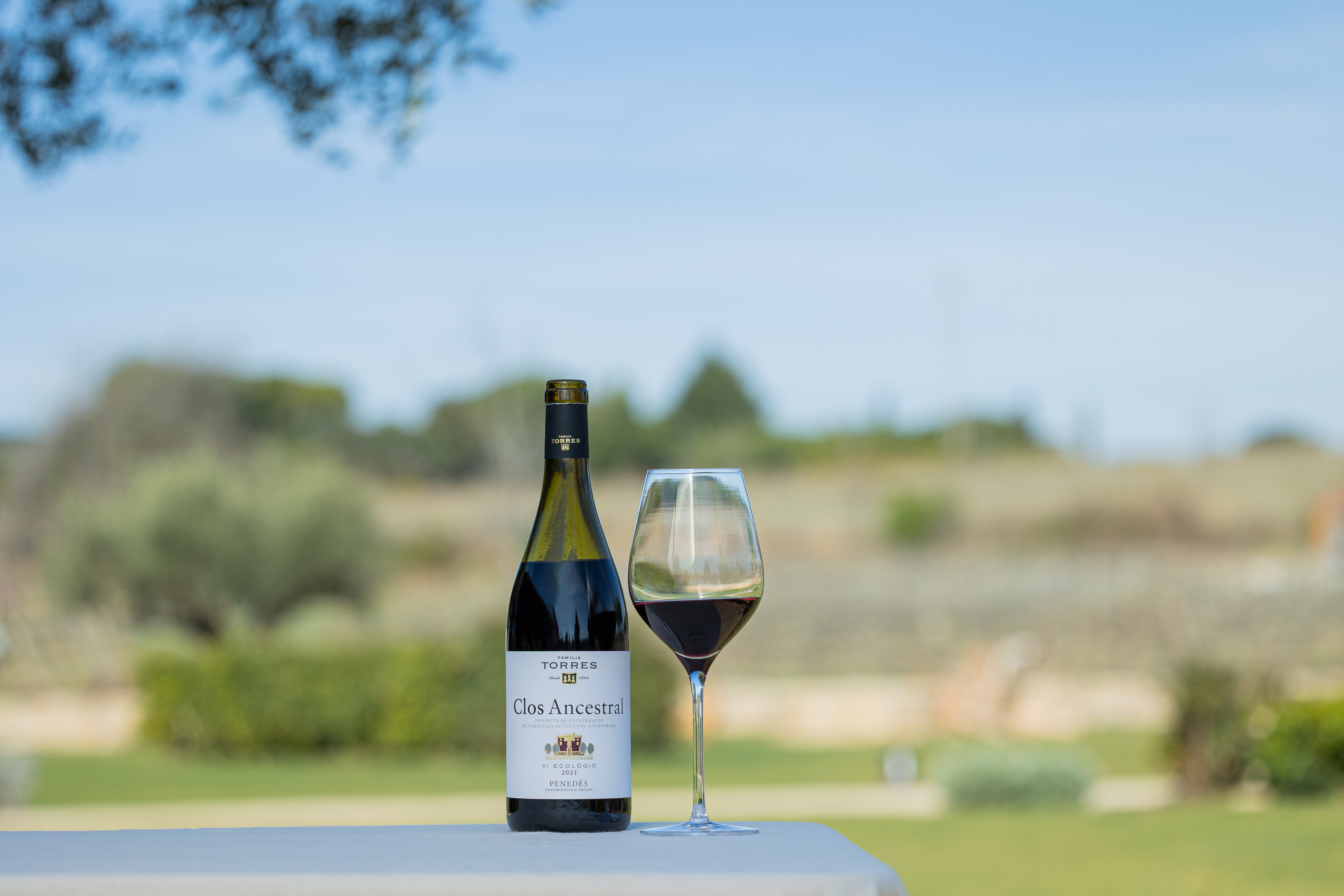
Clos Ancestral Tinto (DO Penedès)
Tasting Note
- In appearance, the wine displays medium colour intensity and a beautiful garnet colour with cherry highlights. The nose is fragrant and seductive, with rich floral and fruit aromas that oscillate between wild rose and raspberry.
- Light, supple, smooth as it unfolds across the palate, the wine has a pleasant, highly sensual texture that eschews power in favour of an identity rooted in exceptional acidity and an unusual, unmistakable personality.
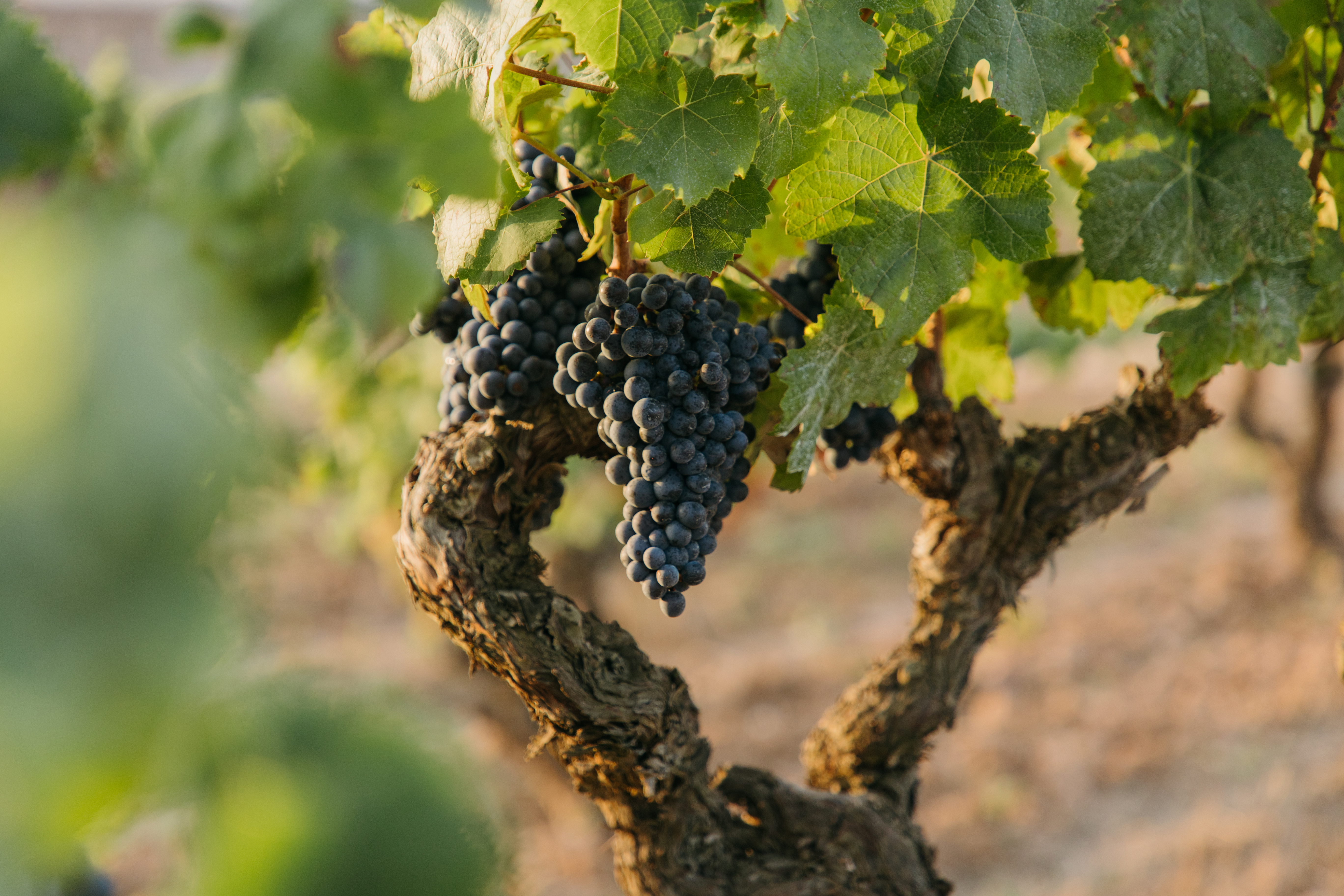
Ancestral Moneu variety growing in DO Penedès
Clos Ancestral Blanco (DO Penedès)
Much like its red “sibling”, Clos Ancestral Blanco is steeped in identity and innovation. The pairing of Forcada and Xarel.lo makes Clos Ancestral Blanco into a wine of inimitable authenticity. What we have here is an organic wine born from a vinicultural archaeological endeavour to restore a shared heritage of Penedès.
Tasting Note
- Limpid, luminous, pale yellow in appearance. The nose is delicate and seductive, offering a symphony of fruit aromas (lemon, grapefruit, tangerine). Fresh, lively, juicy on the palate with fine extract.
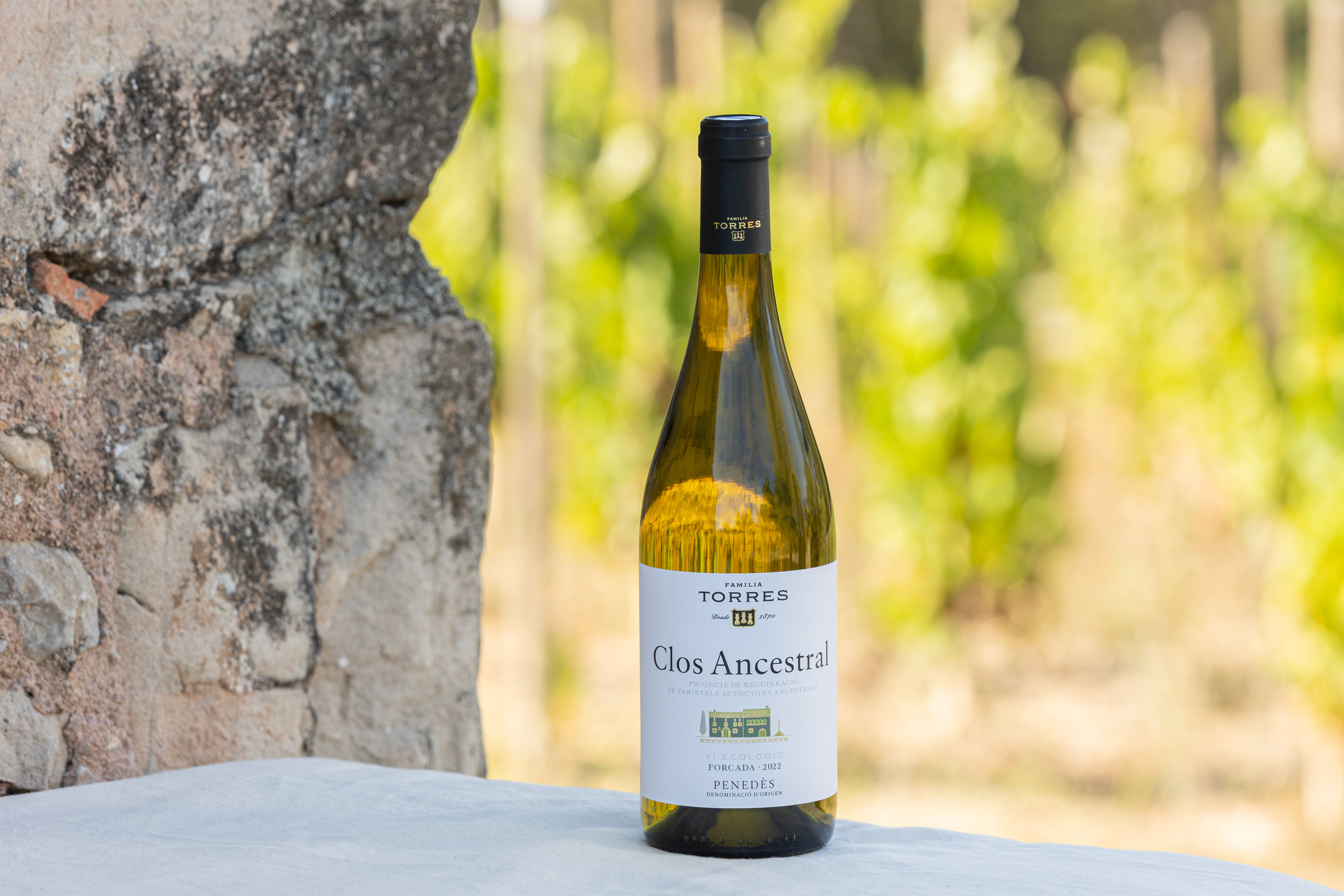
Clos Ancestral Blanco (DO Penedès)
Pirene
Let’s continue our presentation of the tangible, bottled results of the project to recover ancestral varieties which Familia Torres has been working on for more than 30 years.
The red Pirene variety is grown at Familia Torres’s vineyards in Tremp, in the foothills of the Catalan Pyrenees, at 950 metres. Conditions here resemble those of continental climates, given the influence of the nearby Pyrenees. The climate is dry, with certain areas exposed to extreme conditions, where winter lows drop below zero and summer highs reach almost 40 degrees Celsius.
Today it provides the perfect setting to counteract the effects of climate change. The estate has well-drained, highly permeable limestone soils and a distinctly continental climate with notable temperature variations, conditions which allow for fresh and balanced wines.
Tasting Note
- The variety displays bright, gorgeous, intense depth of colour and a high tannin levels.
- An abundance of seductive, lively red fruit on the nose, with a hint of minerality and spices that yields a highly expressive structural organic quality. Exquisitely elegant as it unfolds across the palate, with surprising texture and finesse, fleshy fruit, succulent flavours, and freshness that carries through to the finish.
Gonfaus
Found in 1998 in the village of Santa Eulàlia de Puig Oriol, in the Lluçanès region of Osona county, the variety derives its name from a field south of the municipality, known to locals as Quintà de Gonfaus. Today the grape is grown in Finca Purgatori, located in Juneda, Les Garrigues.
This low-yielding variety possesses its own resources to handle drought, an attribute that points the way forward for a winegrowing approach that looks to the past to ensure the future.
However, what is most noteworthy according to Familia Torres’s technical team, is that Gonfaus might be a new female variety (most are hermaphrodites).
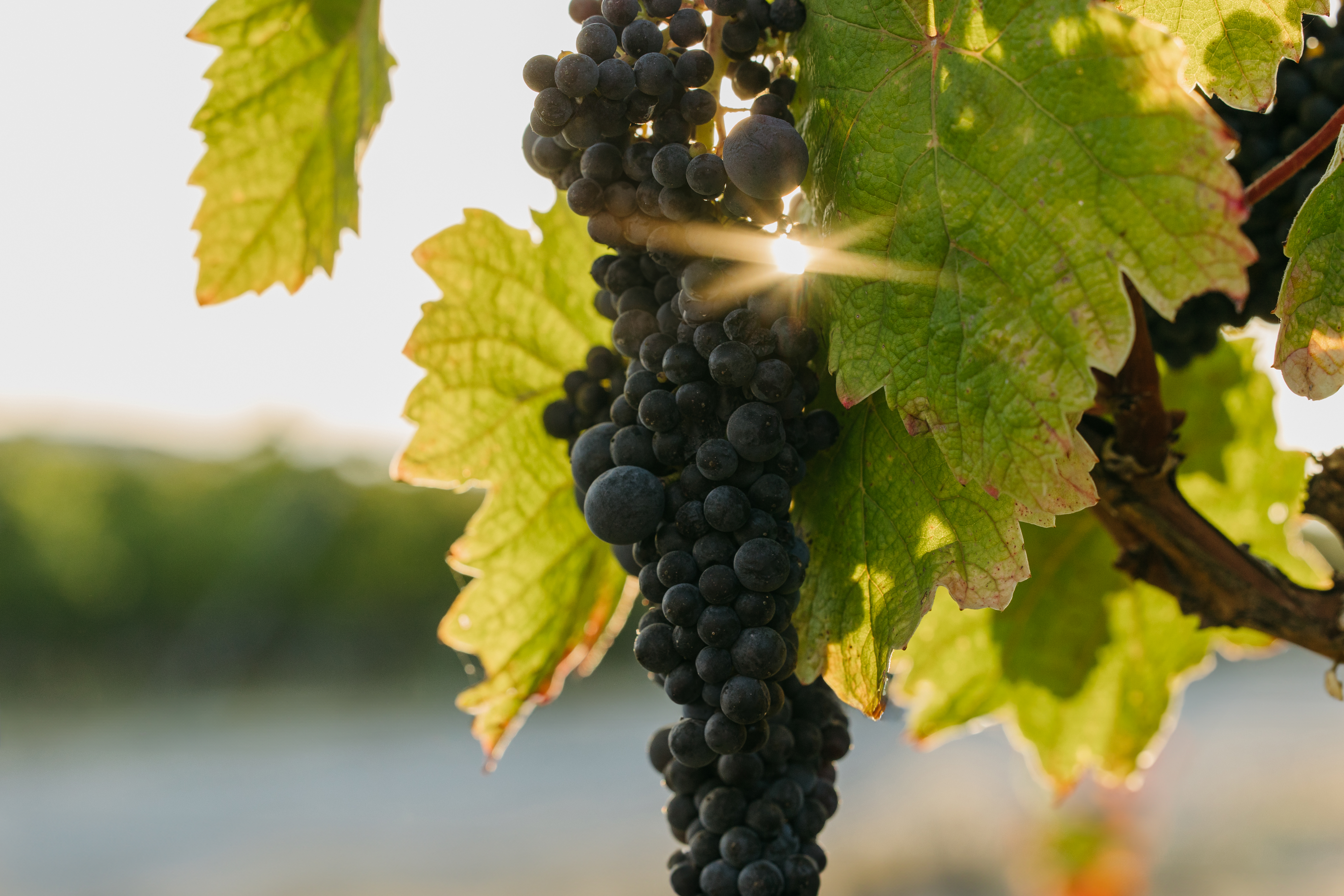
Ancestral Gonfaus variety growing in DO Costers del Segre
Tasting Note
- Gonfaus produces wines of medium-high depth of colour; a canvas of dark cherry red with a violet edge that recalls the elegance of the great classic Mediterranean reds.
- Ripe, but lively and present, red fruit on the nose, combined with slightly spicy undertones, resulting in complex, seductive aromatic characteristics. An intensity that envelops and immerses the palate in a paradigmatic expression of Mediterranean winemaking.
- The wines display well-integrated acidity and captivating concentration, with ripe, sweet tannins. Likewise, the alcohol is integrated in simply spectacular fashion, providing structure, but without drawing any attention whatsoever. Somewhat vertical, with a direct entry to the palate, the wine does ultimately reveal itself to be generous, big, intense, with a long aftertaste where the by now settled notes of ripe fruit and spices reappear. Not so much rustic, but rooted in the land. The sort of intangible attributes that transform a wine into an experience to remember.
Forcada (DO Penedès)
Forcada, authorized by the Regulatory Council of Penedès, is planted at two of our estates in Alt Penedès, in the subzone of Alts d’Ancosa: Mas Palau, in the municipality of Santa Maria de Miralles at 550 metres, and Les Escostes, in La Llacuna, an old terraced vineyard with drystone walls restored in 2020 and located at 700 metres at its highest elevation. The sites were chosen to explore the maturation limits of this variety.
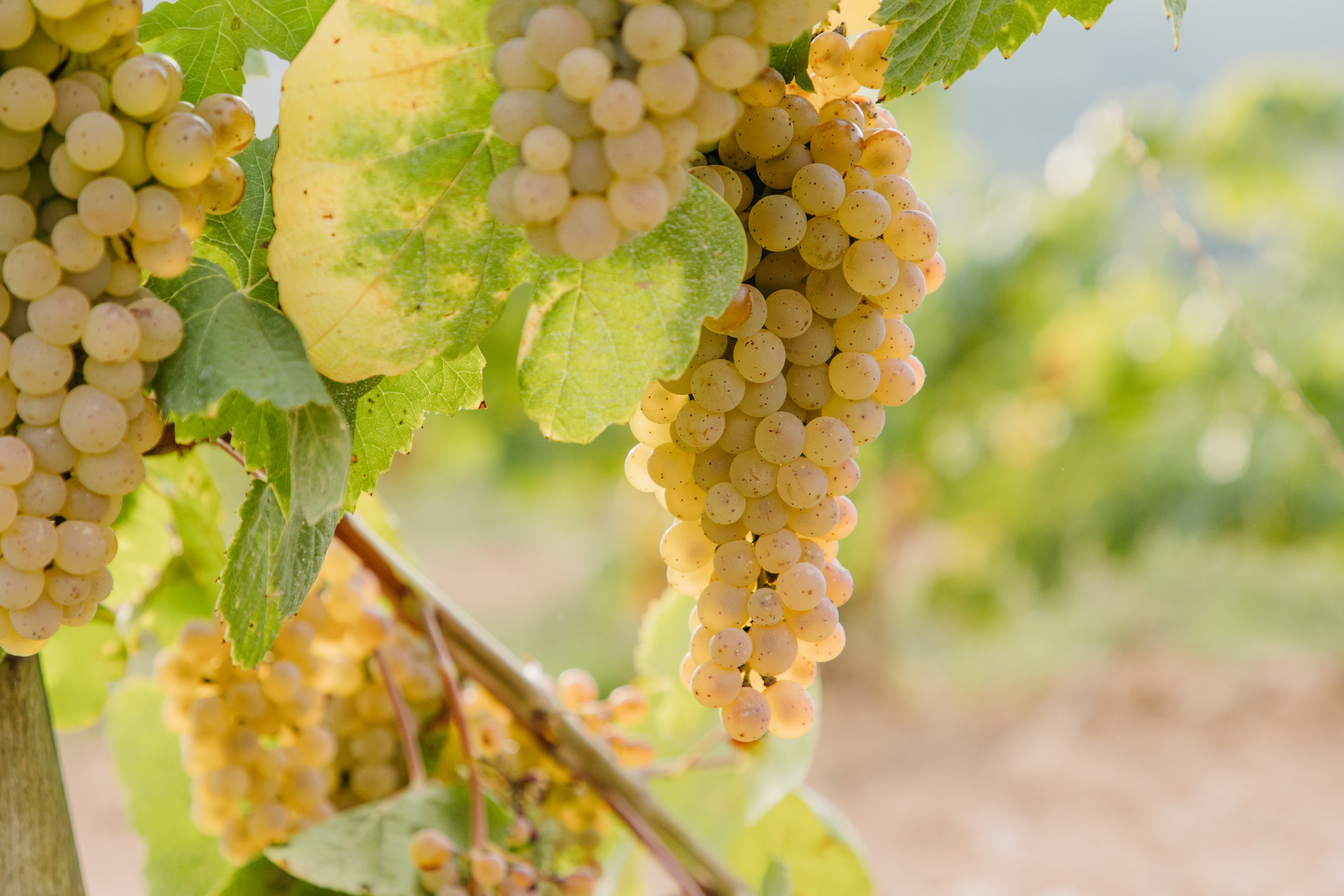
Forcada planted in DO Penedès
Tasting Note
- Forcada offers surprising aromatic intensity and freshness, characteristic of higher elevations.
- Herbal notes plunge us into visions of Mediterranean woodland while echoes of white flowers and a palate-seducing whisper of citrus keep us tethered to an electric, lively acidity that sustains the structure and the essence of the variety.
Although close to fifty varieties have been recovered by Familia Torres so far, the winery has focused its efforts on six, given their immense oenological potential and capacity to adapt to the new climate change-related challenges. An unprecendented success and tangible expression of Familia Torres’s effort and vision when it comes to restoring and preserving our viticultural heritage.