A GUIDE TO PAIRING FOOD AND WINE AT HOME
Tips for a Perfect Sensory Experience
This guide takes a deep dive into the importance of choosing the right glass, the time and technique for decanting wine, as well as sharing some pairing tips.
Let’s talk about the importance of glassware.
Knowing the parts of a glass and their function will help us better understand why this choice matters:
-
The uppermost part is the rim. The width of the opening will result in more or less intense aroma concentration and direct the flow of wine to the mouth. The di-ameter determines the potential sensations we may experience. For instance, the differences between tasting wine in a narrower or wider glass are significant, be-cause the position of the head while drinking will be very different.
-
The stem is where we hold the glass. It should be long enough to allow for a com-fortable grip. The base is the bottom of the glass, the part that provides support.
-
The shape of the glass is closely linked to varietal characteristics, aromas, alcohol, and acidity. A glass with a wider bowl accentuates the wine’s aromatic poten-tial.
-
The size of a glass (its capacity) affects the intensity and quality of the aromas.
The right glass
Generally, red wines call for wider glasses that encourage aeration, thereby elimi-nating any possible reductive aromas that might have developed during bottle ageing. Narrower rims are best for whites to conserve varietal aromas and acidity, whereas sparkling wines are served in “flutes”, slim glasses that widen slightly in the middle, like a “tulip”, to preserve carbonation.
- Such a variety of options might seem overwhelming, but don’t worry, there is no need to purchase all the glassware available on the market.
Suitable stemware should be made from thin glass or crystal and measure between 20 and 25 cm in height with sufficient capacity for the wine to unfold its most delicate aromatic potential.
- The basic, highly versatile, and widely used Bordeaux and Burgundy glasses, along with a generic type of glass that meets the standards mentioned above, will be more than enough to enjoy just about any kind of still wine at home.
The “musts” of washing glasses
Maintaining our glassware properly will prevent a lot of problems. The goal is to achieve cleanliness in the most neutral way possible without contaminating our sense of smell. This means avoiding strong detergents and making sure sponges, cloths, and dish towels are clean.
-
Glasses should be washed with warm water. If you do want to use detergent, opt for the most neutral, least perfumed option.
-
Rinsing and drying thoroughly is essential to prevent undesirable odours from set-tling in the glassware. Make sure to rinse several times with plenty of water and then dry the glasses with a clean, dry cloth that doesn’t transfer textile residues or odours.
-
Finally, store the glasses upright to avoid strange smells from developing in the bowl.
Service: what does it mean to “decant” a wine?
The practice of decanting consists of transferring the wine from the bottle to a de-canter to prevent solid particles from entering the glass. Oftentimes, particles or sed-iments accumulate at the bottom of the bottle, either due to the wine’s age or the winemaker’s decision to forgo filtration.
-
When transferring the wine from the bottle to the decanter do so with great care, keeping the bottle in an almost horizontal position to ensure the poured wine is free from impurities.
-
Keep in mind that truly old wines oxidize very quickly so it is best to avoid exposing the wine to oxygen for excessive amounts of time.
-
Aerating, breathing, opening…all synonyms that help us understand the action of oxygenating and what differentiates this from decanting.
The goal is to free the wine’s many aromas and avoid undesirable re-ductive aromas that might have developed in the bottle.
What about aerating young wines?
- Young wines also benefit from oxygenation, preferably by pouring the wine quite forcefully (as opposed to decanting) into the decanter and then swirling it about. However, some sommeliers and winemakers prefer to let the wine evolve in the glass by occasionally swirling the wine. This involves rotating the glass in one di-rection and then abruptly doing so in the opposite direction, seeking the maxi-mum aromatic expression of the wine — it’s identity.
Ideas for pairing Familia Torres wines
Below, we’ll share five food and wine pairings that will provide a full experience for the senses:
Purgatori (DO Costers del Segre)
A great wine from a small appellation of origin. Purgatori displays a deep, opaque garnet colour. The nose is rich, expressive, laden with fruit (blueberries, griotte or sour cherry preserves) with spicy (black pepper) notes and undertones of dried fruit (figs, dates, dried plums) that meld with toasty oak nuances. Light and velvety on the palate, delicate rather than forceful yet persistent and pleasant.
- Paired with Purgatori, a simple plate of cannelloni becomes an absolute delight. The wine also invites an assortment of quality cheeses, especially soft aged ones like Munster.
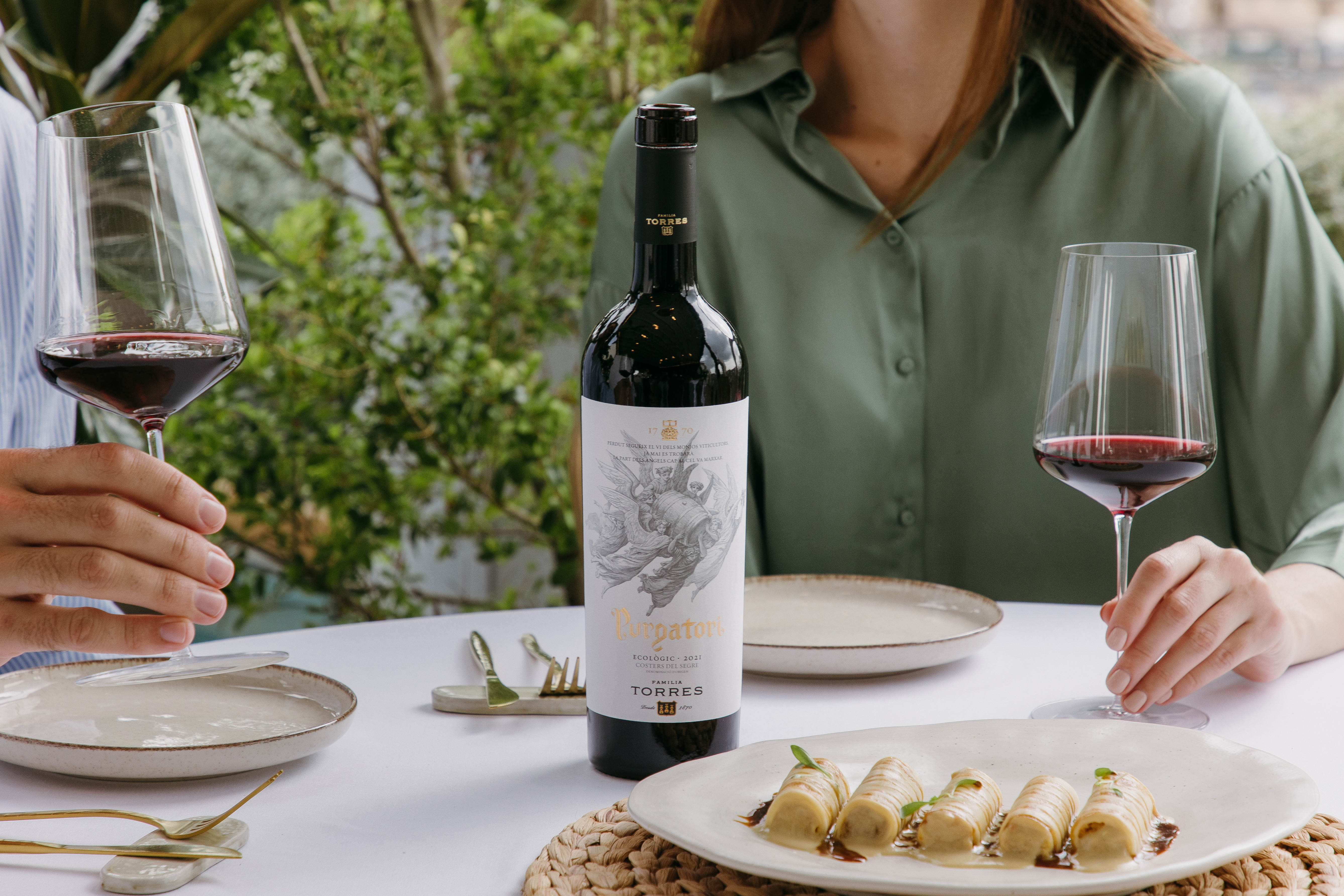
Purgatori (DO Costers del Segre) pairs perfectly with cannelloni
Clos Ancestral Tinto (DO Penedès)
Blended with Tempranillo and Garnacha, the recovered ancestral Moneu variety turns Clos Ancestral into an inimitable wine. Lovely, luminous ruby red. Intense and seductive on the nose with ripe fruit (cherry) notes and toasty (coffee), spicy nu-ances. Flavourful, pleasant, light on the palate.
- The wine’s finesse and versatility make it a great match for a variety of medium-aged cheeses and charcuterie, as well as lean meats and fish in creamy or but-tery sauces. Pairs wonderfully with rice dishes like meat paella or mushroom risot-to.

Clos Ancestral Tinto (DO Penedès)
Clos Ancestral Blanco (DO Penedès)
A blend of the recovered Forcada variety and indigenous Xarel·lo bring Clos Ancestral Blanco to life. Clean, brilliant, pale straw colour. Delicious nose offering fresh floral and vegetative notes with fruit (citrus, pineapple) undertones. The palate is lively, cheerful, clean, and flavourful. Excellent length.
- An ideal aperitif. It pairs well with barely seasoned dishes made from simple in-gredients, such as raw or fried seafood, oysters, and prawns. A good match for simple grilled fish like sea bass. Excellent in combination with complex Japanese fare like sushi and sashimi or fried dim sum.
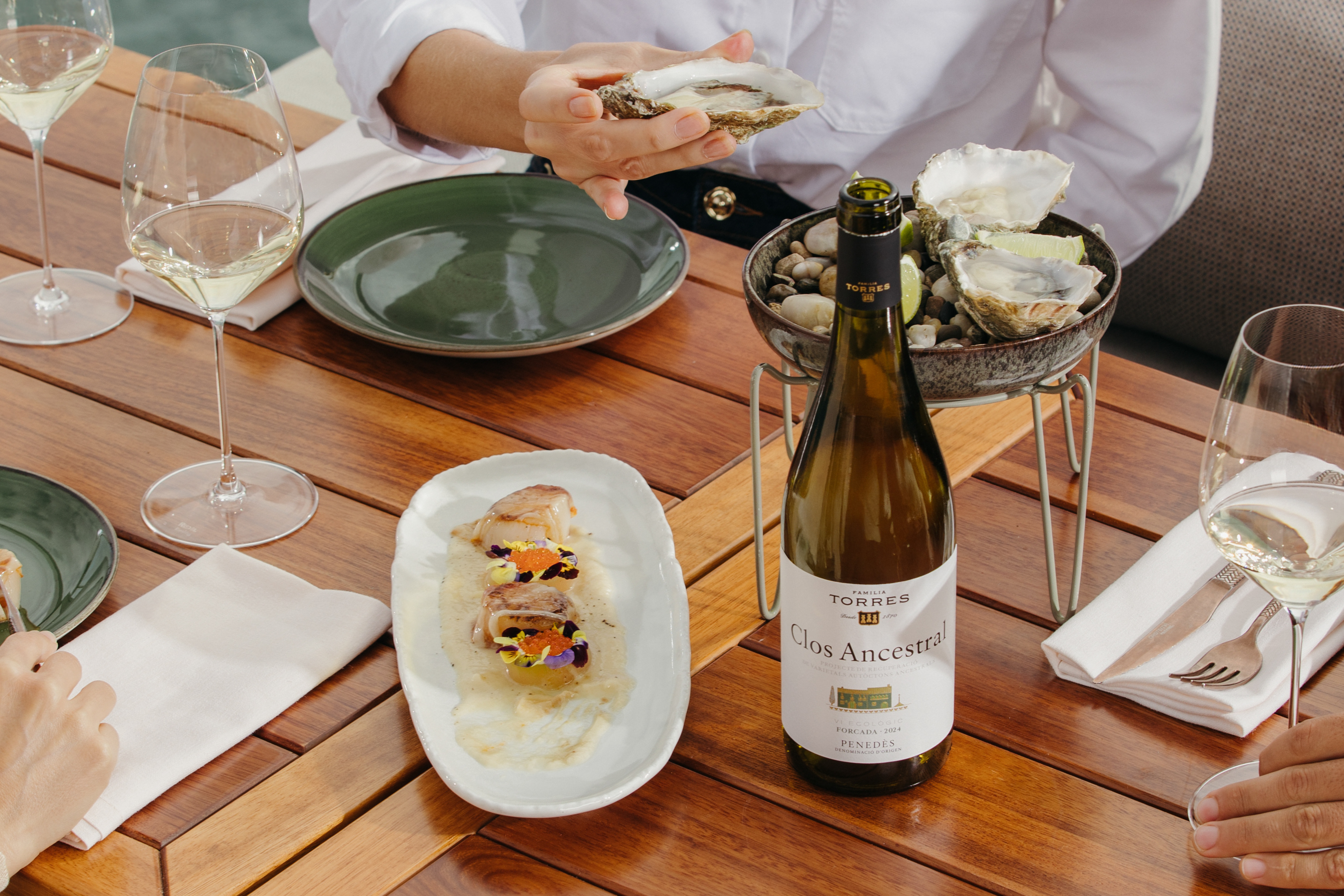
Clos Ancestral Blanco (DO Penedès)
Malpastor (DOC Rioja)
Malpastor reveals the boldest side of traditional Riojas. Well-pigmented cherry red colour. Rich fruit (blueberry jam) aromas with fine notes of excellent oak ageing on the nose. Silky, supple, light on the palate.
- Pairs perfectly with roasted lamb or lamb chops served with veggies. Splendid with Ibérico cured meats and aged cheeses.
Pazo das Bruxas (DO Rías Baixas)
An outstanding Atlantic-style wine enveloped in mist and mystery, tangible folklore and heritage. This is the epitome of Albariño: straw colour with golden highlights. Seductive nose with exquisitely fine white floral notes and delicious fruit (pineapple, apple, lemon) coming through. Delicate, smooth, silky on the palate but with plenty of personality.
- An excellent aperitif. Pairs perfectly with mild white fish and raw, cooked or grilled seafood, as well as sushi and vegetables. Fresh goat cheeses find a harmonious match in the wine’s lively freshness.
Giving attention and care to our wines is about optimizing and maximizing pleas-ure. Doing so turns a mere lunch or dinner into something greater. It makes the mundane, exceptional.