
How to Read a Wine Label Without Getting Lost in the Lingo

By Laura Conde, wine writer
A wine label can contain a lot of information, but it isn’t always easy to decipher. What is the difference between a Crianza and a Reserva wine? What does Grand Cru mean? Is an appellation-of-origin wine better? Let’s take a look at the main information we might find on a bottle and see what it means.
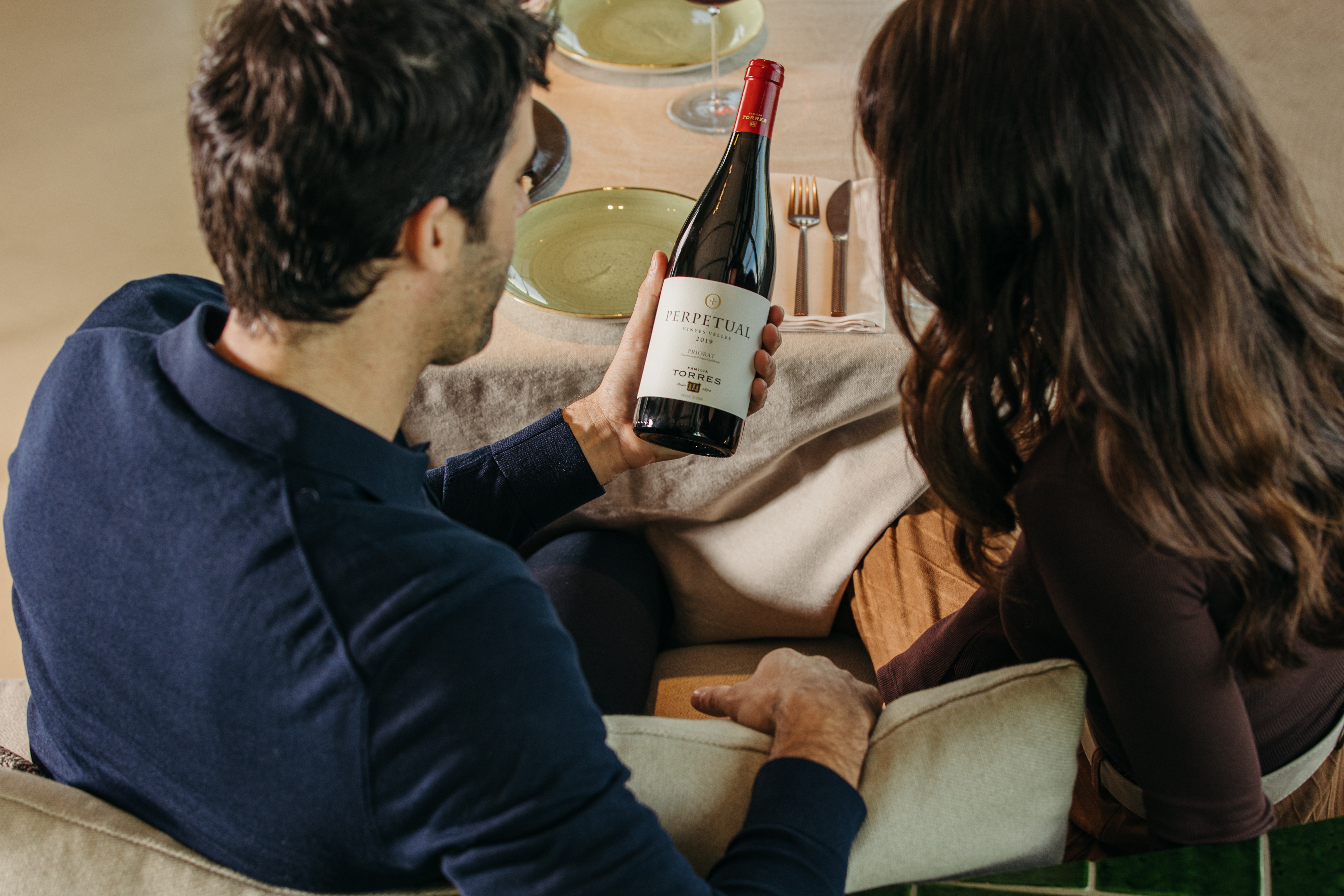
Reading the label on a bottle of Perpetual by Familia Torres
In Spain, the designation or appellation of origin (DO) identifies wines that comply with certain production regulations linked to a region, such as Penedès or Ribera del Duero. Rioja and Priorat belong to more rigorous categories: DOCa and DOQ respectively, both versions of qualified appellation of origin. Then there are protected geographical indications (PGI) that allow for greater flexibility, and vinos de pago, which originate from winegrowing enclaves with their own specific characteristics.
These categories regulate production, but that doesn’t necessarily mean certain wines are better than others. Production in a DOQ or DOCa must follow more stringent regulations than in a DO, but the quality of the resulting wines isn’t always higher. In fact, some winemakers produce excellent wines outside of the DO system, because they want to use non-authorized varieties or prefer to work more freely.
Moving on, the vintage indicates the year the grapes were harvested, and the grape variety – when provided – gives us clues about the wine’s style. It is also worth differentiating between Crianza, Reserva, and Gran Reserva, regulated terms that refer to minimum ageing periods. In terms of reds, Crianza wines generally require two years of ageing, with six months in oak; a Reserva wine requires three years, with at least one in oak; and a Gran Reserva requires five years, with at least 18 months in oak. For whites and rosé wines, the periods are 18 months for Crianzas, two years for Reservas, and four for Gran Reservas, with a minimum of six months of barrel ageing in all three cases.
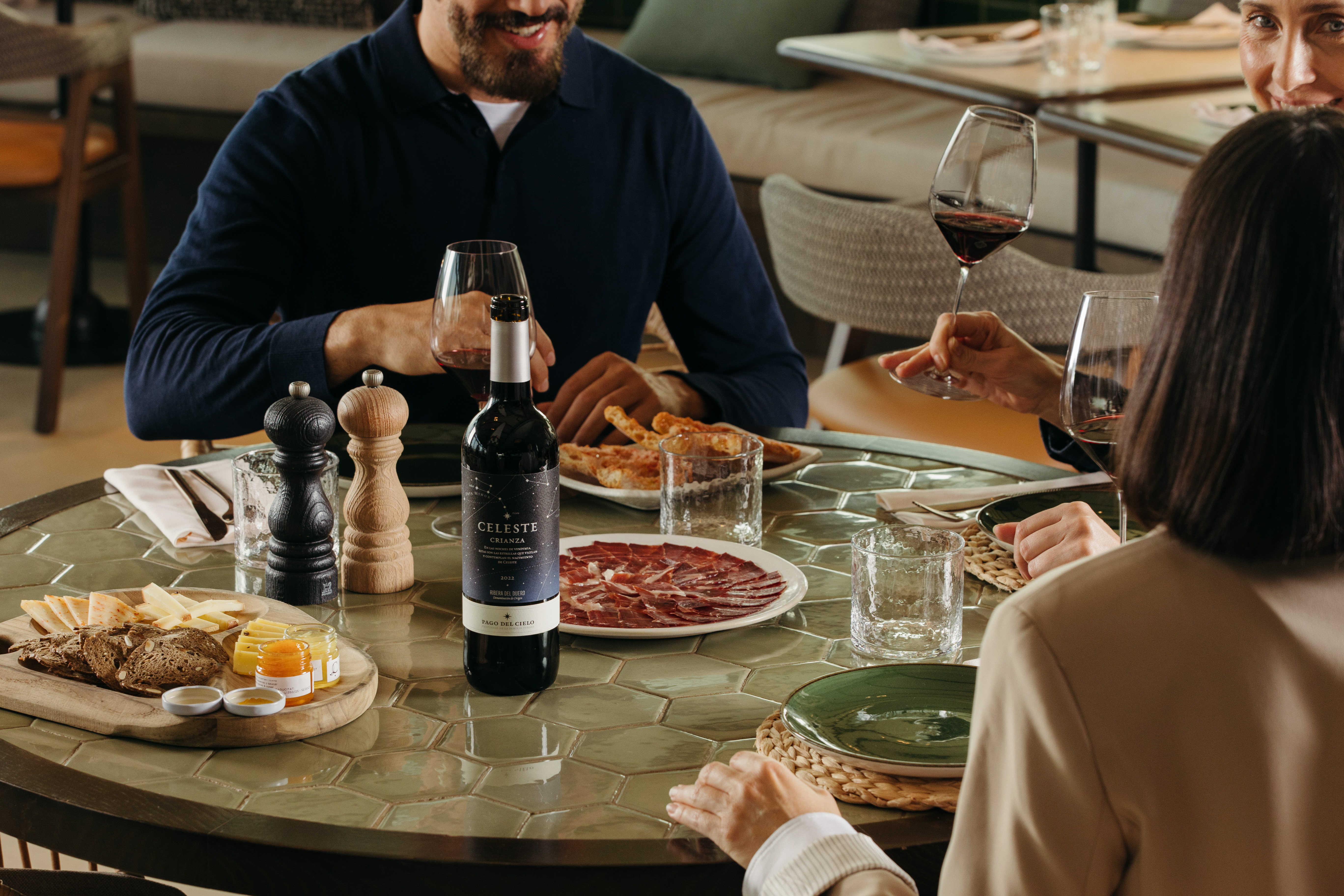
Celeste Crianza, a Crianza wine from DO Ribera del Duero
France, Italy, and Other Regions
In France, most labels do not provide any information about grape variety since traditionally more importance has been given to the region of provenance. For instance, a white Chablis from Burgundy is a Chardonnay, whereas a white Sancerre from the Loire Valley is a Sauvignon Blanc, but these varieties do not appear on the label.
The word “appellation” refers to a renowned production area where the wines must comply with certain regulations. The term is more or less equivalent to the Spanish DO (denominaciones de origen). We might also find words like “château”, common in Bordeaux, which identifies a wine estate whether it has a castle or not; or “domaine”, common in Burgundy, which refers to a property dedicated to winemaking.
Other terms we might come across are Grand Cru and Premier Cru, most frequently in connection to wines from the Burgundy or Champagne regions. There are historical classifications associated with wine quality, although in Burgundy they identify specific vineyards and in Champagne they are used to classify winegrowing villages.
Heading over to Italy, the initials DOC (Denominazione di Origine Controllata) and DOCG (Denominazione di Origine Controllata e Garantita) identify wines subject to specific provenance and production regulations. The IGT (Indicazione Geografica Tipica) classification establishes different requirements and allows for more flexibility in terms of varieties and winemaking. Like in France, many appellations refer to the region and not the grape variety directly. Barolo, in Piamonte, is made from Nebbiolo; Brunello di Montalcino, in Tuscany, with Sangiovese.
In countries like Chile, Argentina, Australia, New Zealand or the United States, the labels tend to give greater prominence to varieties than the region of origin. It is therefore common to find wines identified as Malbec or Sauvignon Blanc, although their provenance is also indicated. That said, just because a label mentions “Malbec” doesn’t necessarily mean that the wine is made entirely from this variety. In the United States, it is generally enough if the variety constitutes 75% of the blend, whereas in Australia and New Zealand, the minimum percentage is usually 85%.
Other Useful Information
Although alcohol content isn’t the only factor that determines the body of a wine, it does provide us with clues about its style: a 14.5% or 15% wine will usually give a more mouth-filling sensation, while an 11% or 12% wine tends to be lighter on the palate. The term “old vines” (viñas viejas) indicates that the wine is made from vines of a certain age, while “barrel fermented” means the wine was fermented in oak, which shouldn’t be confused with barrel ageing.
Another common feature is the expression “contains sulphites”, which is legally required when concentrations reach 10 mg per litre. Although often associated with industrial products, sulphites also occur naturally during fermentation and are used to protect the wine from oxidation and microbiological alterations.
Since December 2023, European regulations also require labels to provide nutritional information. This information can be accessed via a QR code, although the energy value and allergens must also appear on the physical label. Wines produced before this regulation went into effect are exempt from this requirement.
With sparkling wines, it is worth paying attention to the sugar content, which determines how dry or sweet they are. A brut nature contains less than 3 grams of sugar per litre, and no sugar is added after the second fermentation; an extra brut contains between 0 and 6 grams; and a brut, less than 12 grams. By contrast, a demi-sec contains between 32 and 50 grams per litre and is noticeably sweeter. Curiously, an extra dry sparkling wine, despite its name, is sweeter than a brut.