
The most common mistakes when serving wine in summer
By: Laura Conde, journalist
Summer is the season for lighter meals, sunny terraces, leisurely apéritifs and bottles that suit the occasion without any fuss. But high temperatures pose an additional challenge: wine is particularly sensitive to heat. Serving it too warm, overchilling it, or leaving a bottle on a table in the sun for hours can cause even the best wine to lose some of its qualities. These ten recommendations will help you keep and serve wine in the best possible condition throughout the summer months.
Serving wine too warm
This is probably the most common mistake. When wine is served too warm, the alcohol becomes more noticeable, its freshness is diminished and its aromas can lose definition. The familiar idea that red wine should be served at room temperature makes little sense when temperatures reach 28 or 30 °C. In summer, many reds benefit from a few minutes in the fridge before serving.
According to the Wine & Spirit Education Trust (WSET), one of the world’s leading wine education organisations, serving temperature should be adapted to the style and structure of each wine. As a general guide, sparkling and sweet wines are usually served well chilled, at around 6–10 °C; young whites and rosés at between 7 and 10 °C and fuller-bodied or aged whites at between 10 and 13 °C. Light reds can be enjoyed slightly chilled, while more structured reds tend to show at their best at around 15–18 °C.
These ranges are only a guide, as the style and complexity of the wine, personal preference and the outdoor temperature all play a part.
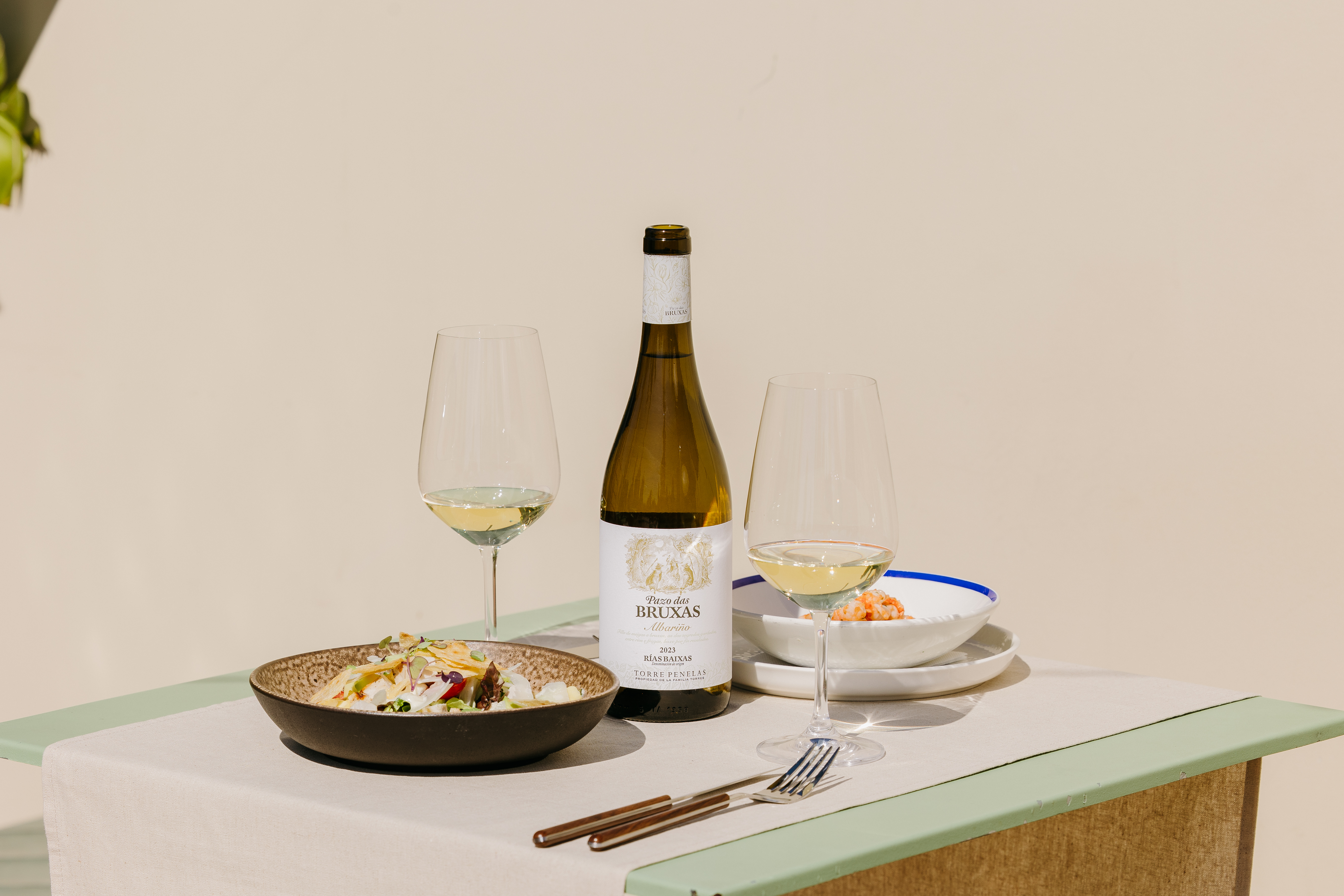
A summer meal on the terrace with Pazo das Bruxa
Assuming that the colder a white wine is, the better
At the other extreme is the tendency to serve white and rosé wines almost ice-cold. Overchilling can make a wine less expressive: its aromas become less intense, some of its flavours are muted and its texture and complexity become harder to appreciate, particularly in aged or more structured whites. That said, serving temperatures are recommendations, not hard-and-fast rules. Ultimately, the best temperature is also the one at which each person most enjoys the wine.
Forgetting about the bottle once it has been opened
Getting the temperature right is of little use if the bottle is then left on a terrace table for a long time. An ice bucket is an excellent way to keep whites and rosés cool and, in very hot weather, can even help maintain certain reds at the right temperature. The key is to use it to maintain the desired temperature, not necessarily to make the wine as cold as possible.
Putting only ice in the bucket
A bucket filled solely with ice cubes is less effective than one containing both water and ice, as the water surrounds the entire bottle and allows it to chill quickly and evenly. If you need to cool down a bottle you have just bought, this is one of the most effective solutions.
Putting a bottle in the freezer… and forgetting about it
The freezer can come to the rescue if you need to chill a bottle quickly, but it is important to keep an eye on the time. Aside from the obvious risk of forgetting about it, chilling wine rapidly for a prolonged period is not the ideal way to treat it and should be reserved for emergencies. Whenever you can plan ahead, the fridge is the best option. And if you are in a hurry, use water and ice in an ice bucket.
Leaving wine in the sun
Direct sunlight can quickly raise the temperature of the bottle, and prolonged exposure to heat is one of wine’s worst enemies. During an outdoor meal, the bottle should be kept in the shade and in as cool a place as possible. An insulated bag or small cool box is very handy for picnics.
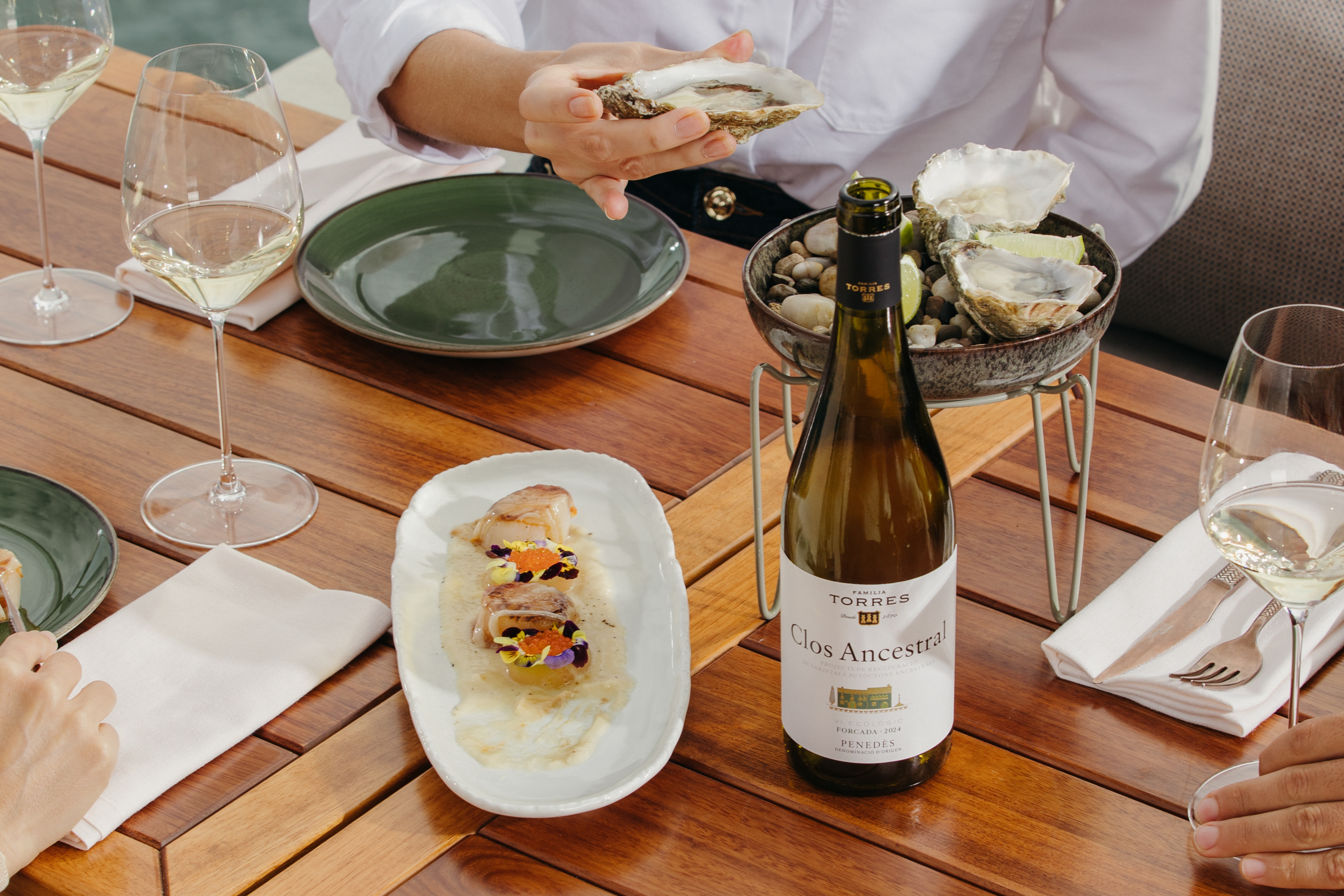
A summer meal on the terrace with Clos Ancestral Blanco
Assuming that all red wines should be served at the same temperature
A fine red made for ageing should not be served at the same temperature as a young, light wine. In fact, young, light reds can be particularly enjoyable in summer when served slightly chilled. But remember: chilled does not mean ice-cold. If the temperature is too low, the aromas become muted and the tannins may seem more pronounced.
Overfilling the glass
At 30 °C, the more wine you pour at once, the longer it sits warming up in the glass. It is better to pour smaller amounts and top up the glass more often, keeping the bottle at the right temperature in the meantime. Leaving enough room in the glass also allows you to swirl the wine and appreciate its aromas more fully.
Chilling the glass instead of the wine
Putting glasses in the freezer or filling them with ice before serving can alter the serving temperature and slightly dilute the wine if any water remains. Even the slightest dilution changes the balance between the alcohol, acidity, aromas and flavours, causing the wine to lose intensity and definition.
Becoming obsessed with the thermometer
Serving temperatures are a guide, not an exact science that requires you to bring out a thermometer at every meal. There is also a simple trick that is particularly useful in summer: serve the wine one or two degrees below the desired temperature, as it will begin to warm up as soon as it is poured into the glass.