The Global Final of the Torres Brandy Zero Challenge will take place at Barcelona Cocktail Fest on Saturday 18th April.
Torres Brandy has unveiled the twelve local finalists who will compete in the 4th edition of the Torres Brandy Zero Challenge Global Final, taking place in Barcelona on 18th April 2026. Representing countries across Europe, Asia and the Americas, these standout hospitality innovators will each present a sustainability‑driven project designed to reduce socio‑environmental impact within the industry. Their ideas span bold environmental interventions, community‑focused initiatives and creative approaches to circularity.
The local finalists include Tim Freitag from Germany, Jason Strohan from Canada, Jaakko Suokas from Finland, Luca de Marco from Italy, Elisa Villareal from Mexico, Alexis Ortega from the United States, Alberto Díaz from Spain, Giannis Wang from China, Lottie Barnard from the United Kingdom, Nicolás Castro from Chile, Jean Trinh from Colombia and Paul Aguilar from Norway (more details on their individual projects below). The twelve local winners will come together in Barcelona from Thursday 16th to Sunday 19th April 2026 for a three-day programme of presentations, workshops, and judging.
Each finalist will pitch their sustainable hospitality project to an international panel of experts, including award‑winning journalist and drinks consultant Mandy Naglich; Julianne Caillouette‑Noble, Chief Executive Officer of the Sustainable Restaurant Association; and François Monti, drinks author and Academy Chair for The World’s 50 Best Bars. Judges will assess entries across four key criteria - the idea, sustainability, business plan, and future growth potential, with the winner of the global competition receiving €30,000 to bring their vision to life.
Now in its expanded 2026 edition, the Torres Brandy Zero Challenge champions environmental responsibility and innovation across the hospitality sector. Led by Torres Brandy and inspired by more than 15 years of climate action by Familia Torres, the competition this year opened its doors to a wider range of countries and welcomed participation from both bar and restaurant teams. Entrants were tasked with presenting projects capable of delivering measurable impact, whether through reducing CO₂ emissions, minimising waste, improving recycling systems, advancing social inclusion, or addressing similar socio‑environmental challenges.
The Global Final of the Torres Brandy Zero Challenge will take place at Barcelona Cocktail Fest on Saturday 18th April.
In Germany, local finalist Tim Freitag, Service Manager and Bartender at Bonvivant Cocktail Bistro, is proving that sustainability can be as creative as it is practical. His project turns the bar’s overlooked remnants such as orange peels, coffee grounds, herb stems, and fruit trimmings into vibrant ingredients that breathe new life into cocktails and pairings. By reimagining what most would discard, he elevates waste into a sensory experience that enriches the entire menu.
From Canada, Jason Strohan, co-owner of St Tropez Bistro and Parlor Bar in Saskatoon, champions a community driven approach to sustainability. His initiative, "Forgotten Fruit," mobilises an urban network of produce collectors, rescuing overlooked or unwanted harvests to reduce waste while strengthening community ties. It’s a model that blends practicality, generosity, and environmental awareness.
In Finland, Jaakko Suokas of Pitkän Päivän Ilta has designed a forward-thinking digital solution for a persistent industry problem. His app enables bars and restaurants to share or redistribute unexpected surplus ingredients, allowing neighbouring venues to purchase or collect them at no cost. The platform lowers operating expenses, cuts waste and fosters a culture of collaboration across the hospitality sector.
From Colombia, Jean Trihn, owner of Alquímico Cartagena, has been developing the project “#FromTheBarToTheFarm” since 2018, when he purchased a farm in the fertile Eje Cafetero region, which Jean and his team transformed into a living model of regenerative farming. Blending hospitality with environmental stewardship, the project creates a closed-loop ecosystem where ingredients, community, and biodiversity thrive together, reshaping the relationship between the bar and the land that sustains it.
In Italy, Luca De Marco is reshaping fast casual dining with his project, “Fast Food Vegetale Per Il Grande Pubblico.” Based on four pillars: standardised menus, scalable production, inclusive communication, and sustainable profit, his initiative already delivers around 30,000 plant forward meals each year. The impact is impressive: a reduction of 90 tons of CO₂ emissions and 15 million litres of water saved annually. Each meal is both nourishment and a step toward a more responsible future.
From Mexico, spirits and wine consultant Elisa Villareal is turning a longstanding environmental challenge into an opportunity for clean energy. Her project, “Agave Loop,” transforms agave bagasse, a major byproduct of agave-based spirits, into ecofriendly fire briquettes. The innovation not only reduces pollution and waste but also strengthens local economies and offers a scalable model for agave producing regions across the country.
In the United States, bartender Alexis Ortega has created the project “Second Press Citrus” a centralized citrus processing operation designed to help bars cut waste and improve consistency. With this design the company collects post service citrus from partner bars, then juices, clarifies, and transforms it into fresh citrus cordials and a consistent sour mix. These shelf stable, ready to use products are sold back to bars, saving them time while reducing waste.
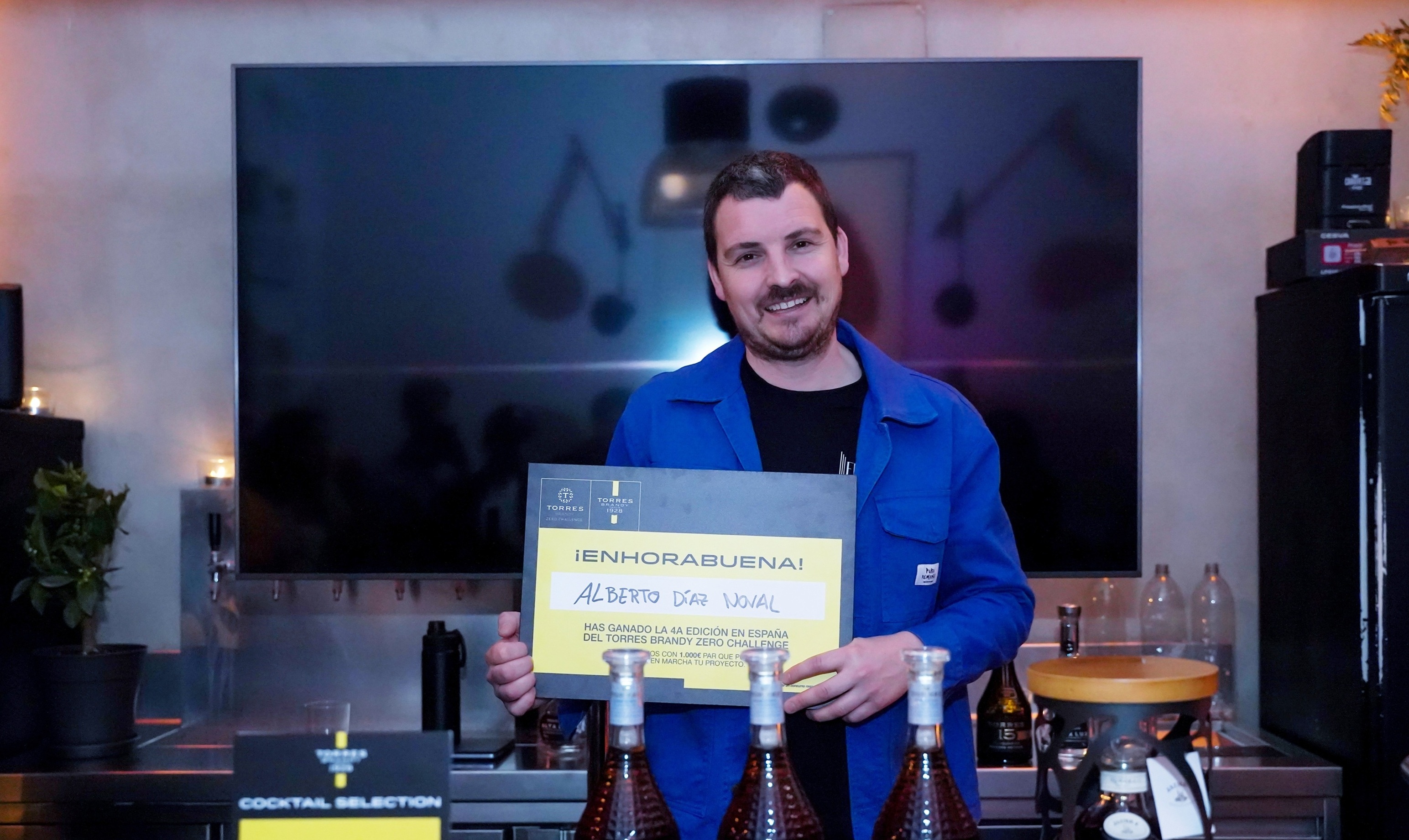
From Spain, Alberto Díaz, of the rural cocktail bar El Patio de Butacas, is envisioning a new generation of hospitality education. His concept blends online coursework with immersive, in-person training and introduces a dedicated “Rebar” lab, a creative space where byproducts are transformed into new cocktail components. By treating sustainability as a strategic advantage, he aims to empower future bartenders to innovate responsibly.
In Chile, co-founder of Casa Brotherwood, Nicolás Castro has created the project, “Oasis Green & Wood” which aims to introduce a green roof, an integrated garden and vertical planters into the venue. The initiative centres on recycling and reusing greywater and rainwater to produce fresh ingredients and raw materials for both the kitchen and the bar.
From Norway, Paul Aguilar who’s Head of Research and Development at the award-winning Himkok has developed the project “Side Hustle Water” a still vitamin water crafted specifically for people whose lives run beyond the traditional 9‑to‑5. Built on clean Norwegian water and infused with Nordic‑inspired flavours, it is packaged in lightweight aluminium cans that feed seamlessly into Norway’s efficient deposit‑return recycling system. The project also reinvests in the community through a wellness fund dedicated to supporting shift‑workers.
In China, Giannis Wang Manager of the renowned Hope & Sesame in Shenzhen has created “Blueprint” a platform designed to provide companies in the Chinese drinks industry with a practical roadmap for setting and achieving sustainability goals.
From the United Kingdom, Lottie Barnard has developed “The Rose” a community garden created to grow ingredients for use in the venue which also works as a shared social space where the local community can learn how to grow ingredients at home.