
Winter Flowers, Drops of Beauty in a Frozen Landscape
By Jose Luis Gallego, environmental communicator (@ecogallego)
For many of us the word “flowering” evokes images of early spring, but a handful of plants decide to defy seasonal expectations and blossom right now, in the middle of the deepest winter, when the otherwise dormant fields are covered in frost. Many of these plants do so in areas adjacent to vineyards.

Winter landscape
The cast of winter-flowering species features a familiar protagonist, inextricably linked to our ecosystem: a shrub known as Mediterranean heath or heather and whose Latin name – Erica multiflora – is very revealing. Around this time of year, the stems of this mid-sized shrub sport a myriad pink flowers. Arranged in tight clusters, these tiny bell-shaped blossoms brighten the landscape with such intense colour that we could easily believe we had suddenly been transported to April.
The climate-change induced rise in winter temperatures is bringing the flowering of another plant forward, one that is equally characteristic of garrigue – the low Mediterranean scrubland made up of a mosaic of evergreen shrubs, low trees, and aromatic herbs. The plant in question is Spanish gorse, also known as scorpion broom. A member of the large Fabaceae family, it goes by the scientific name Genista scorpius.
Gorse tends to bloom along the paths leading in and out of vineyards, adorning the landscape with its delicate, fragrant yellow flowers. Be careful, however, because touching his beautiful shrub can be a rather unpleasant experience.
Beneath last year’s dense growth, now awash in flowers, lies a thicket of old, dry branches that have succumbed to the passage of time and lack of rain. The lignified spikes of the gorse plant are veritable daggers, capable of cutting the skin of anyone who, seduced by its beauty, tries to take home a bouquet.
Another characteristic winter flower of the low and hilly scrubland is lesser celandine or pilewort (Ranunculus ficaria). Especially abundant along streams and springs, the species is known for its medicinal properties and has been used as a remedy for various ailments since ancient times.
Celandine is a humble, almost reticent flower whose yellow petals unfurl in the most humid corners of the forest in the middle of winter. The lively colour of the flowers stands in stark contrast to the dark browns along the shaded or frozen edges of springs and streams. The round leaves, with their vivid green hue, also catch the eye, covering the banks of streams, the ground of ash groves and other riverside woodlands in a blanket of tiny terrestrial water-lily-like pads.
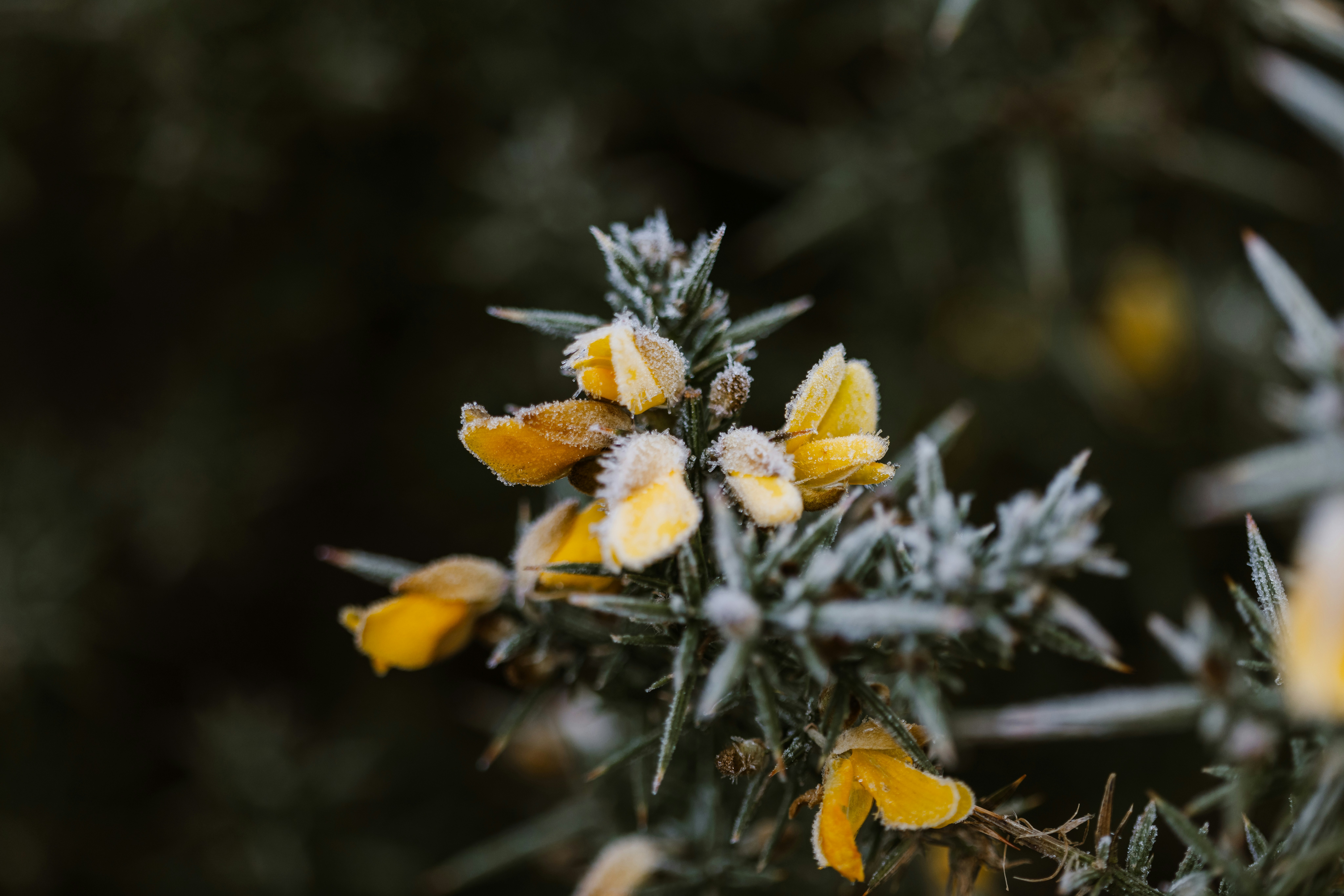
Yellow flowers covered in mid-winter frost
Alder forests – the riverside woodland par excellence – also blossom in January, revealing their most curious physical manifestation. Long before the leaves bud, blossoms dot the bare branches of the alders (Alnus glutionsa), which still bear the shrivelled fruit of the previous year, offering a stark contrast to the pale grey of the winter woodland.
Laurustinus or laurustine (Viburnum tinus) is a small shrub with grand ambitions, which, under the right conditions, can grow to the size of a tree. Like the aforementioned species, it also flowers in winter, forming dense, abundant clusters of small white blossoms that are visible from a distance.
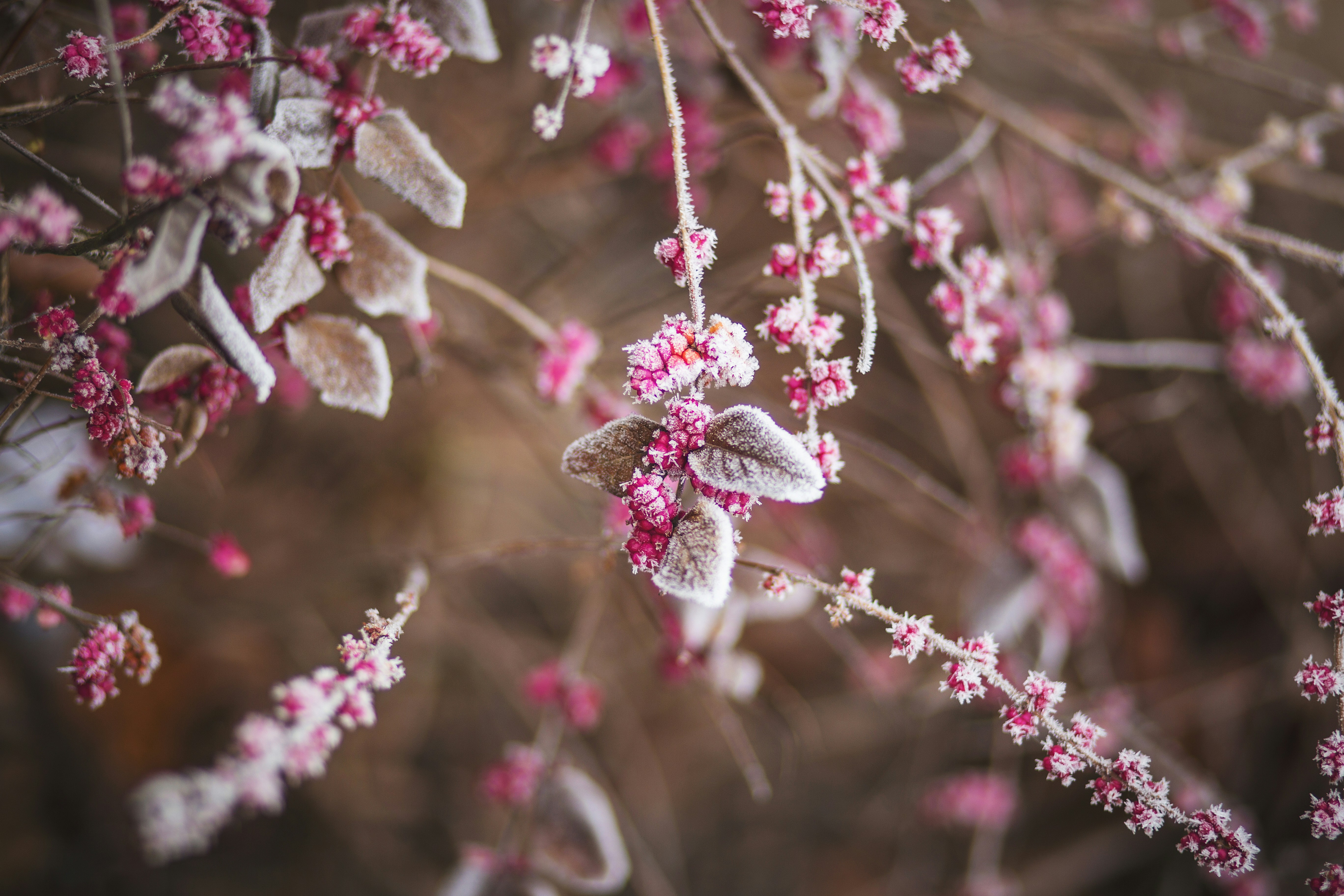
Laurustinus blossoms in winter
Wild hazelnuts have also begun to bloom, albeit far more discreetly. Their minute flowers, arranged in brownish-green clusters, rarely draw the attention of passers-by. In contrast to the chromatic explosion of gorse, hazelnut trees don’t produce traditional flowers, but small dangling clusters that botanists call catkins.
Given its vegetative modesty, we might never notice a hazelnut tree in bloom, even if we happen to have one right in front of us. Compared to almond or cherry blossoms, whose delicate white and pink beauty will adorn the countryside in the weeks to come, the humble hazelnut flower lacks the seductive petals of its cousins.
Finally, we cannot conclude this brief compendium of plants bold enough to bloom amid snow, ice and frost without mentioning one of the loveliest: the winter iris (Iris planifolia).
Regarded as one of the great beauties of the high mountains, the flower is a deep purplish-blue colour, white at the centre, with elegant yellow crests on the three falls. The plant will now gradually unfurl its petals amid the frozen landscape, much to the delight of high-mountain hikers and botanical enthusiasts who ascend the peaks to admire its beauty –without picking a single flower, of course.