
Why Bird Feeders Matter
By Jose Luis Gallego, environmental communicator (@ecogallego)
When temperatures drop below zero, and frost covers our parks and gardens, the birds that live in our cities and villages – blue tits, coal tits, warblers, robins, and goldcrests – have fewer chances of finding enough food to survive the winter.
Furthermore, most of these species are migrating birds that arrive in our forests from northern Europe where ice and snow have taken over the land and brought wildlife activity to a halt. As a result, these birds are forced to leave their breeding grounds and head south for the winter.
When these delicate little birds (the goldcrest, for instance, weighs little more than five grams) arrive here, they are exhausted. After flying for days, covering thousands of kilometres between Scandinavia and the Iberian Peninsula, they are at their physical limit and need to start eating as soon as possible to recover their strength. Yet if conditions here are also severe, with snow and ice on the ground, their chances of survival are slim.
This is where we come in – we can lend them a hand, providing the food they need to survive. This is easily done: all it takes is a small spot in the garden, on the terrace, the balcony, even the windowsill to set up a simple bird feeder. Doing so not only helps them survive the cold temperatures, but we also get to enjoy their delightful company in the wild.
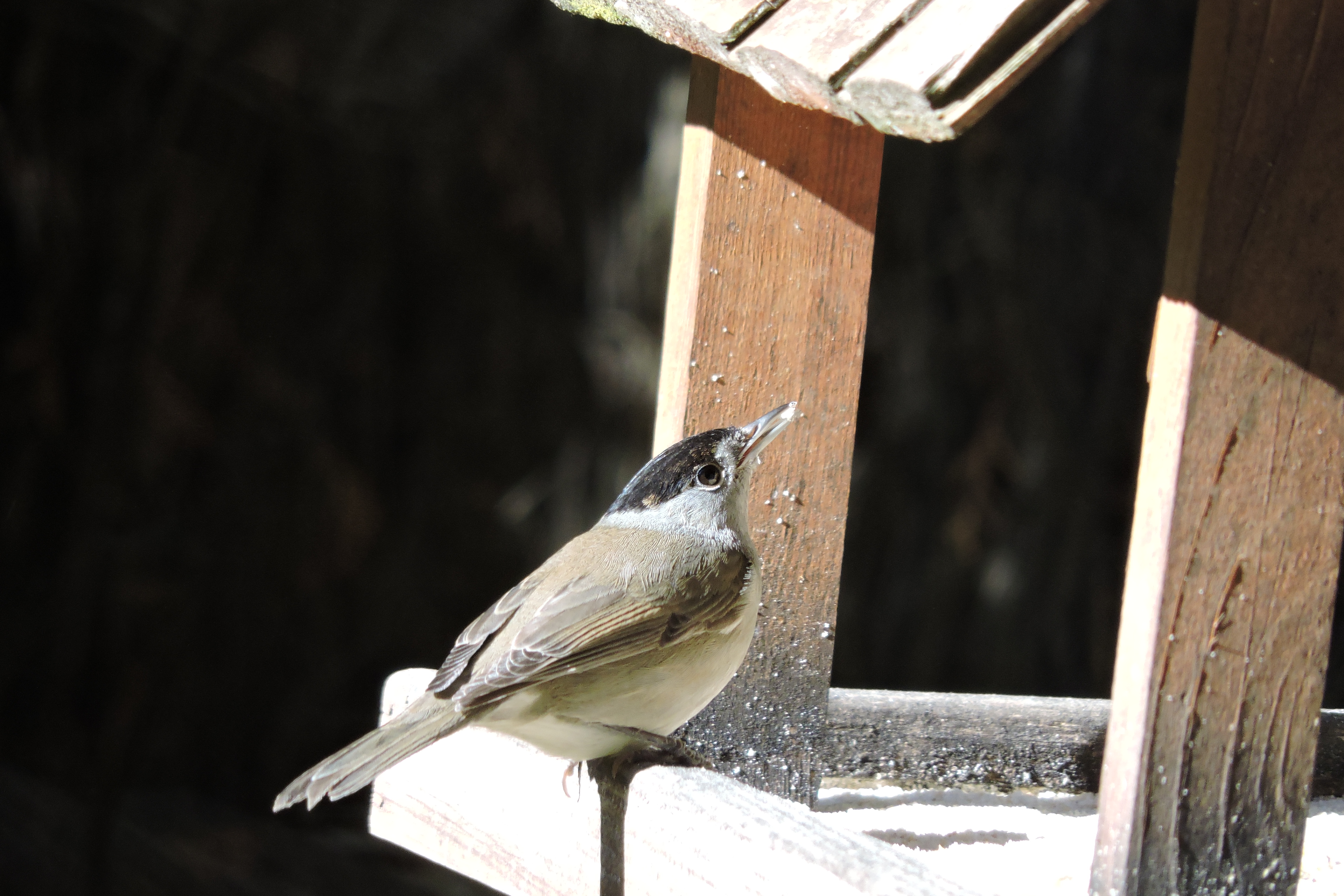
Blackcap at a homemade feeder, photo by Jose Luis Gallego
Garden centres and certain specialized stores usually carry a wide variety of bird feeders. We can also buy them online. The conservation organization SEO/BirdLife, which dedicates much of its work to the study and protection of wild birds and their habitats, has various models for sale at its online shop. We can also go the DIY route and build a feeder ourselves, using recycled household materials.
For example, we can reuse the cover of an old wooden wine case. All we have to do is attach simple boards at the corners, with glue or nails, to prevent the food from falling out. An even simpler option is to take several unshelled peanuts, run a wire through them, and hang the nutty garland from a branch or the balcony railing.
If we’re patient enough, we’ll attract blue and coal tits, two birds that find these particular nuts irresistible. It’s a lot of fun to watch them pick at the shell until they get to the treat inside, leaving behind a wire with empty dangling shells.
We can also form tallow into a ball and, using our fingers, drive in different kinds of seeds, almonds, walnuts or raisins. If we place it in a discreet spot and live near a city park or woodland on the outskirts, we might be lucky enough to spot a gorgeous robin or the equally magnificent wood nuthatch. In any case, we must always make sure to keep the feeder away from the menacing presence of cats, which will scare wild birds away.
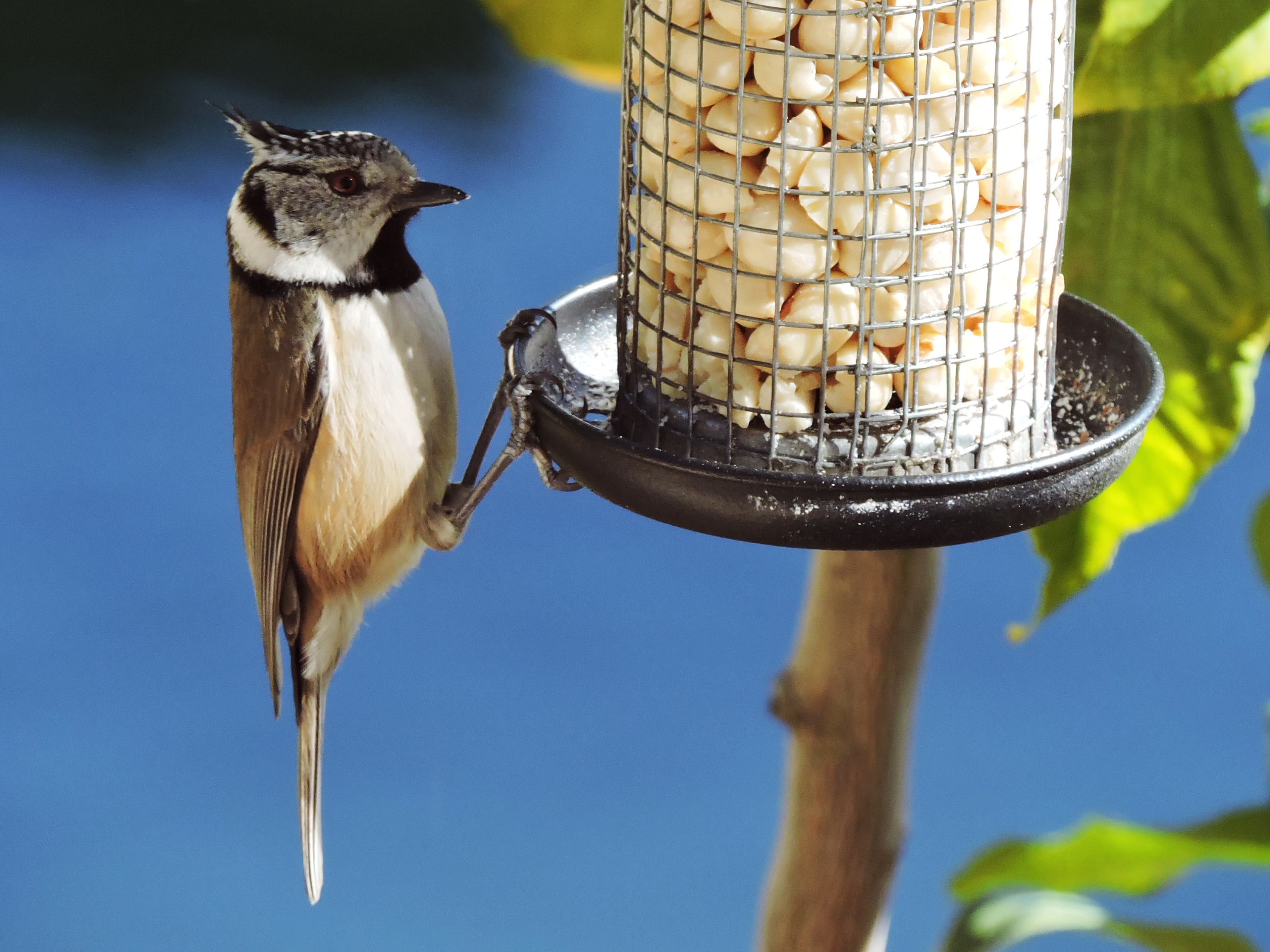
A crested tit, photo by Jose Luis Gallego
So, what should we put in our feeder? SEO/BirdLife reminds us that dry bread, pastries, and leftover processed foods are not recommended, because they contain additives that can alter the functioning of the birds’ delicate organism.
We should also avoid anything salty like fried or salted nuts, or anything with lots of sugar like leftover Christmas sweets. We must bear in mind that these birds are insectivores, and we are only helping them out sporadically to survive the winter, which means we shouldn’t get them accustomed to eating a type of food that isn’t good for them.
Oh! One very important thing: regardless of the type of feeder we use, we must wash it every so often to avoid spreading diseases caused by bacteria like Suttonella ornithocola. This type of contagion – completely harmless to humans and household pets – most often affects blue and coal tits, two of the most frequent visitors to bird feeders.