
The Vineyard Misses the Turtledoves

By Jose Luis Gallego, environmental communicator (@ecogallego)
When carrying out agricultural tasks in open farmland, especially in vineyards, workers usually enjoy abundant avian company. Wild birds in all shapes, sizes, and colours brighten the farmer’s workday with their song and joyful presence. From small passerine birds like sparrows, larks, and corn buntings to medium-sized birds like blackbirds, cuckoos, and the European turtledove – one of the most beautiful birds to grace our countryside.
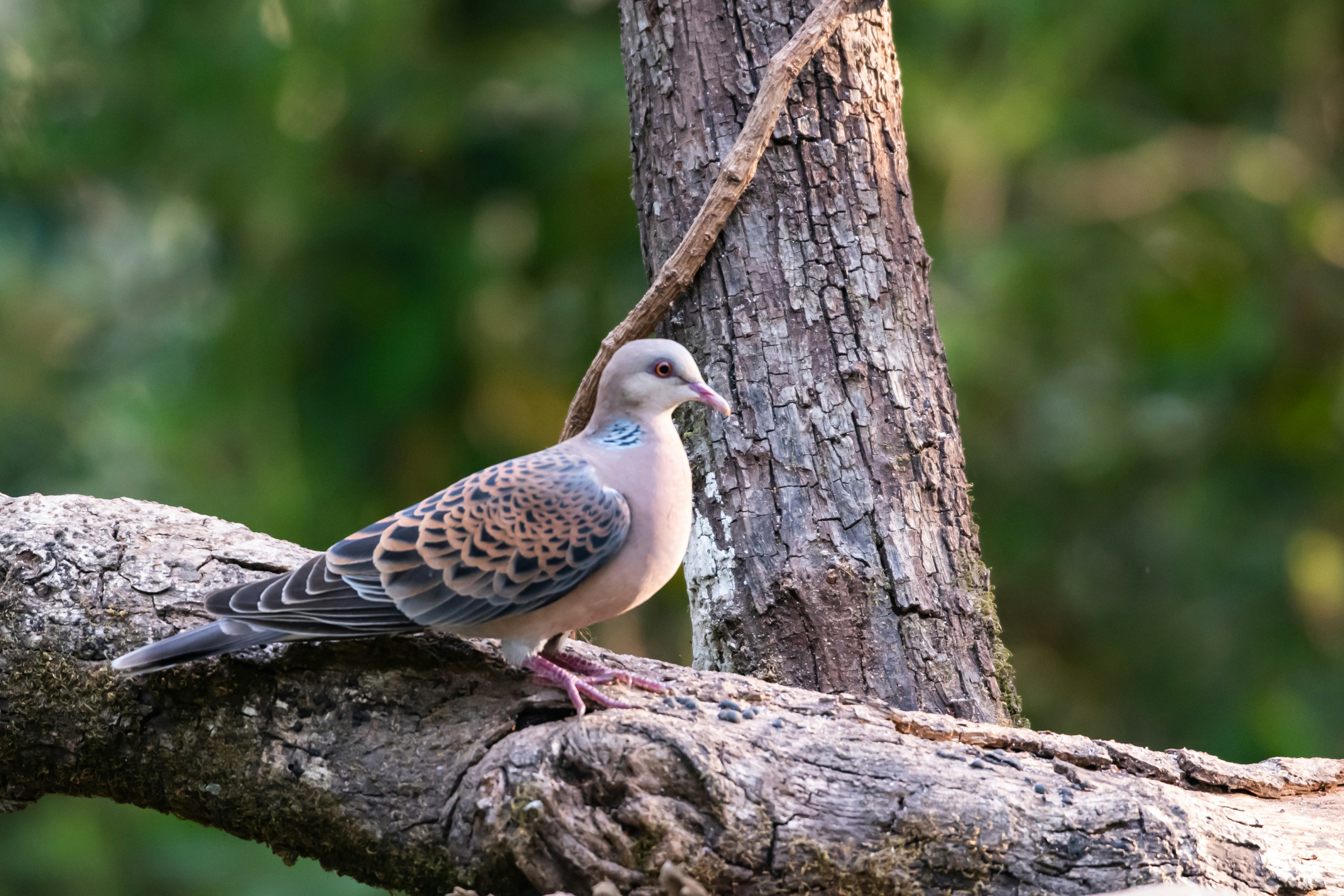
The European turtledove (Streptopelia turtur) is smaller and slenderer than a pigeon and sports far more extravagant plumage, with a spotted tiger-pattern on the wings offering a striking contrast to the rosy grey of the body. A distinctive mark resembling a small barcode on the side of its neck makes it easy to identify the turtledove. Very short legs and a sharp, narrow beak complete its physical attributes.
A European turtledove perched on a branch. The species, which has been traditionally linked to arable land, has seen a severe population decline in recent decades.
Exclusively tree-dwelling, the common turtledove (as it is also known) is fond of riverside groves and light woodland that opens around farmland, preferring them to dense forests. It also seeks out meadowland and city parks. Turtledoves are granivores, meaning they basically feed on seeds and wild berries. They communicate with a deep, soft cooing sound (rurrr-rurrr-rurr) that can be heard from a distance. They are 27 centimetres tall and weigh 140 grams.
Amateur ornithologists like me have witnessed the decline of this familiar species for some time. In the past, hearing their call or enjoying their beautiful presence was commonplace from March on, coinciding with their spring return to the Iberian Peninsula after spending the winter on the plains of Sub-Saharan Africa. Nowadays, however, seeing or hearing turtledoves is becoming increasingly rare.
A turtledove perched amid vegetation. The species seeks out these refuges to rest and feed in spring and summer.
According to the conservation group SEO/BirdLife, turtledove populations have decreased almost 75% in the past 25 years. One of the primary causes of this decline has been the change in how agricultural land is used, bringing about an alteration in the species’ traditional habitat.
Over the past decades, the traditional arable landscape, once littered with scrubland and groves edging the fields, has given way to a far less biodiverse environment where vast, uniform expanses of monocultures, devoid of wild flora, predominate. This is a much more industrialized agricultural model that resorts to more agrochemicals, including neonicotinoid pesticides – the same ones linked to declines in bee populations also have a devastating impact on wild birds.

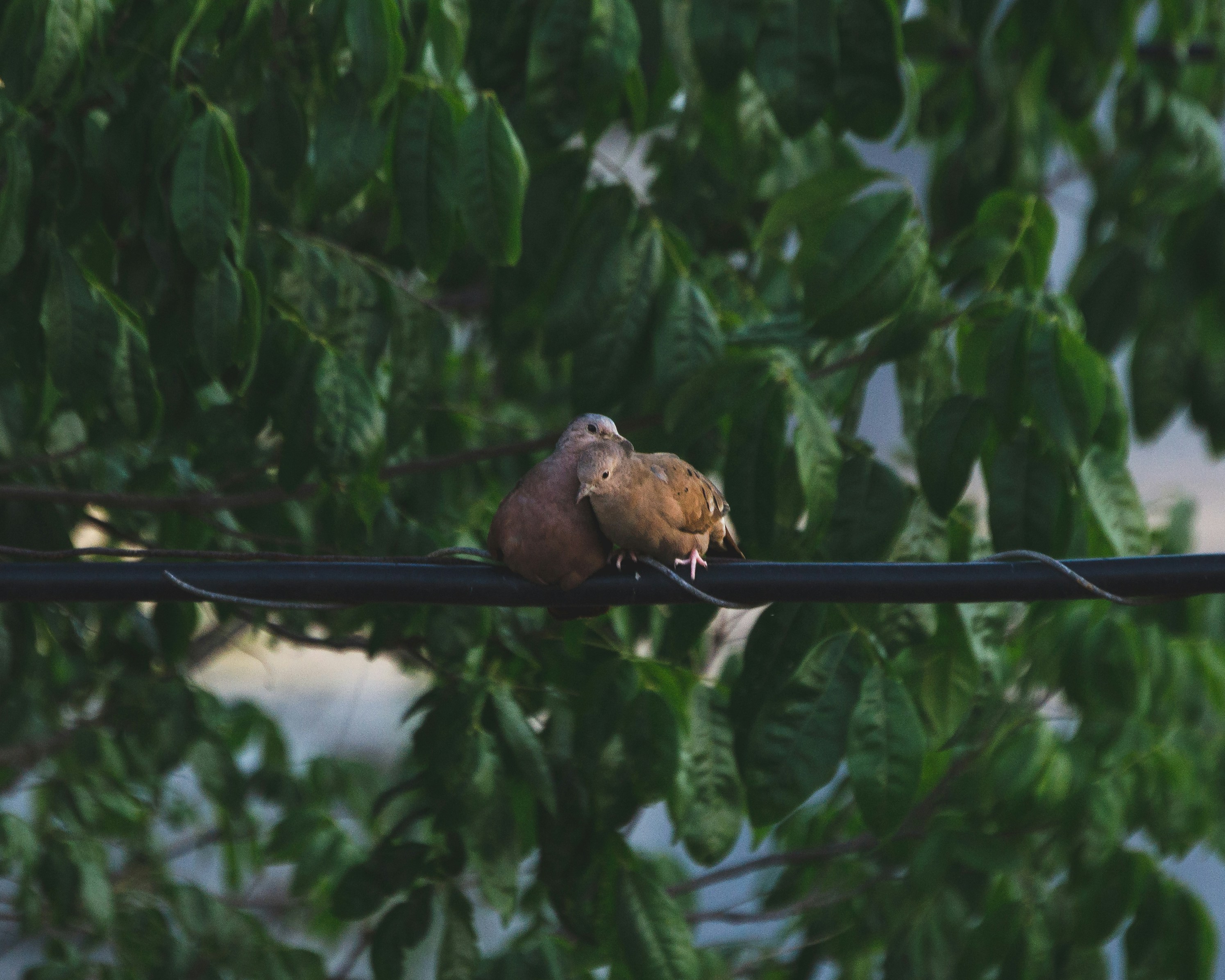
A pair of turtledoves perched on a branch
Another factor related to the decline of the European turtledove is the high hunting pressure this species has been subjected to in our country, with seasons in which more than half a million individuals were killed. The situation was so clearly unsustainable that, in response to warnings from ornithologists and the scientific community, a Europe-wide moratorium on its hunting was approved in 2018. In Spain, the moratorium took effect in 2021, and its impact was almost immediate, with a clear rebound in populations. This was true until 2025, when turtledove hunting was once again allowed, disregarding all scientific evidence.
In addition, the decline of the European turtledove has coincided with the arrival of a closely related competitor, another dove species that reached our rural areas in the 1970s and gradually managed to install itself in the same territories: the Eurasian collared dove (Streptopelia decaocto).
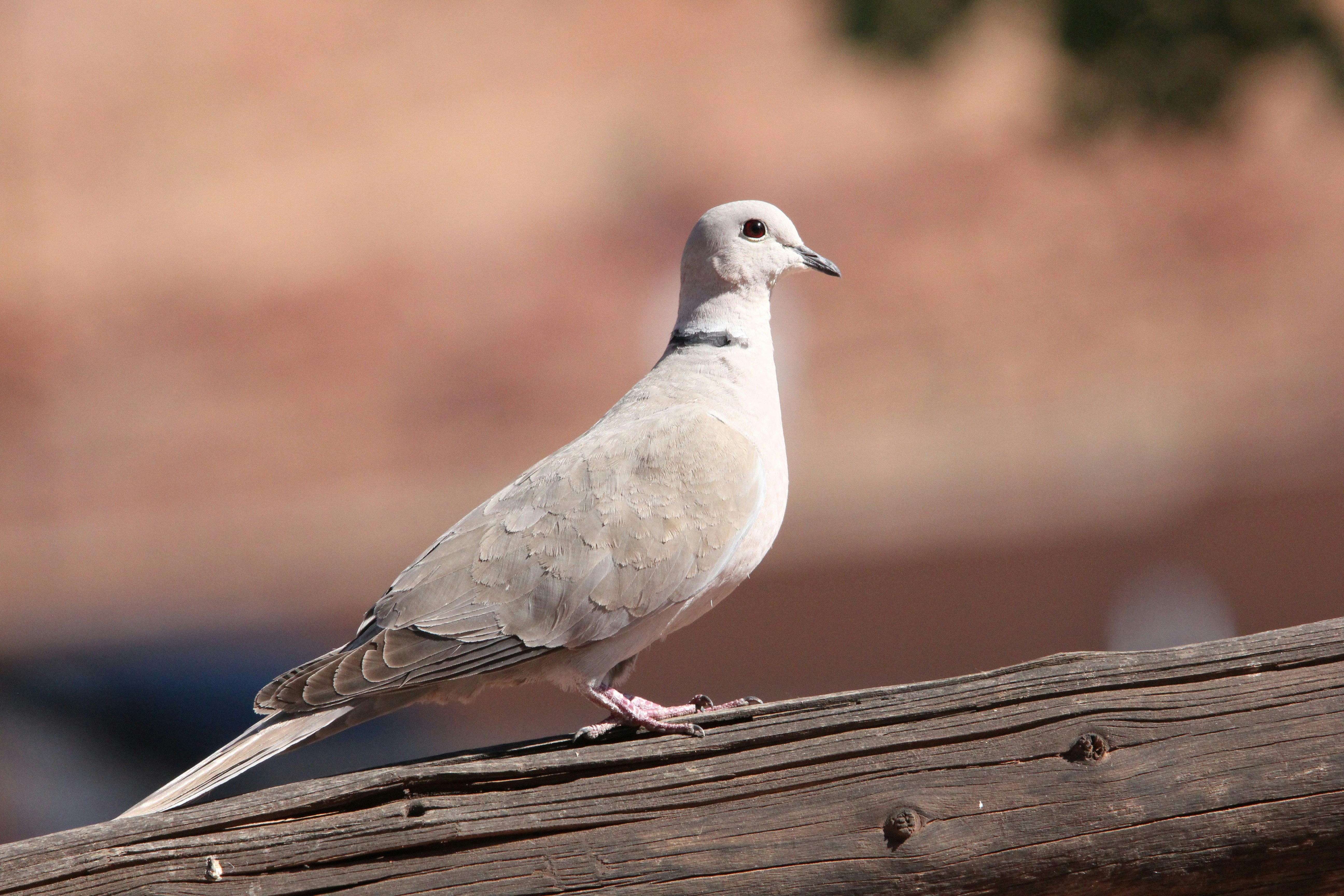
A collared dove resting in an urban space. This exotic species spread rapidly, and it is now common in cities and villages.
Native to Asia and the Middle East, this invasive species is also slender, slightly larger, with far more uniform plumage: brown-grey with pale pink nuances. Another way to distinguish it from the turtledove is to look at the neck markings: a single black stripe rather than a “barcode”.
Highly adaptable, the species has spread across all of Europe in barely half a century, with far more abundant populations compared to the indigenous dove species in rural and urban areas on the Iberian Peninsula, Balearic and Canary Islands.
To help restore the European turtledove and make its presence in the countryside as common as it once was, SEO/BirdLife is calling for it to be removed from the list of game species and declared a protected species. The petition has the support of the scientific community. It’s worth remembering that the European turtledove is currently listed as “vulnerable” in the Libro Rojo de las Aves de España 2021 (“Red Book of Birds of Spain 2021”, a conservation assessment that evaluates the extinction risk of bird species), but is not included in the Catálogo Nacional de Especies Amenazadas (National List of Threatened Species), Spain’s legal register of at-risk plant and animal species.
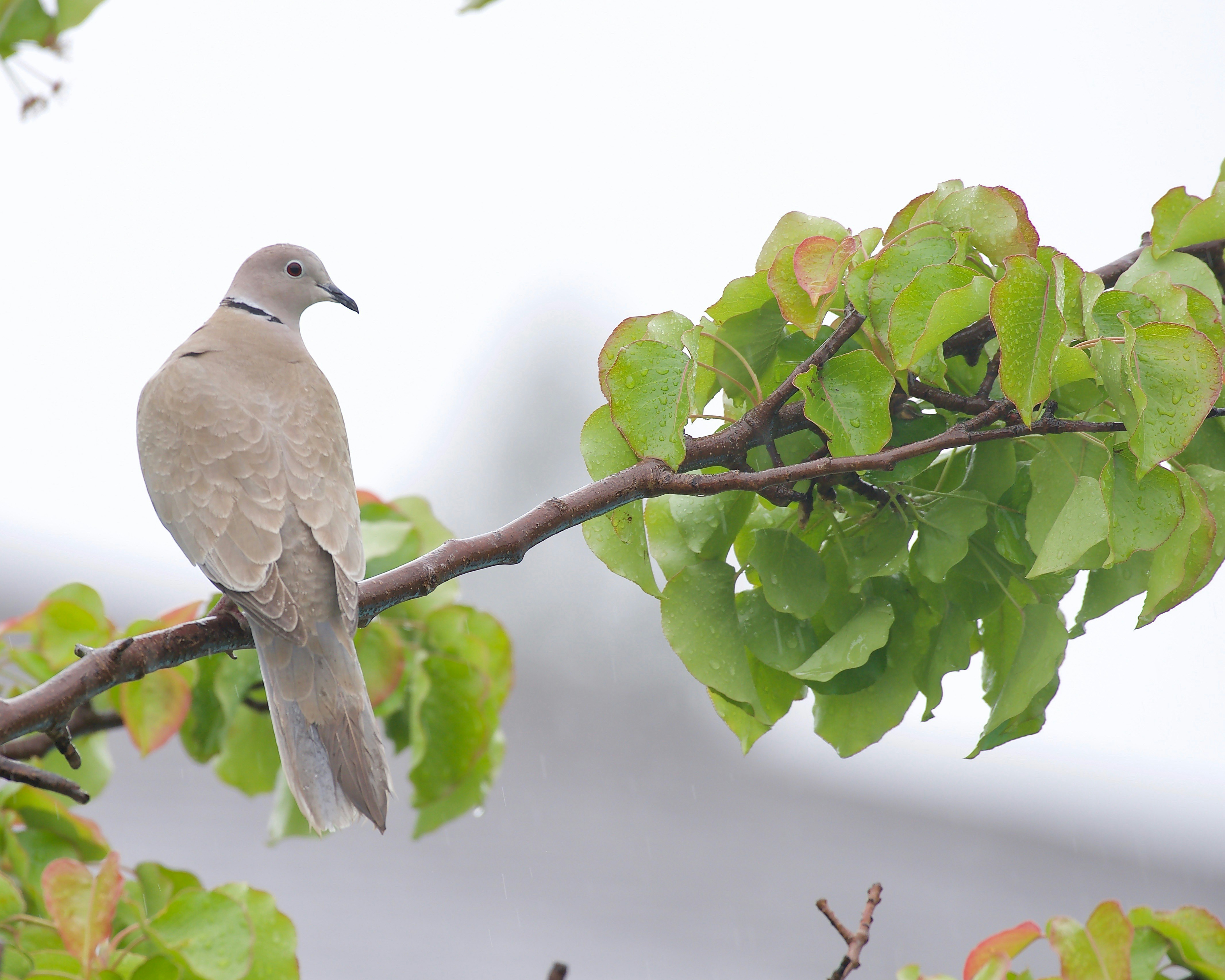
European turtledove in the vicinity of a vineyard. These traditional landscapes provide food and shelter for several farmland birds.