
The vineyard: an ally against wildfires
By Jose Luis Gallego. Environmental communicator (@ecogallego)
Scientists studying how the climate crisis is developing warn that increasingly extreme and prolonged heatwaves, combined with ever more severe and frequent droughts, have become one of the greatest threats facing the world’s forests.
The threat is particularly acute in the Mediterranean region, where, as we are seeing, climate models are pointing towards the most alarming and least favourable scenarios. Under these conditions, forest ecosystems will become highly vulnerable to wildfires and the spread of pests.
Wildfires in southern Europe are becoming increasingly dangerous and destructive. The flames are spreading through ever drier and less healthy forests where woodland management has been abandoned, and plant matter continues to accumulate, providing fuel for fires.
As a result, and as we are unfortunately seeing this summer, wildfires are becoming increasingly fierce and difficult to extinguish, posing a greater risk to the population and dramatically increasing the number of hectares affected by fire.
Beyond the effects of climate change, however, conservation organisations also identify rural abandonment, the lack of sustainable forest management and the decline of traditional farming and livestock-rearing as major causes of large wildfires.
When traditional farming practices disappear, so to do mosaic landscapes: mixed areas of farmland and forest that break up the countryside and, as well as supporting rich biodiversity, act as natural barriers to the spread of fire.
Wildfire prevention experts are therefore calling for these agroforestry mosaics to be restored and expanded, creating open areas between the vast expanses of scrub and woodland spreading across abandoned land.
This requires support for extensive livestock farming and traditional crops such as vines. Beyond their considerable productive value, vineyards act as natural firebreaks, slowing the spread of wildfires and helping ground crews to extinguish them.
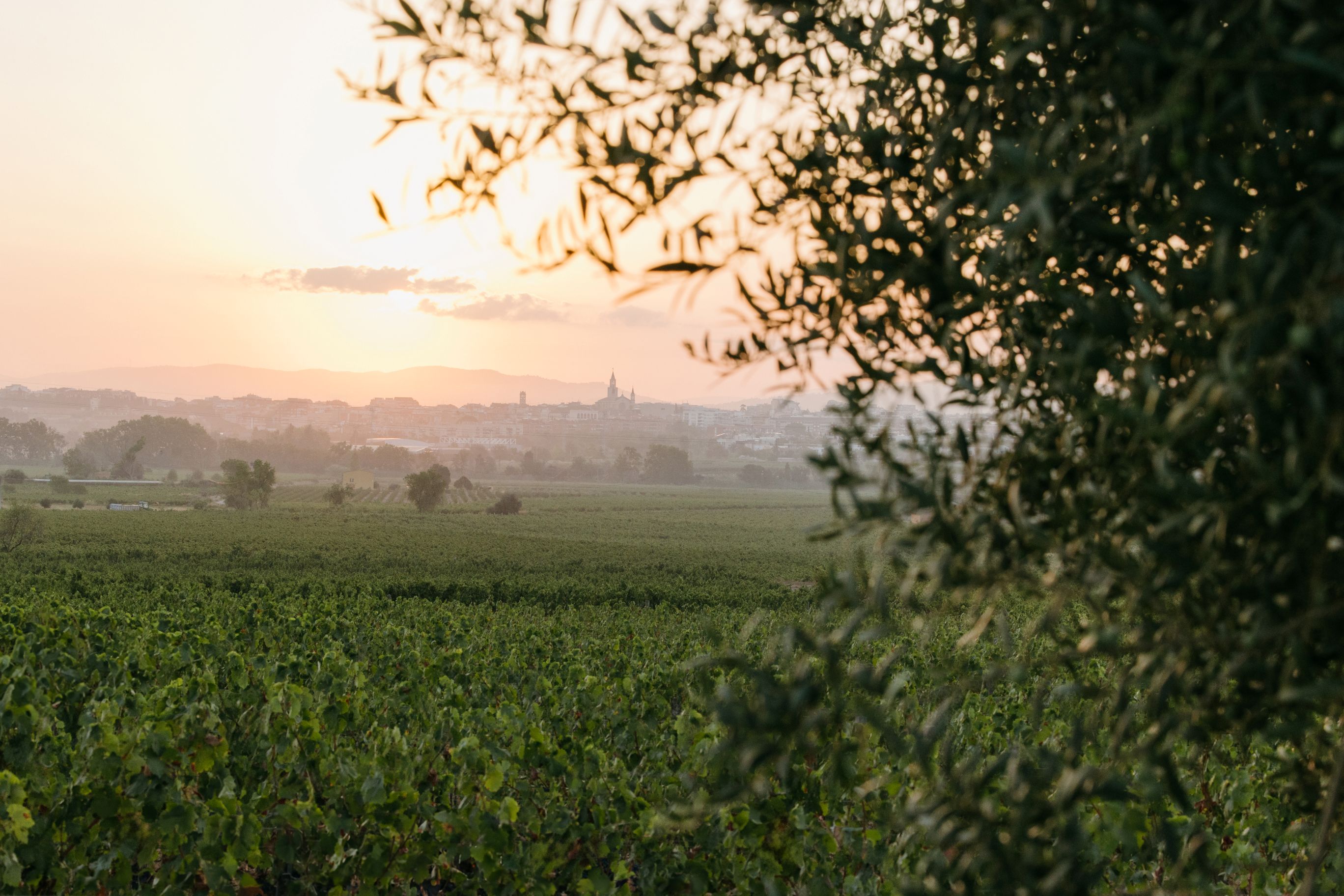
Vineyard in the Penedès
A recent study published in the journal Science, involving researchers from the Centre for Ecological Research and Forestry Applications (CREAF), warns that unless we significantly reduce the greenhouse gas emissions driving climate change, almost 90% of forests in the Mediterranean region could be affected by the spread of large wildfires and forest pests.
Dr Josep María Espelta, a CREAF researcher and one of the study’s authors, has no hesitation in warning that the abandonment of traditional farming and livestock-rearing is one of the main reasons why our forests are now so vulnerable. ‘The mosaic landscape that once hindered the spread of wildfires no longer exists’, notes this respected scientist, ‘so the flames encounter fewer and fewer obstacles in their path’.
Supporting extensive livestock farming and traditional crops such as vines would help mitigate the damage caused by wildfires. For this reason, both agricultural organisations and conservation groups stress the need to recognise the value of the work carried out by farmers and shepherds. They are calling on public authorities to provide support for traditional rural occupations and extensive livestock farming.
As well as strengthening local economies and helping to address the demographic challenge, this would curb the uncontrolled expansion of forests and restore the mosaic landscapes that shape the traditional agricultural countryside. This highly productive ecosystem helps bind the area together and, as well as supporting rich biodiversity and sustaining rural populations, is one of our greatest allies against wildfires.