Tradition and Innovation, Eight Wines to Understand the Evolution of Familia Torres
By Laura Conde, wine writer
Tradition isn’t at odds with evolution. Quite the contrary. Having in-depth knowledge of each region, of the varieties and history are precisely what is needed to innovate meaningfully and bring a legacy into the future. This notion provided the through line for a tasting-conference led by Mireia Torres, Innovation and Sustainability Director at Familia Torres, and sommelier Sergi Castro at the Barcelona Wine Week 2026.
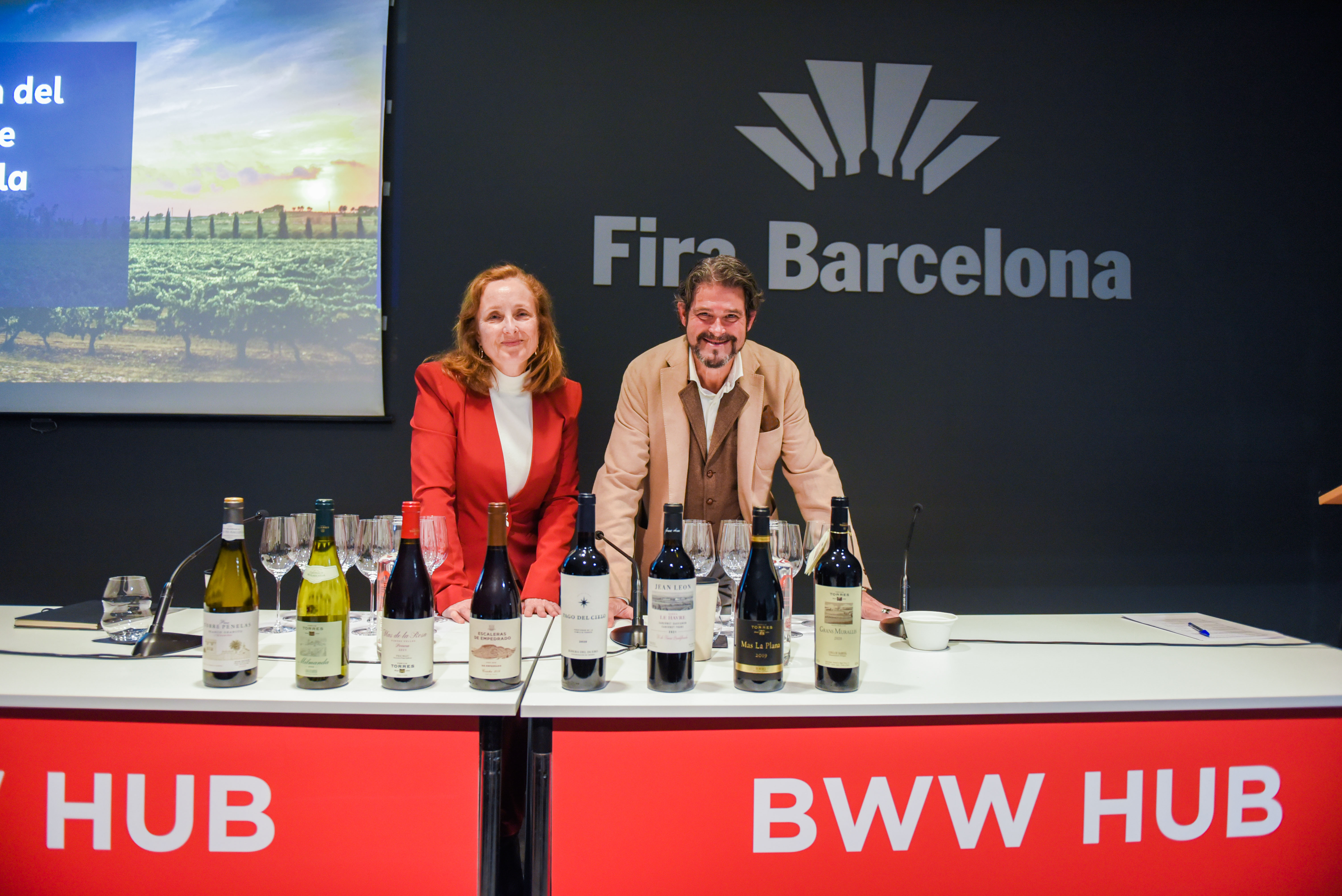
Mireia Torres and Sergi Castro during the tasting at BWW
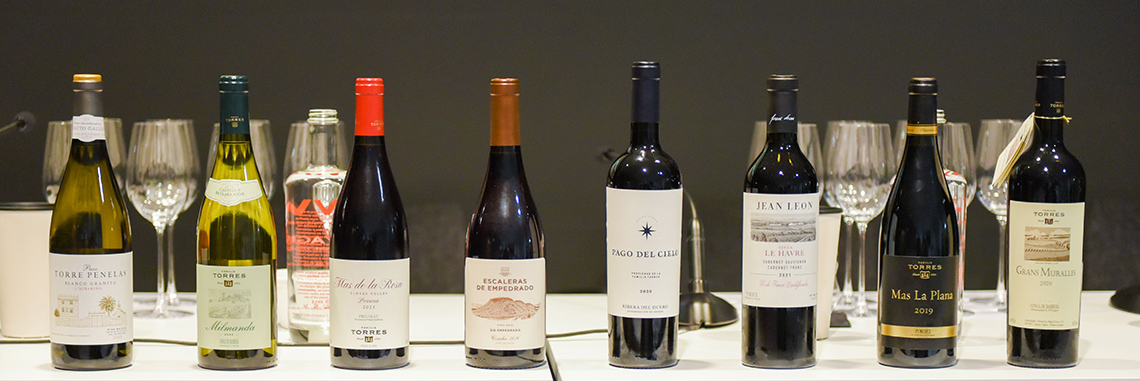
Entitled Evolving a Legacy Through Respect and Innovation, the event featured a tasting of eight of the house’s flagship wines from eight different regions. The wines reflect eight ways of understanding innovation as something that doesn’t break with the past, but interprets, updates, and adapts it to changing times. “All of these wines show the success of a generational transition, those incredible moments when a previous generation acknowledges that the next one has surpassed it,” stated Castro.
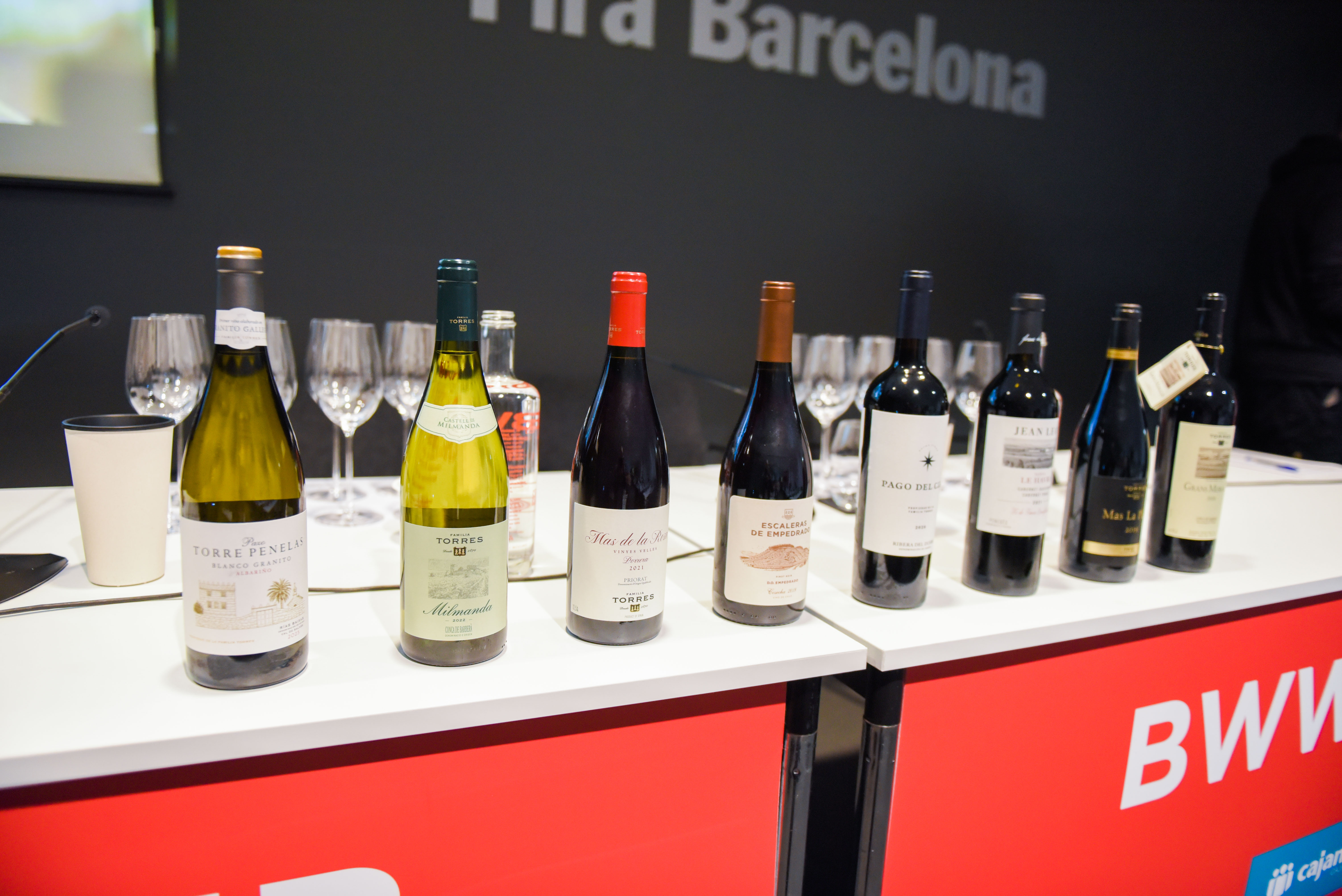
The wines featured in the tasting
Blanco Granito 2023 – Rías Baixas
The journey began far from Penedès in the Valle de Salnés in Rías Baixas. Blanco Granito originates from a pazo – a Galician estate – from the 14th century, nestled amid six hectares of vineyards and symbolizing Familia Torres’s commitment to exceptional enclaves beyond Catalonia. It is the first Albariño fermented in egg-shaped granite vats, which reinforce its identity and cellaring potential. Fresh, friendly, and straightforward, the wine bears the distinctive signature of the Rías Baixas climate. “Compared to Penedès, the rainfall here is exciting,” joked Mireia Torres.
Milmanda 2022 – Conca de Barberà
For Sergi Castro, Milmanda “is one of our country’s great Chardonnays, one of the most prestigious long-aged wines.” Located in a spectacular setting and presided over by a medieval tower, this gorgeous estate in Conca de Barberà represents the shift from purchasing grapes to committing to winery-owned vineyards in the 1970s, born from a desire for full quality control. Elegant and refined, the white reveals noticeable yet always well-integrated oak. Furthermore, the use of selected yeasts contributes to its creaminess and cellaring potential.
Escaleras de Empedrado 2018 – Chile
The tasting tour also made a stop in the southern hemisphere, in a cold region a few kilometres from the Pacific Ocean. Escaleras de Empedrado hails from Manso de Velasco, the oldest and most productive Pinot Noir vineyard in Chile. The initial idea was to emulate the profile of Priorat wines, but the differences in soil and climate ultimately led the winemakers to decide on Pinot Noir. The resulting wine is delicate, silky, and elegant, revealing great aromatic finesse. In 1979, Familia Torres became the first foreign winery to establish a foothold in Chile.
Mas de la Rosa 2021 – Priorat
Returning to the Mediterranean, Mas de la Rosa is a project initiated by the family’s fifth generation, representing the essence of Priorat at its most authentic. The Garnacha and Cariñena vines are very old – 80-plus years – and grow on steep slopes. Intervention in the winery is kept to a minimum to respect and elicit the truest expression of every vine. An iconic wine of great depth and length, Mas de la Rosa offers a clear interpretation of the precipitous landscape it calls home.
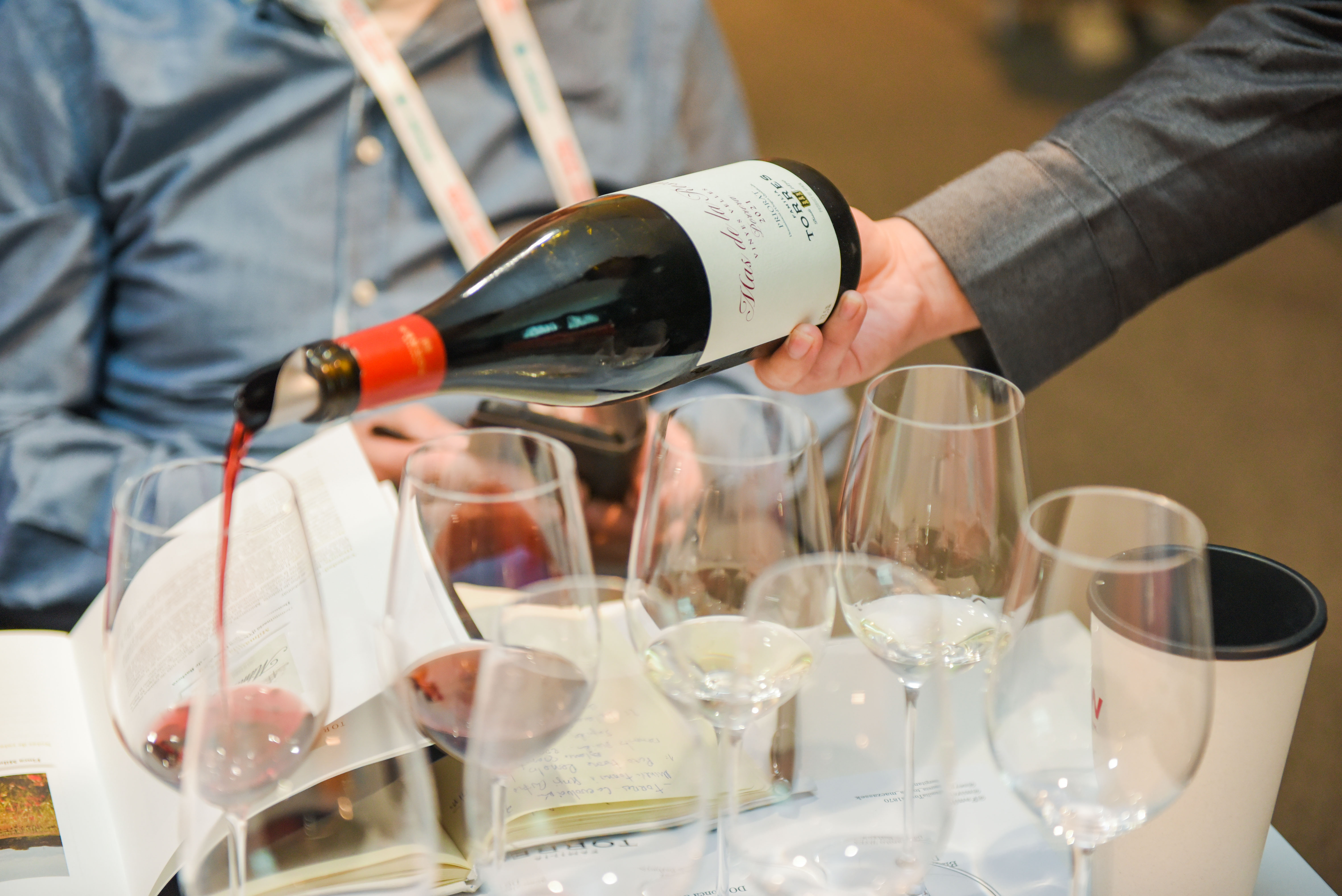
Mas de la Rosa
Pago del Cielo 2020 – Ribera del Duero
In Ribera del Duero, Familia Torres sought to replicate the philosophy it had already applied in Priorat: to identify old vineyards with great potential and make them the cornerstone of the winemaking project. According to Sergi Castro, Pago del Cielo is “a trend-setting wine in Ribera del Duero, emphasizing varietal expression over oak ageing”. The result is an elegant, fresh, concentrated Tempranillo with a more refined profile than is common for the region, true to the Familia Torres style.
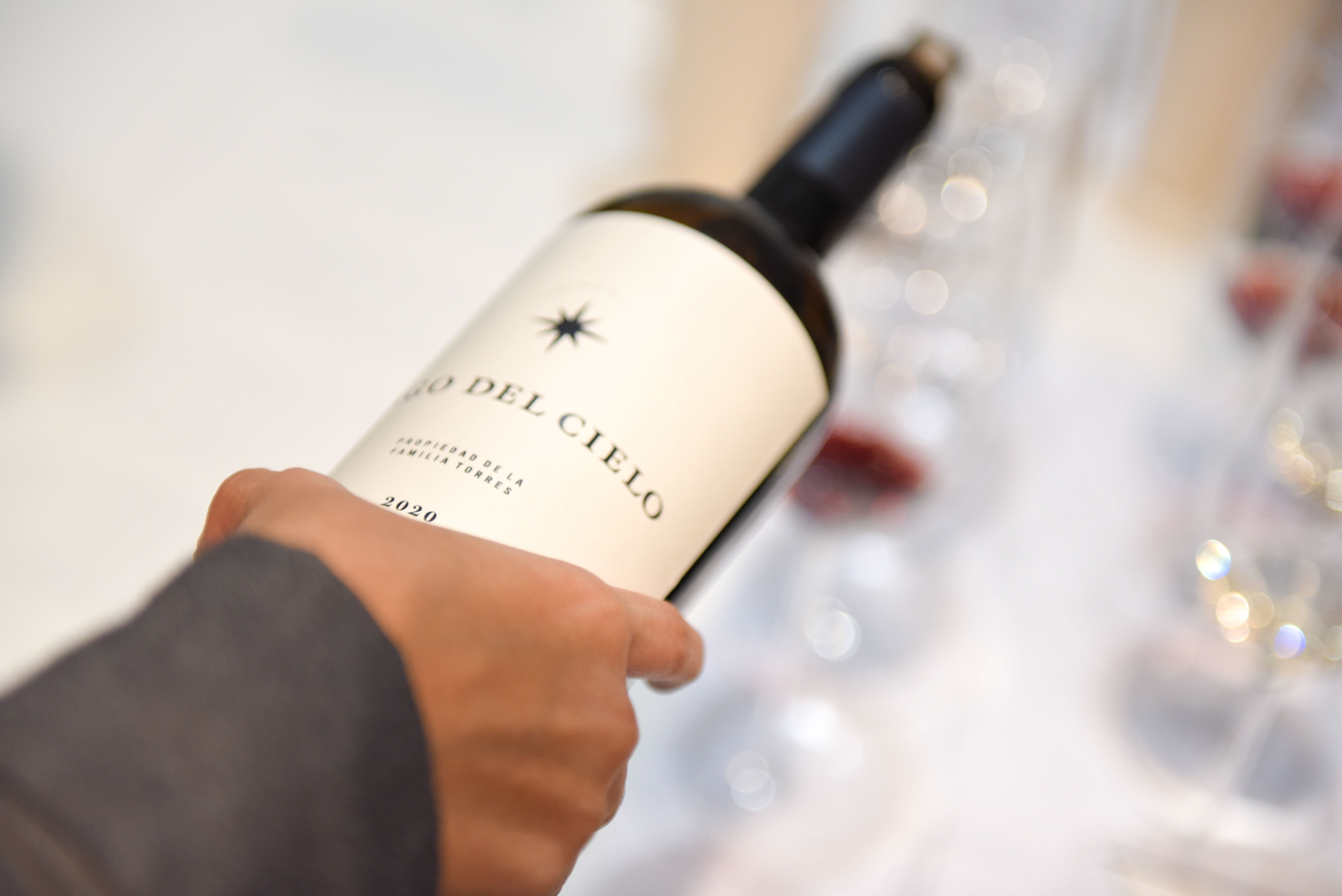
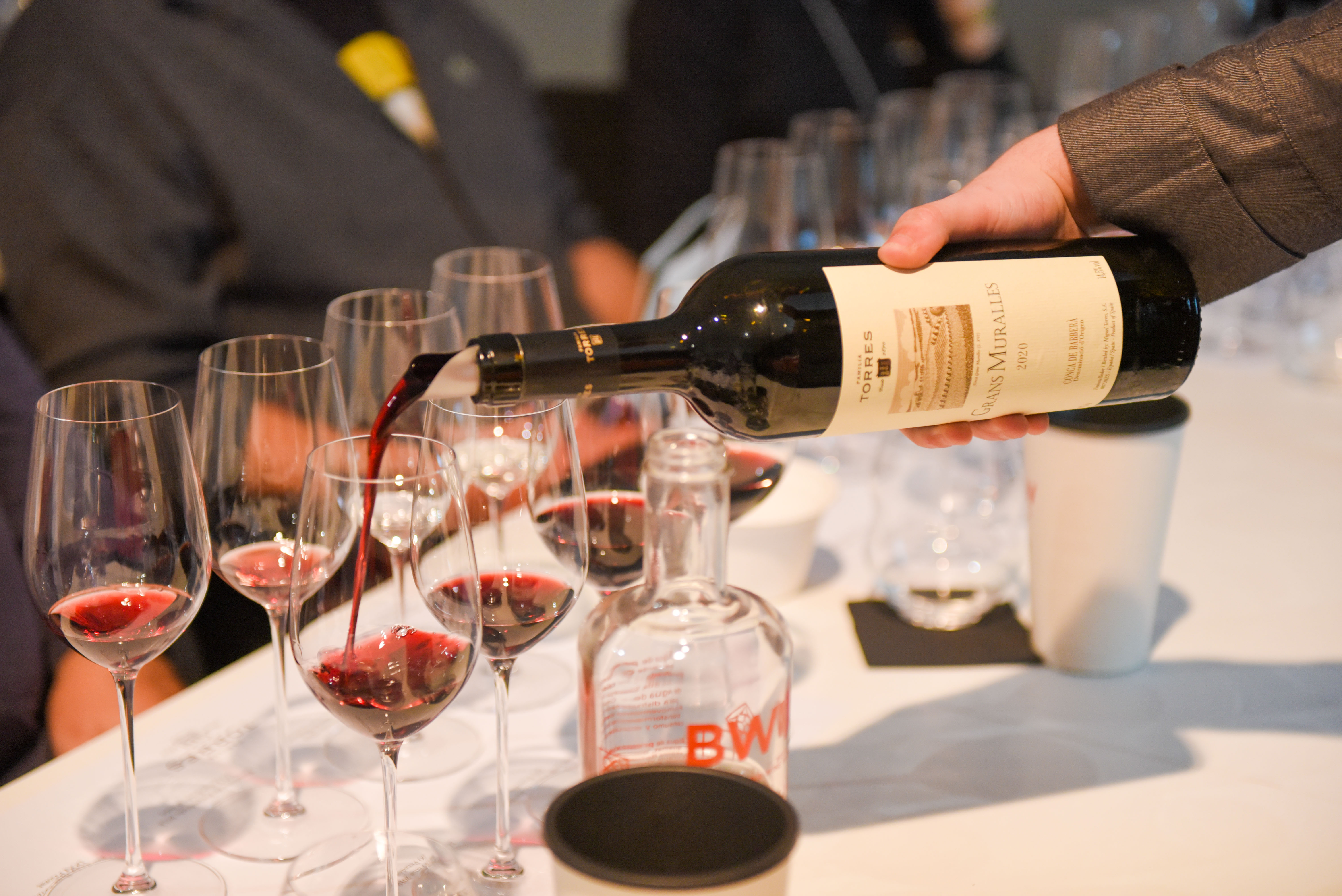
Serving Pago del Cielo to tasting participants
Jean Leon Vinya Le Havre 2021 – Penedès
Made from Cabernet Sauvignon and Cabernet Franc, Vinya Le Havre shows that the legacy of Ceferino Carrión (a Santander native better known as Jean Leon who fell in love with Penedès) is more alive than ever. In the hands of Familia Torres, the percentage of Cabernet Franc has gradually risen – up to 37% – given the variety’s freshness, balsamic notes, and resilience in terms of climate change. Although it deviates from the classic Bordeaux blend, the wine has a refined profile and proves that Penedès is also capable of producing great reds.
Mas La Plana 2019 – Penedès
Few wines are as symbolic of the winery’s nonconformist spirit than Mas La Plana. “The best Mediterranean Cabernet Sauvignon there is,” insisted Sergi Castro during the tasting. Mireia Torres recalled the historic triumph of the wine during a blind tasting in Paris in 1979, a milestone that marked a before and after. The 2019 vintage, an especially good year for reds, reinforces its well-structured, elegant character. “Every generational transition needs its rebels,” remarked Castro, alluding to what it took to make a Cabernet Sauvignon in Penedès in those days.
Grans Muralles 2020 – Conca de Barberà
The session concluded with Grans Muralles, one of the winery’s great Mediterranean wines and emblematic of the project to recover ancestral varieties, begun by Miguel Torres in 1980. The blend combines Cariñena, Garnacha, Monastrell, Querol, and the ancestral Garró, brought back from oblivion after years of research. A complex wine with a wholly original identity, Grans Muralles reflects Familia Torres’s environmental commitment. For good reason, Time magazine recognized Miguel A. Torres as one of the 100 most influential individuals in the fight against climate change.