
The Tawny Owl and Summer Nights in the Vineyard
By Jose Luis Gallego, environmental communicator (@ecogallego)
On summer nights, the woodlands around the vineyards provide the ideal setting to hear one of the most unique calls in all Iberian bird life.
A distinct and powerful tiuuuu/ tiuuuu/ tiuuuu, often compared to the familiar sound of submarine sonar and repeating in much the same way, resounds at almost exact intervals for hours on end.
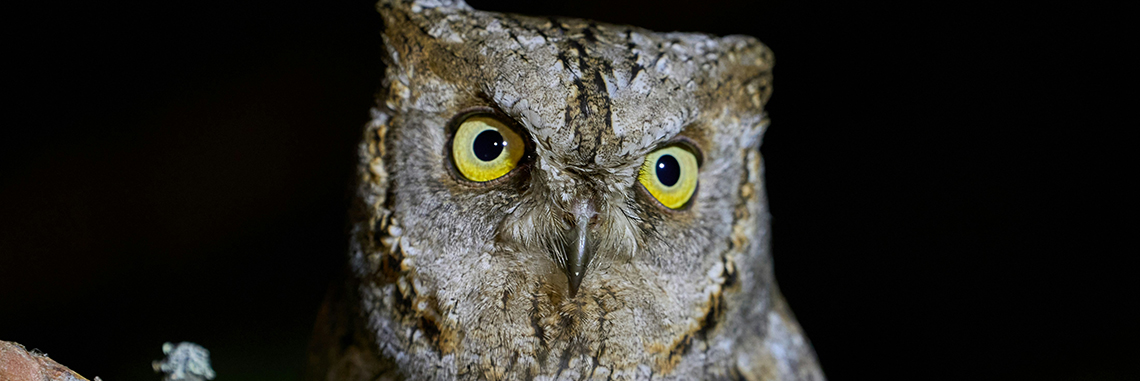
The source, however, of this short, crisp whistling sound – both sharp and mournful – emitted every two seconds in the dead of night is actually a wild bird: the European tawny owl, the smallest of our nocturnal raptors.
Officially a migratory species, the tawny owl used to arrive in our fields in early April and return to its wintering grounds in Sub-Saharan Africa at the end of August. Climate change, however, is changing these migratory patterns, and increasing numbers of Iberian tawny owls are becoming sedentary.
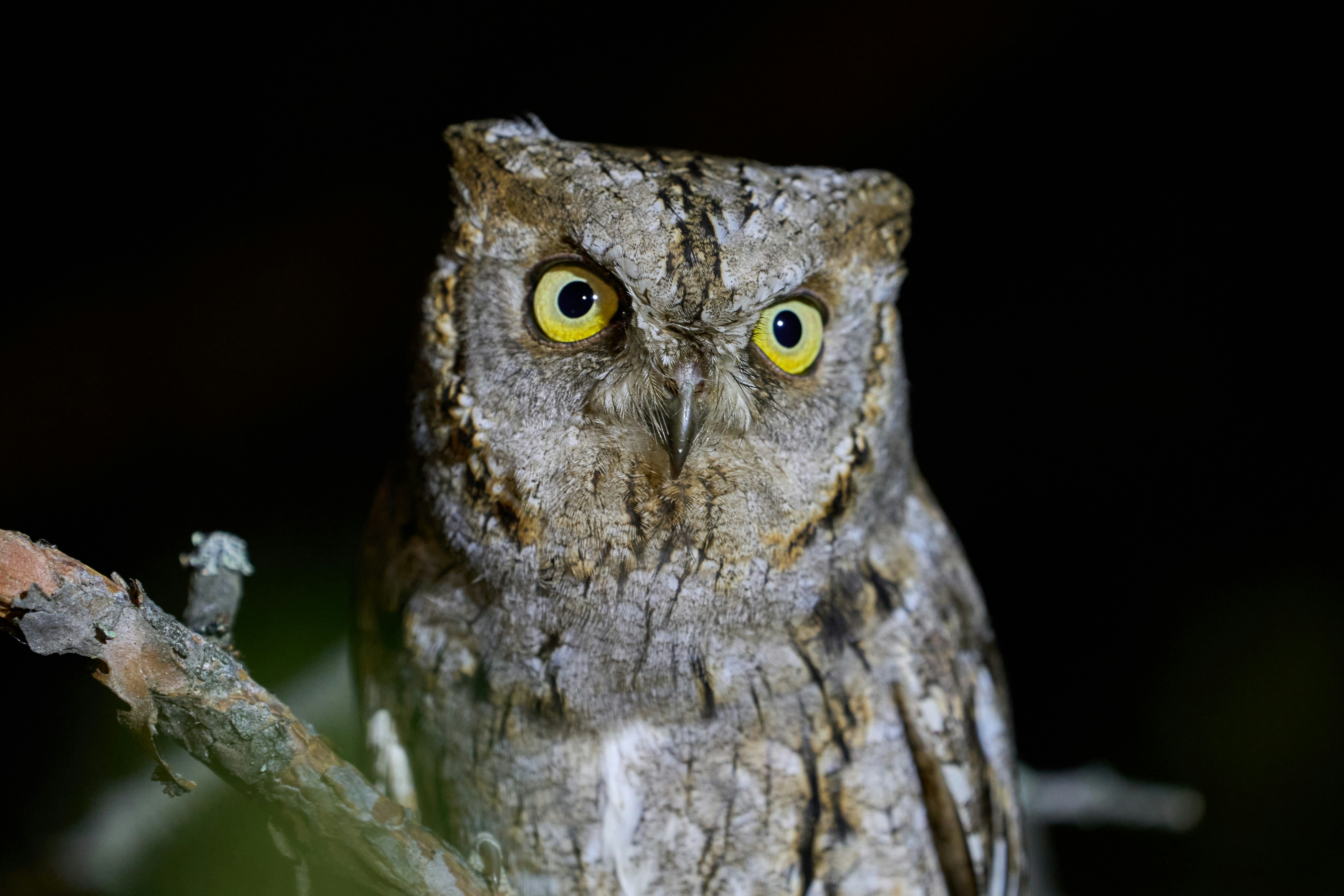
European tawny owl
Well distributed across mainland Spain and the Balearic Islands, the tawny owl is an exclusive woodland dweller, although it is rarely found in deep, dense forests or at elevations above 1000 metres. Instead, these birds prefer open woodlands around farmland, olive groves, meadows, white and black poplar groves, and other gallery forests.
In all these places, the call of the male owl can be heard constantly throughout the breeding period, either to mark territory or to attract females, which also sing, but do so with far less intensity.
Tawny owls are also commonly heard in parks and gardens located on the outskirts of cities and villages where their call gives rise to curious anecdotes among residents and visitors. If you are wondering why we keep talking about “hearing” the tawny owl, this is because seeing one is extremely rare.
Only the bird’s distinctive call denotes its presence, because this small nocturnal raptor is one of the most difficult species to spot in the wild. This is due to its cryptic plumage, composed of ochre, ash-grey, cream or tawny hues, finely brushed with brown speckles.
Tawny owls can change their appearance at will, adapting these hues to exactly simulate the colouring of the bark of whatever tree they happen to be on. This astounding ability to blend into their surroundings allows the tawny owl to hide from its predators in plain sight, as well as evade the curious gaze of people drawn to its call.
Not only does the owl possess this sophisticated evolutionary tool, but it is also small in size – no bigger than a blackbird, albeit much more elongated and vertical in stature – and habitually spends hours and hours perched on a branch without moving a single feather, therefore guaranteeing its invisibility.
Despite rarely seeing them, farmers and especially winegrowers welcome the company of these invisible birds, because they know that tawny owls are a powerful ally in controlling pests. The diet of these raptors essentially consists of insects and rodents that pose a threat to the vineyard. In fact, many winegrowing estates install nesting boxes to attract tawny owls.
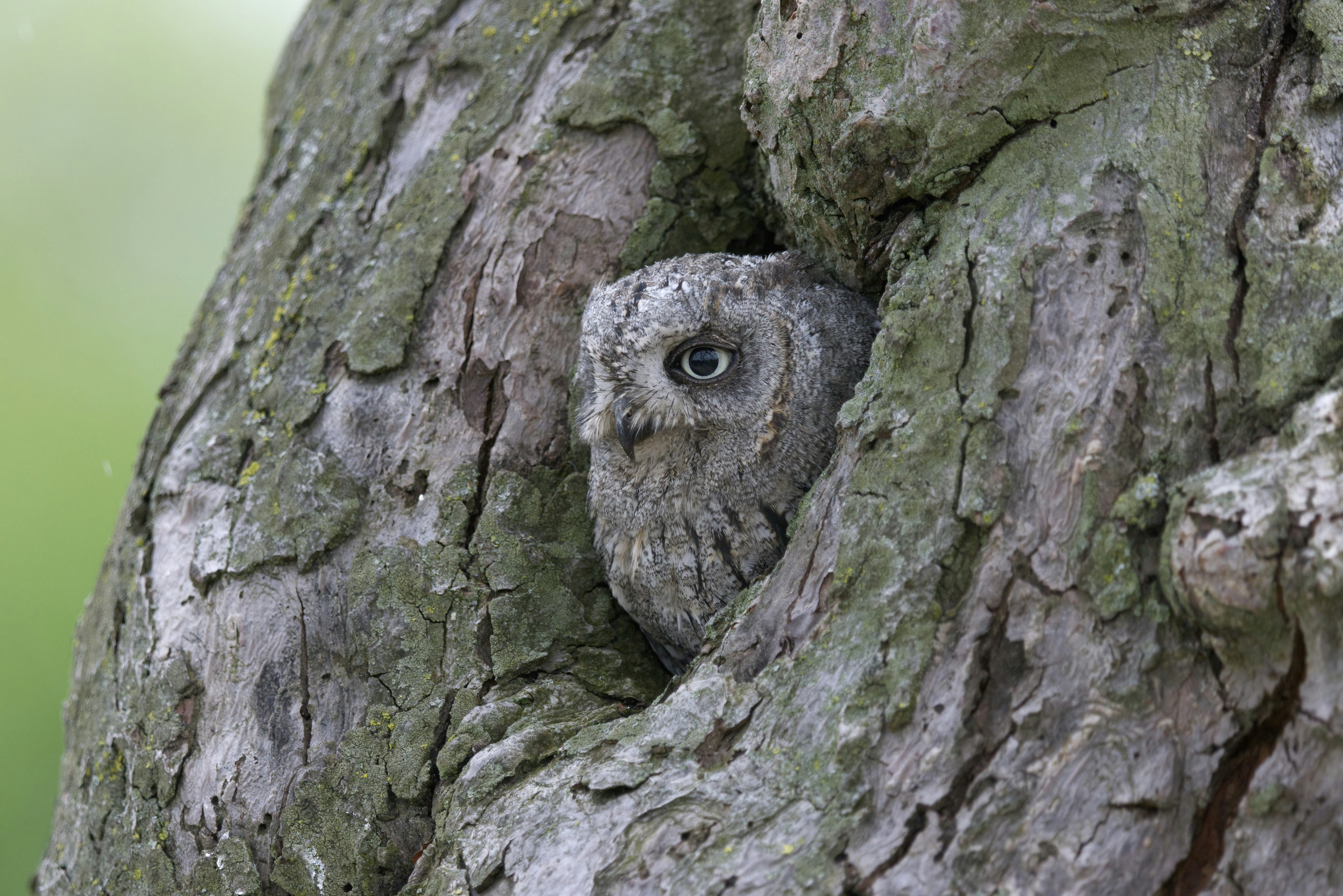
A tawny owl
Unfortunately, the proliferation of large-scale monocultures and the abuse of pesticides are decimating tawny owl populations, which have decreased by over 30% in the past twenty years. Therefore, this protected species is listed as “vulnerable” in the Libro Rojo de las Aves de España (Red Book of Birds of Spain) and is included in the List of Wild Species under Special Protection (LESPRE).