
A GUIDE TO STORING AND SERVING WINE AT HOME
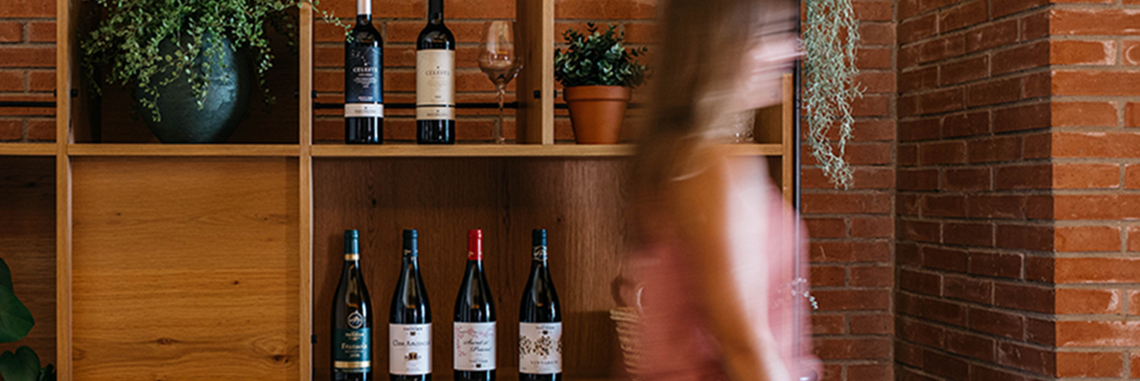
Tips for a Perfect Sensory Experience
Storage and Service
Deciding to store and preserve wines at home pursues two goals: first, keeping wines we plan to open soon in optimal condition, and second, creating a restful sanctuary for our most age-worthy bottles.
Three factors determine the perfect storage conditions: location, hu-midity, and temperature. Obviously, the majority of homes do not have an underground cellar in which to shelter prized bottles be-tween thick stone walls. Instead, most of us will need a different solu-tion — ideally a north-facing room that is well-insulated from the out-side. If it is windowless, even better.
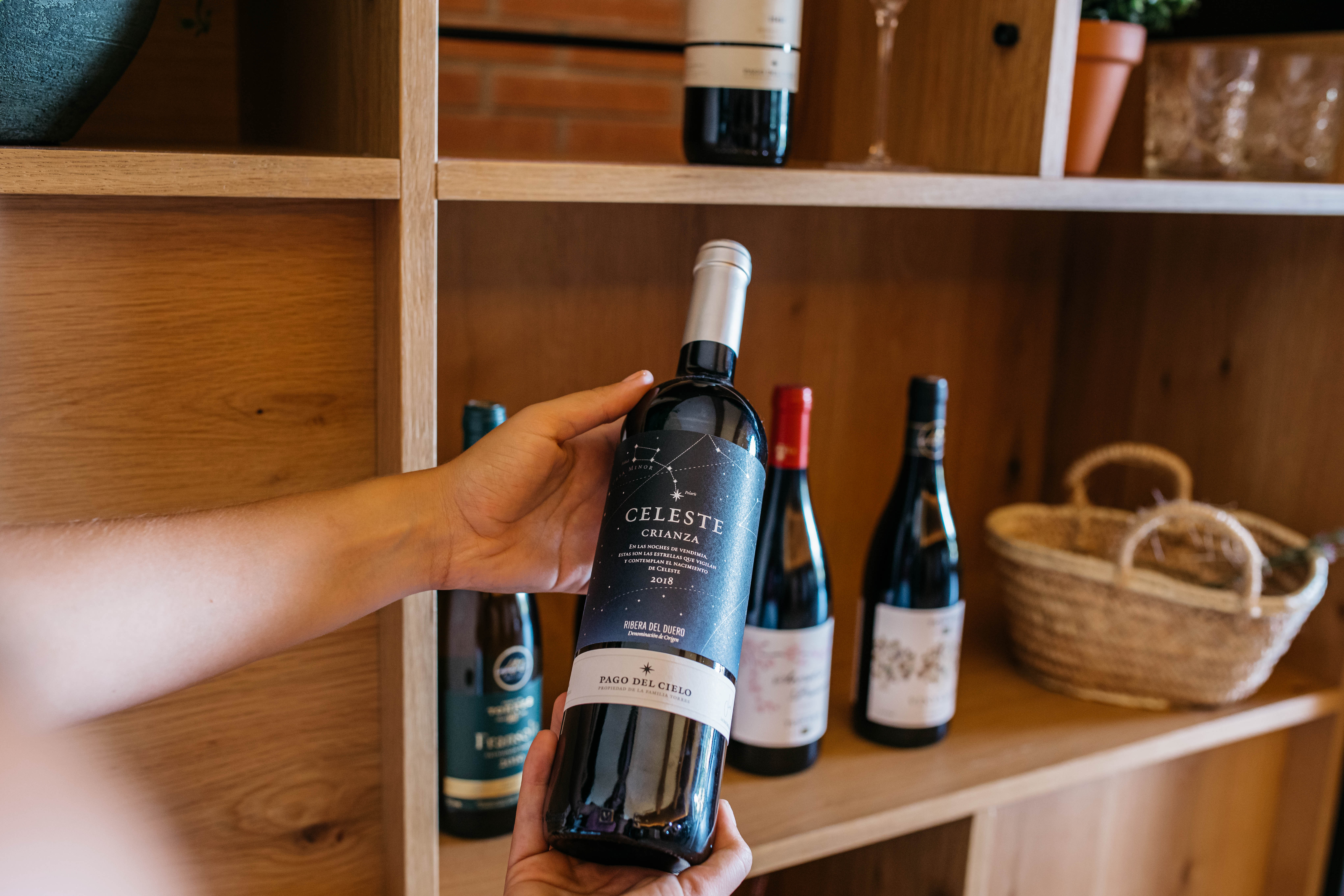
Wines displayed on a shelf
- In terms of temperature and humidity, a steady 12 degrees Celsius and a high level of humidity (75% or thereabouts) provide the ideal conditions. That said, meeting these conditions in an average home can pose quite the challenge. But don’t fret — finding a place that doesn’t get warmer than 20 degrees Celsius in summer will suffice.
- When it comes to wine service, ensuring the right temperature, uncorking the bot-tle correctly, and pouring the wine properly marks the difference between simply filling or serving a glass.

Enjoying a glass of white wine on a terrace
Getting more specific, the maximum temperature for partially or fully oak-aged red wines is between 17 and 19 degrees. The minimum temperature depends on the type of aromas, sugar levels, and tan-nic structure of the wine, but generally falls between 4 and 6 degrees (white and sparkling wines).
- That said, every wine has its own ideal temperature — for instance, an intense, fruit-forward young red welcomes a slightly-below-maximum service tempera-ture. Similarly, white and sparkling wines with a bit of oak prefer serving tempera-tures above the minimum.
Opening the bottle, step by step
- When uncorking the wine, avoid moving the bottle excessively and keep it in a vertical position to prevent stirring up any undesired dregs or sediment.
- It is also important to remove the capsule properly to prevent bits of the material from falling into the glass. To do so, cut the capsule right below the ring or collar, the uppermost part of the bottle’s neck.
- Now position the corkscrew at the centre of the cork and gently twist until the worm is fully introduced. Remember to move your hand, not the bottle.
Once we have pulled out the cork, its smell will tell us about the wine’s condition and any possible flaws. Smelling the cork is an ap-propriate and necessary step.
How should we store the wine once it has been opened?
- It is important to know that once opened, the wine is exposed to oxygen. Pro-longed exposure can damage the wine. We therefore recommend reinserting the cork after every serving.
- Likewise, once open, the wine should not remain in the fridge for more than two days, because the cork will dry out. Having an aerator on hand is always a good idea to optimize the structure and freshness of the wine.
In conclusion, the reasons for storing and preserving wines at home are twofold: first, to keep wines we plan on enjoying in the immediate future in optimal condi-tion, and, second, to create a space in which to store our most age-worthy bottles for longer periods of time.