
The Goshawk, Guardian of the Vineyards
By Jose Luis Gallego, environmental communicator (@ecogallego)
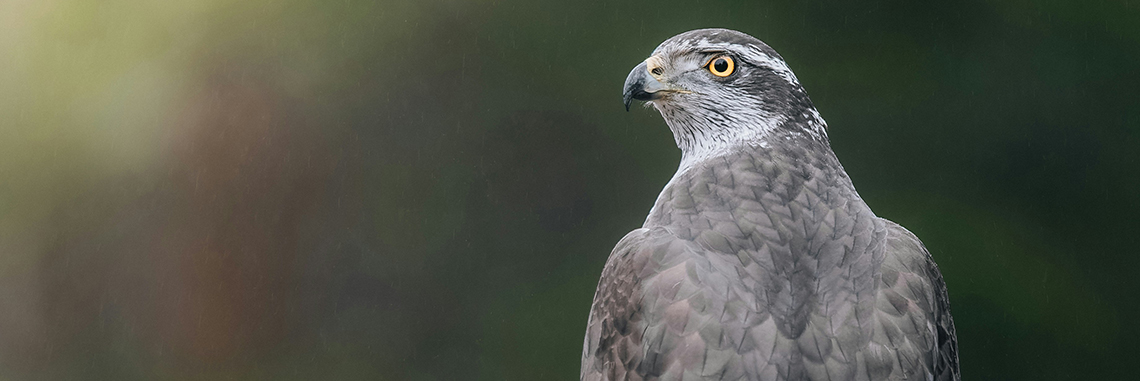
Vineyards nestled into the middle of dense forests provide the perfect hunting grounds for one of Iberian fauna’s most spectacular birds of prey: the goshawk. A beautiful and consummately skilled hunter, this woodland raptor can pursue and capture all sorts of prey in the thick of the forest, navigating obstacles at high speeds. That said, the best place to appreciate the goshawk’s hunting skills is in the open spaces of the forest landscape mosaic, such as meadows, farmland, and especially vineyards. The goshawk will fly over or circle above them or perch on a nearby tree, ever vigilant.
Agricultural areas surrounded by woodland attract the goshawk’s favourite prey, primarily medium-sized birds like pigeons, turtledoves, thrushes, blackbirds, partridges, jays, and magpies. As these quarries move about the vines in search of food, they are far more visible and easily spotted by the winged predator’s keen eye.
Goshawks also hunt mammals of various sizes, from dormice and voles to weasels and squirrels. They are particularly fond of some of the vineyard’s most frequent visitors: rabbits and hares. Taking out these quarries involves spectacular hunting flights in which the raptor makes use of its surprising musculature and sharp talons.
About half a metre in length, with a wingspan of little more than a metre, goshawks might be relatively small, but they’re among the most corpulent diurnal raptors. Much larger than the sparrowhawk, with whom they share an area of distribution, goshawks also display notable sexual dimorphism. The male resembles a miniature of the female, which can be up to two and half times bigger in size.
Their plumage is primarily slate-grey on the back, around the eyes, and hood. The chest is horizontally barred white from the neck to the undertail covert. In addition to its always impeccably groomed plumage, this magnificent raptor has another captivating feature – its gaze is truly hypnotic, with eyes ranging from deep yellow to fiery orange.
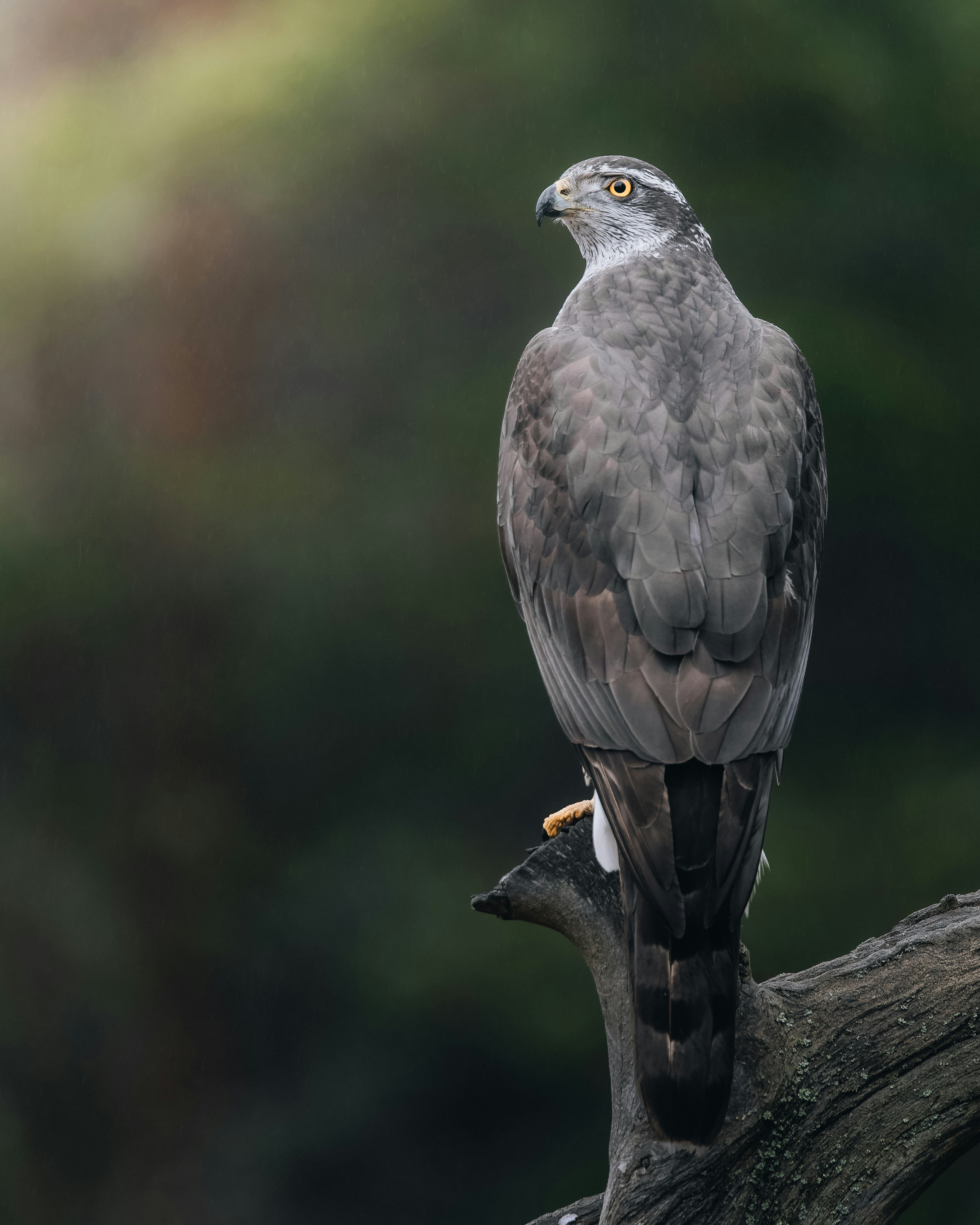
A goshawk perched on a branch
At rest, goshawks display short but prominent beaks and as previously mentioned, powerful, razor-sharp talons. In flight, they reveal their wide, relatively short wings, and when flying over open spaces in search of prey, their long tails usually fan into a wedge shape.
Exclusively a bird of the forest, the goshawk has no particular preference for one woodland over another and is a relatively common species found in all kinds of forests: riparian forests, beechwoods, oak groves, holm oak groves, wooded pastures, and pinewoods – from the coast to the high mountains. They are also fond of woodlands around villages or agricultural fields. Goshawks are not found on the Balearic or Canary Islands but are especially abundant in Galicia and Castilla y León.
They are a sedentary species. Their mating season begins in February with a nuptial “sky dance”, complete with aerial acrobatics, over forest clearings. Generally quiet and discreet, goshawks will produce shrill calls during the mating season, both to mark their territory and attract a mate.
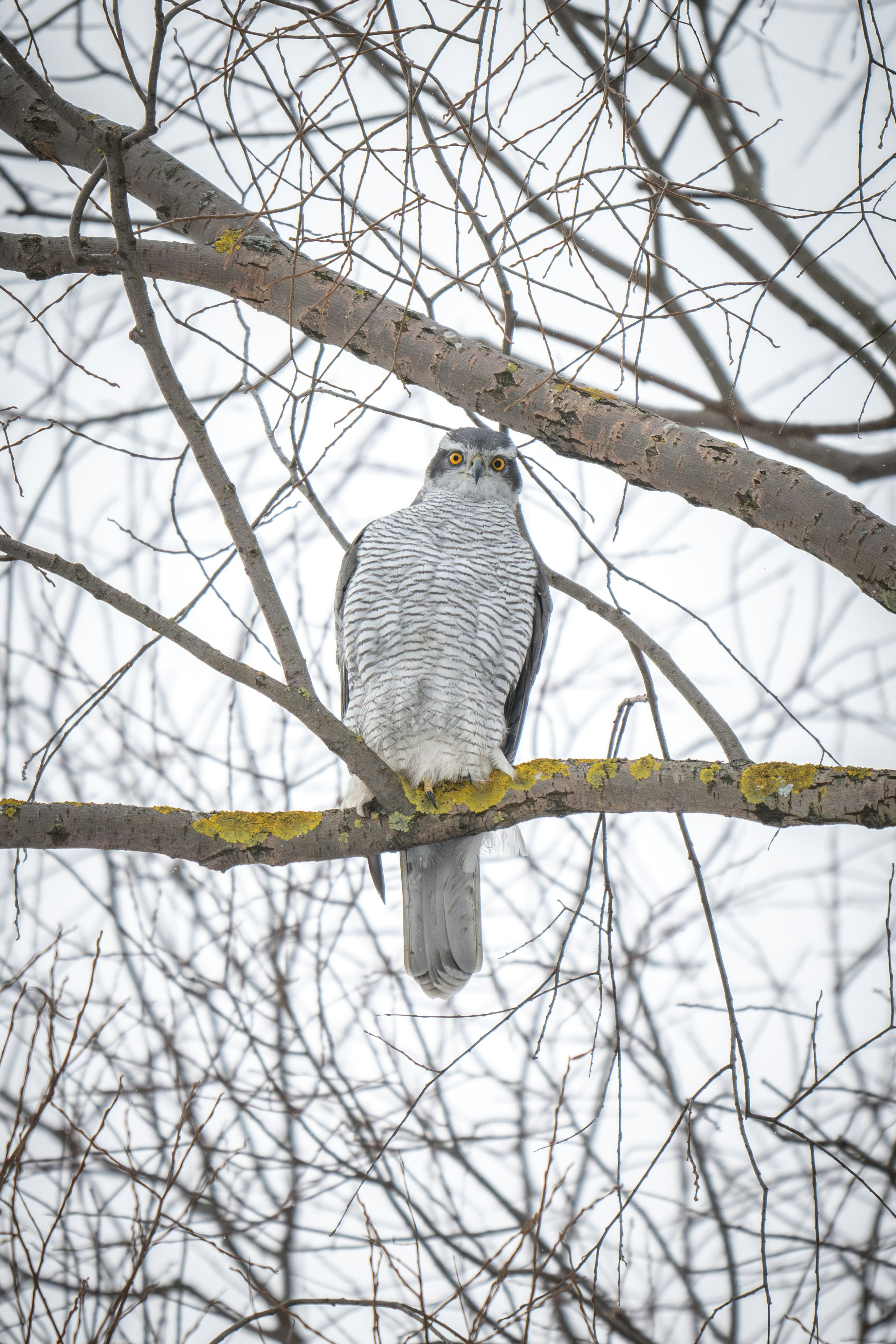
A goshawk perched on a tree
Goshawks build large nests, usually high up in the canopy of broad-crowned trees. They often squat the abandoned nests of other birds, usually corvids. Females lay between two and three eggs, which they incubate for four to eight weeks, a period during which they rely on the male for food. Chicks begin to fly around the immediate vicinity of the nest once they’re about a month old. At the age of two months, they leave the nest.
Like all Iberian raptors, the goshawk is a protected species included on Spain’s Lista Roja de las Aves (Red List of Birds) and the List of Wild Species with Special Protected Status. It does not, however, appear in the Spanish List of Endangered Species. Among the main causes of death are the illegal use of poison in fields, poaching, and electrocution after colliding with high-voltage lines. In recent years, goshawks have been particularly affected by large wildfires.