
The Elegance of Almond Trees in February
By Jose Luis Gallego, environmental communicator (@ecogallego)
The Prunus genus includes some of the most characteristic fruit trees of the Mediterranean, from where they spread across the planet. Cherry, plum, peach, and apricot trees – they all share a trait that makes them particularly eye-catching: the delicate beauty of their blossoms. The candidate for most elegant of them all is the almond blossom.
The almond tree (Prunus ducis) is deciduous and grows to a height of up to 10 metres, with a plain, ungainly bearing. For most of the year, it draws little attention to itself in the countryside. On reaching maturity, its trunk – once smooth and slim – begins to twist and the bark grows coarse, cracked, and rough to the touch. Low branches and an open crown complete the almond tree’s appearance in autumn and the first part of winter.
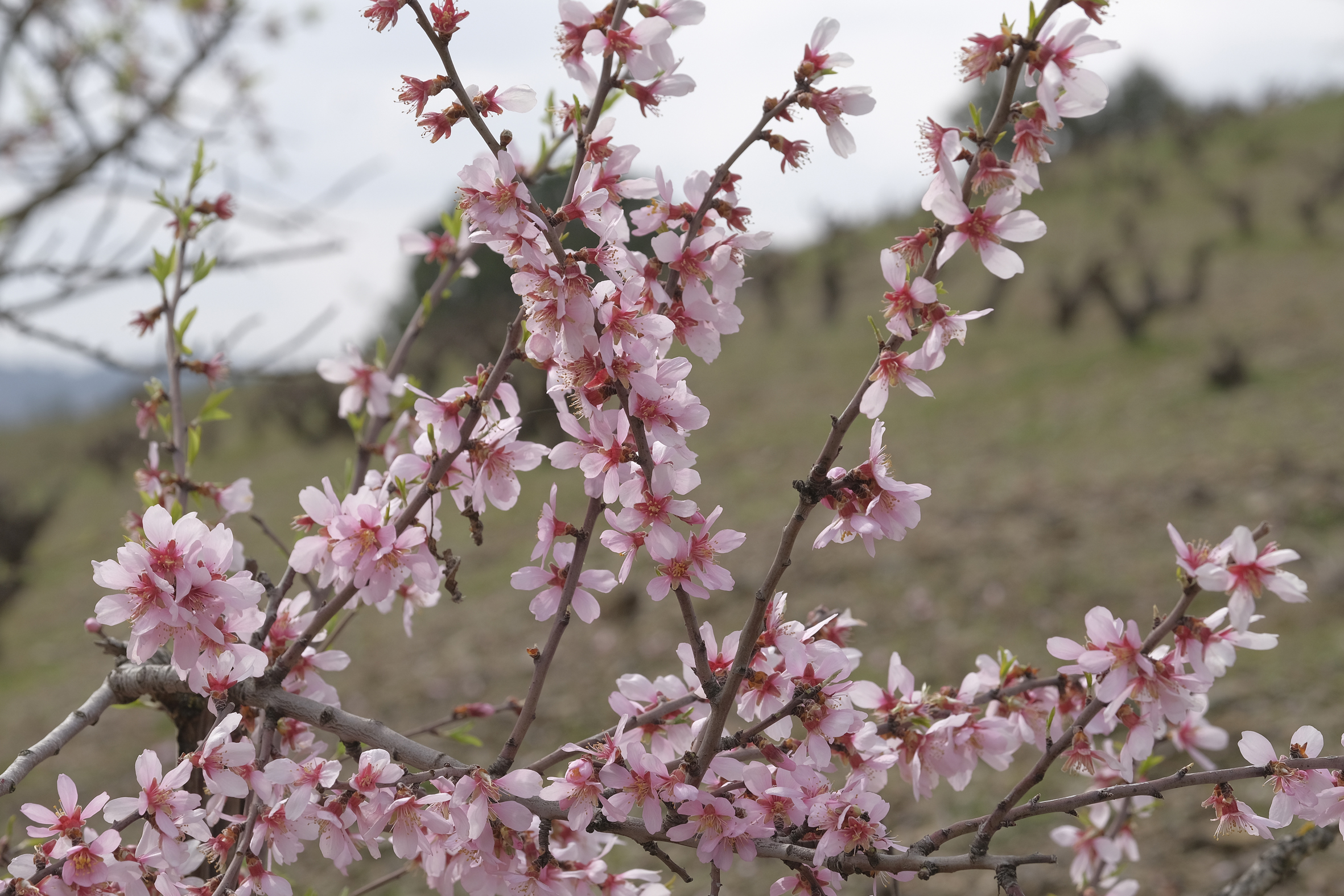
An almond tree amid vines in Priorat
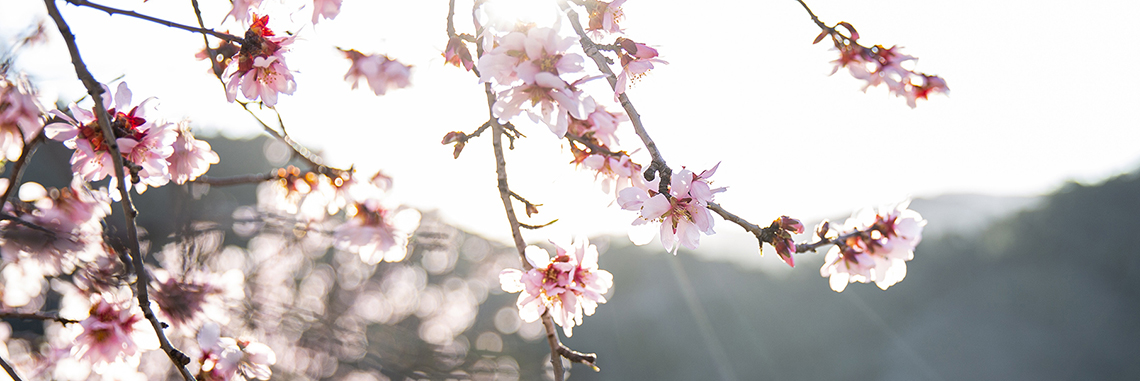
However, in early February, before the leaves begin to bud, the apparently dry branches of the almond tree come alive with pink and white flowers, completely enveloping it in a cloud of dense cotton-like petals. This is the moment when this plain, humble tree transforms into a veritable eye-catcher, a splash of elegance that stands out from afar amid the still fallow winter fields.
The intention of the almond tree in donning this elegant attire, however, is not to draw our eye but to invite bees and other pollinating insects. Seduced by such a floral explosion – a rarity in winter – they flock to the blossoms to feed on their pollen. This effort not only ensures the tree’s propagation but also the production of one of the year’s first and most prized honeys.
As the end of winter approaches, the sun’s rays begin to dominate the days, heralding the arrival of spring. This is when the almond tree’s branches begin to grow distinctive, elongated, green, lanceolate leaves, curled slightly inward and producing a dense yet not especially abundant canopy.
While shifting into its green attire, the almond tree sheds its white blossoms, which succumb to the gentle breeze and drift to the ground. In their place, the tree grows its fruit – the almond – initially little more than a green teardrop attached to a dry branch.
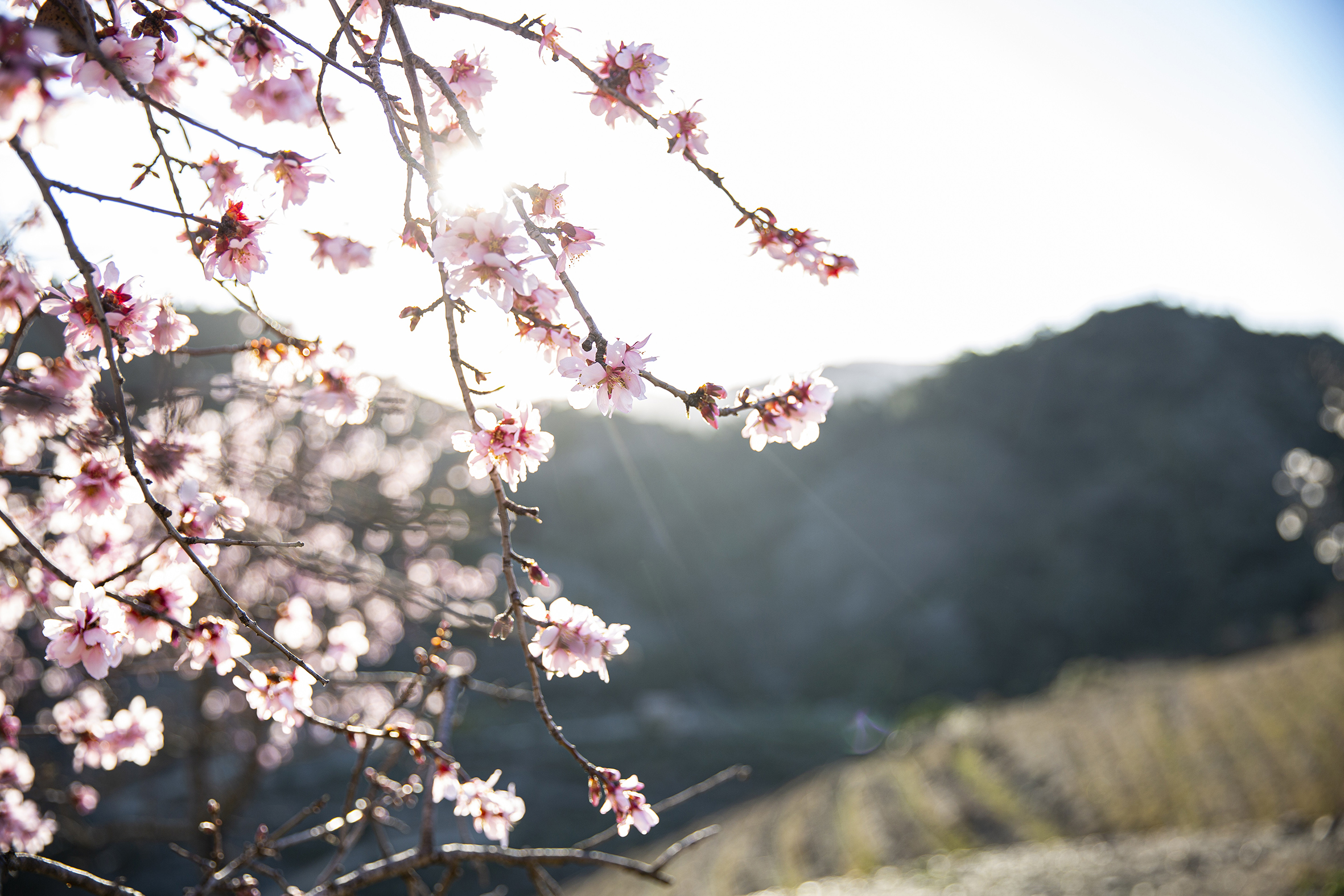
An almond tree in Priorat
Like a large drop of water wrapped in a seed pod, the tender almond gradually sets within a green, velvety outer shell. As the weeks pass, the shell dries and cracks, offering us one of the most prized nuts – a staple of Mediterranean cuisine, as well as one of the most used ingredients, whether sweet or bitter, in natural cosmetic products.
Undemanding and highly adaptable to all kinds of soils, the almond is widely found in our fields, making it one of the most common trees of our rural environment. Much like the olive, the almond tree is one of the best fruit tree neighbours the grapevines can have. In fact, they have shared a landscape and cultivation for centuries. Throughout the Mediterranean region, combining the cultivation of almonds and olives with viticulture has been a common and enduring practice. For this reason, we will often see these trees growing around vineyards or along the paths leading to them.
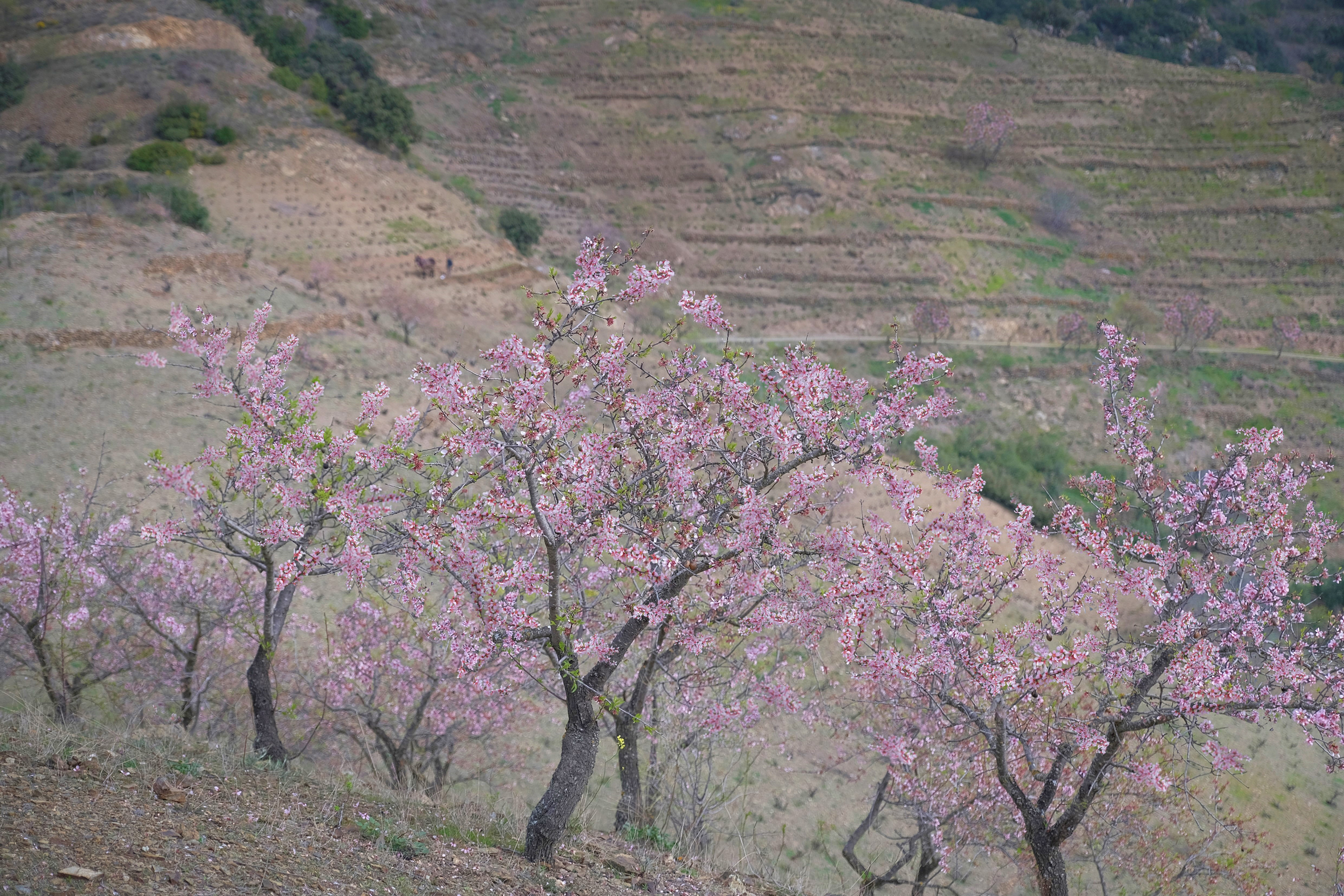
Almond trees amid vineyards in Priorat
Perfectly adapted to the Mediterranean climate and its high variability, the almond tree, like the grapevine, can handle high summer temperatures and the piercing winter cold – in fact, this actually benefits its cultivation.
In rural areas, the cold serves as an authentic natural pesticide, reinforcing the almond tree’s resilience, eliminating diseases, and stimulating flowering. In fact, a lack of low temperature periods – which experts refer to as “vernalization” – can result in incorrect flower development or decreased fruit production, among other abnormalities.
By contrast, when the winters are especially cold, crops develop at a slower, more gradual pace, and the fruit – in this case, the almonds – increase their sugar concentration in response to low temperatures, making them more nutritious and flavourful.
The problem is when the rise in temperatures – a mainstay of the Mediterranean summer – becomes so intense that it gives way to dreaded heat waves, which are increasingly persistent and recurrent. Or when temperatures plunge below zero in winter or even early spring for entire days, resulting in widespread, persistent frost. Fierce storms and gales complete the picture, flooding fields and toppling trees. Unfortunately, the climate crisis is turning this into an ever more frequent occurrence at our latitudes.