
The Cotton Rain
By Jose Luis Gallego, environmental communicator (@ecogallego)
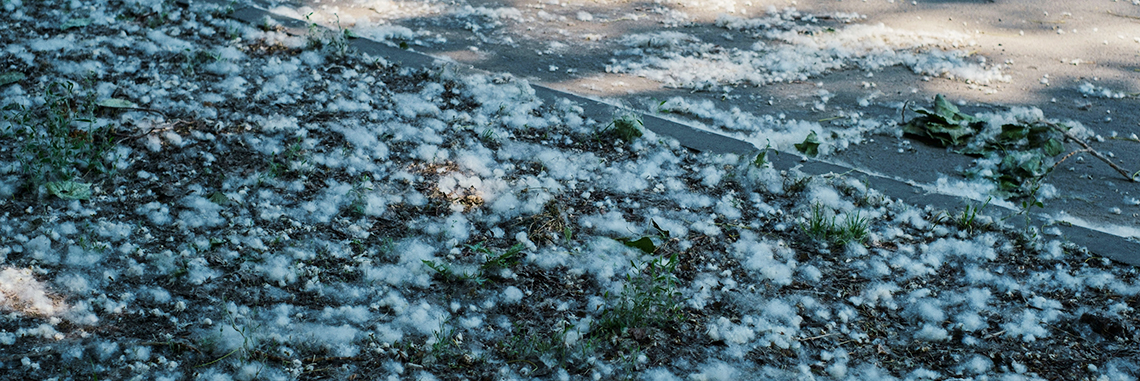
One of the most beautiful springtime spectacles is the wind dispersal of seeds belonging to trees in the genus Populus, including white poplars (P. alba) and black poplars (P. nigra). These downy seeds, whose appearance resembles a cross between a water droplet and a snowflake, are known as “poplar fluff”.
Tall, slender, and fast-growing, these types of trees abound in our surroundings, as woodlands on riverbanks, perfect rows lining country roads, neatly arranged in cultivated forests or as ornamental trees in parks and gardens.
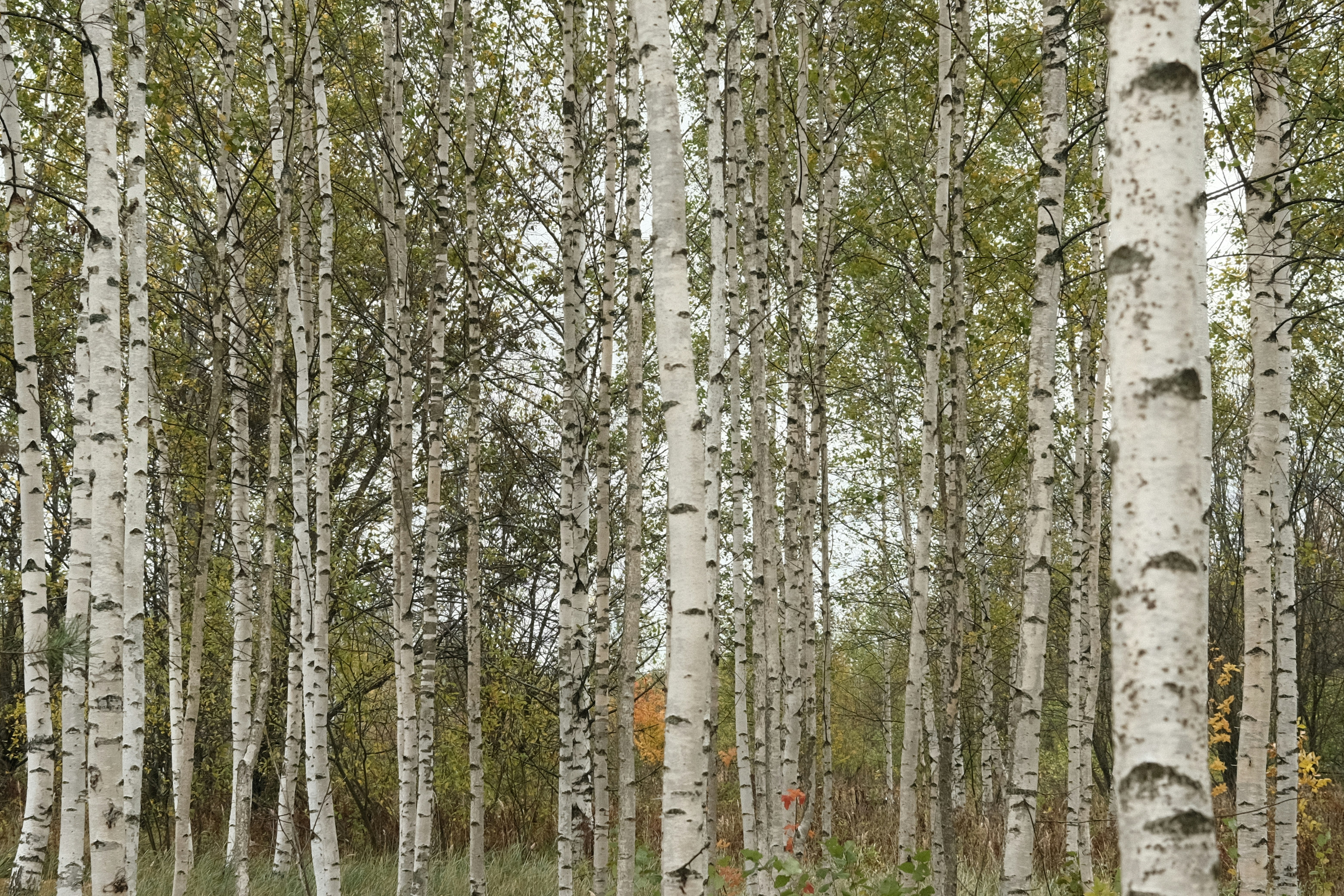
Black poplar forest
Wherever they may grow, these tree species develop white cotton-like seed tufts between May and early June that are highly airborne. They are designed to “lift off” a branch, catching even the lightest breeze to whirl through the air and scatter across the surrounding areas.
So, when the spring breeze blows through the poplar groves, thousands of these seeds fall from the branches, forming ethereal, fugacious flurries; clouds of white fluff that floats through the air, giving us the optical illusion of watching cotton rain from the sky.
Aerial propagation is very common in the plant kingdom and based on the wind dispersal of seeds. Rather than falling to the ground around the tree, thereby entering into competition with its own growth, windborne poplar seeds can travel great distances, allowing the species to extend its presence in the territory.
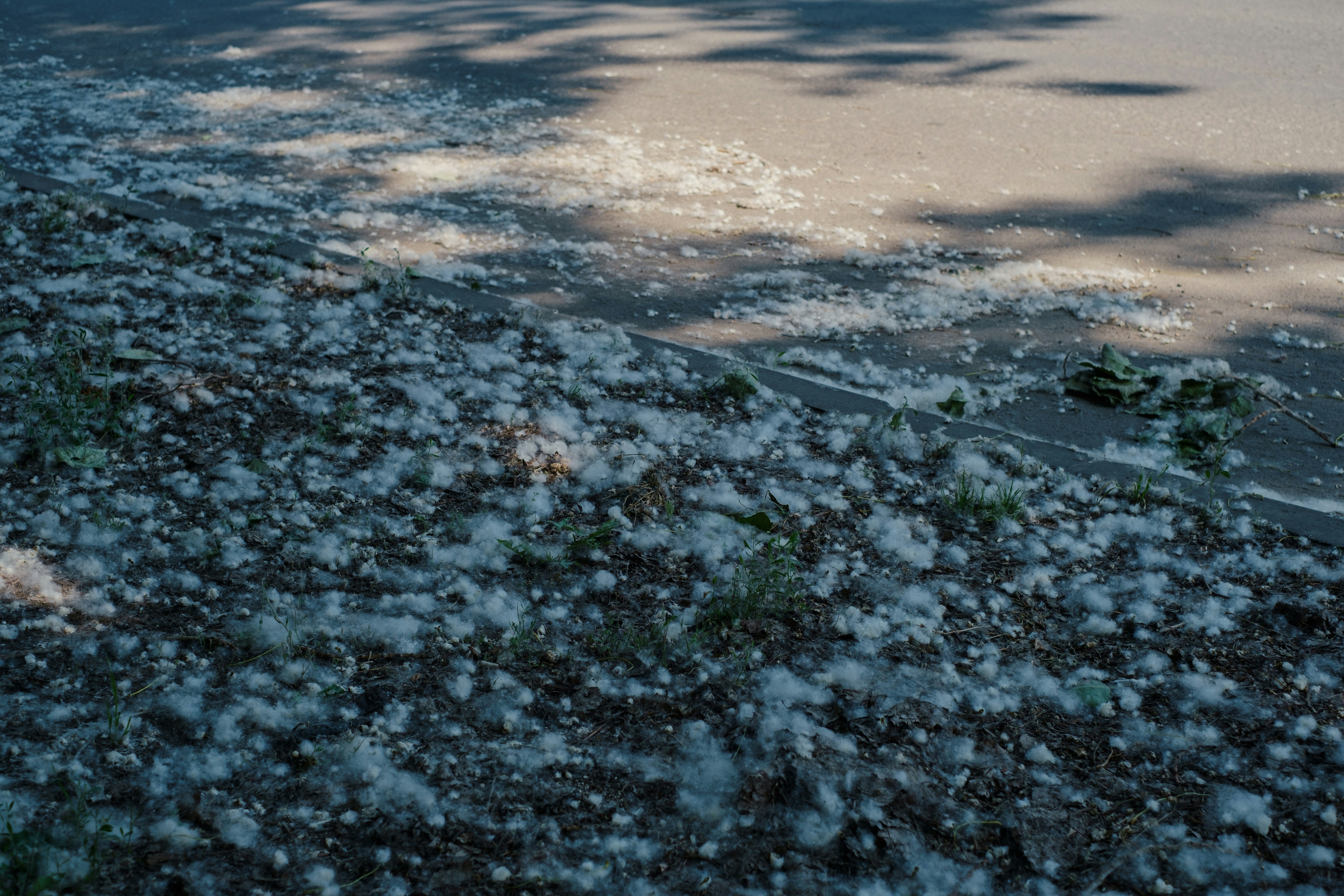
Piles of black poplar seeds
As a result, we often see large accumulations of poplar fluff piling up along country paths and roads, covering paths in city parks or blanketing crop fields, including vineyards. When the white down settles between the vineyard rows and covers the ground, we are treated to another optical illusion: the appearance of snow.
Although undeniably aesthetic, the accumulation of poplar fluff on the ground of parks and woodlands does carry a fire risk, because the downy organic matter is highly flammable. Firefighters are aware of this problem, seeing how every spring they have to put out fires caused by this pretty “cotton rain” going up in flames.
It is stunning to see how and how quickly the delicate flames consume the fluff. They do so low to the ground, resembling a gentle wave rolling in to shore, expending almost no heat and therefore incapable of burning park lawns or the rootstocks of the vines. But caution is warranted.
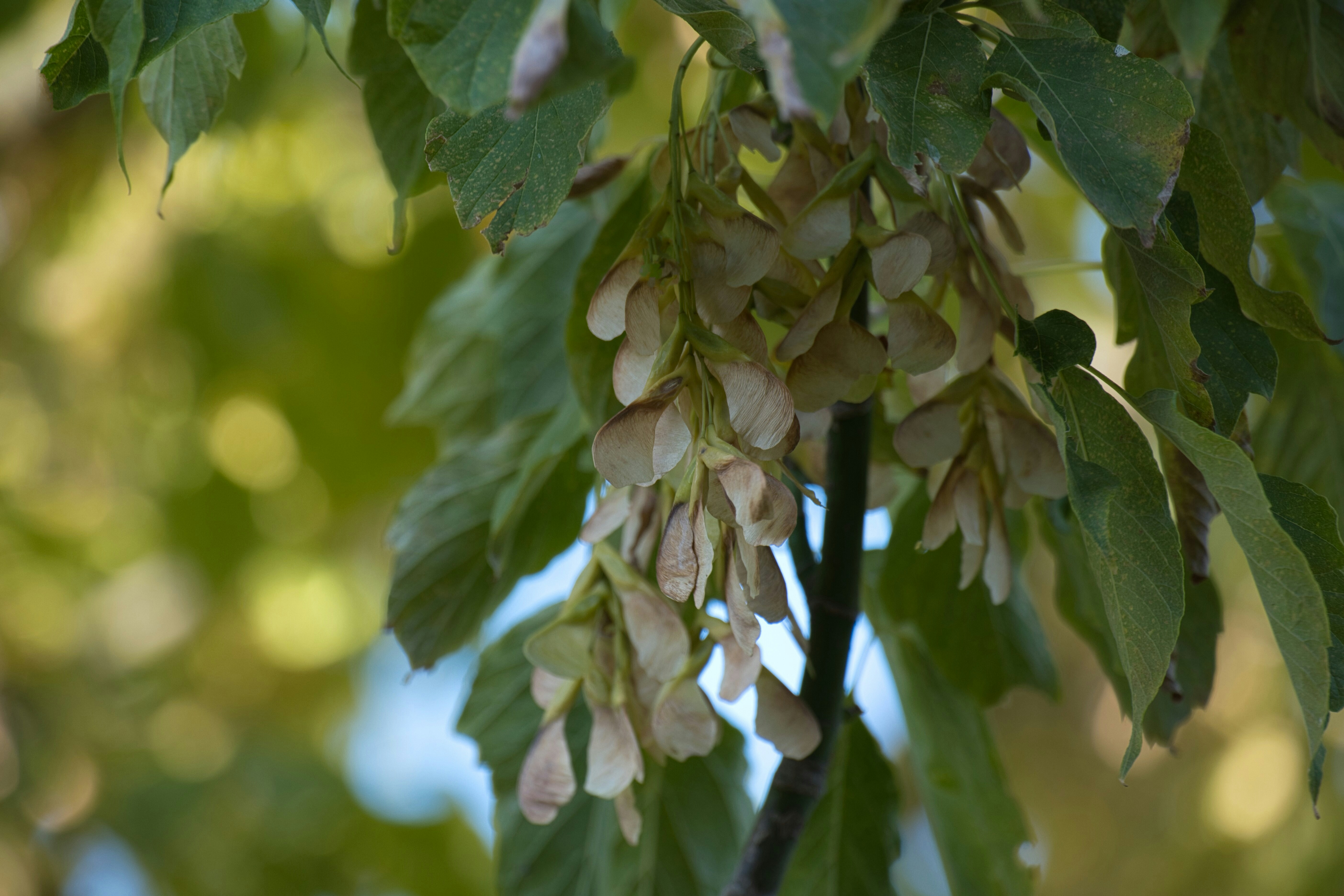
Black poplar branch
Climate change has complicated matters. In years like this one, when temperatures are high before the onset of summer and the vegetation struggles with low water levels weeks ahead of the traditional schedule, these delicate and apparently harmless flames can burst into a raging fire line, leading to far bigger and destructive fires.
This is why public park and garden maintenance services prevent vast accumulations of poplar fluff in urban green areas, gathering and removing them in a variety of ways.
Once the reproductive period is over and summer gives way to autumn rains, the leaves of white and black poplars begin to lose chlorophyll, turning yellow and falling from the branches when October winds shake the trees. This results in yet another optical illusion.
I am referring to the other kind of rain, as beautiful as the falling cotton, which has found its way into celebrated literary passages and captured the imagination of the most illustrious romantic painters: the “yellow rain”, a natural phenomenon we have already described in this blog and which involves the same trees.