
Sustainable Urban Transport

By Toni Ulled, beeletter.org
The private car has dominated the design of our cities for decades: streets conceived with cars in mind, parking lots that take up public space, pollution, noise, and a sedentary lifestyle. But something is changing. More people are discovering that getting around without a car is not only possible but healthier, cheaper, and, in many cases, faster. Sustainable mobility isn’t a restriction – it is a liberation.
What does getting around sustainably actually mean?
It means choosing, whenever possible, the form of transport that has the lowest environmental impact and the greatest social benefit. It means walking more, using a bicycle, taking advantage of public transport, car sharing when needed, and really considering if every journey from point A to point B really requires a car. It isn’t about prohibiting but expanding our options and using them conscientiously.
Why is change urgently needed now?
Transportation accounts for almost 25% of global CO2 emissions, and the private car carries much of the responsibility. In urban areas, cars cause traffic congestion, occupy up to 50% of public space, and lead to thousands of annual fatalities due to air pollution and accidents. Given our current climate emergency and urban growth, transforming our modes of transportation is not optional but a collective and individual necessity.
1. Walking: the world’s most sustainable form of transport
Walking is free, healthy, noiseless, and has no carbon footprint whatsoever. Yet we have grown accustomed to using the car for trips of less than a kilometre. Redesigning our daily habits to include more walking improves our physical and mental health, reduces emissions, and reconnects us to our urban environment. The cities with the best quality of life are, above all, walkable cities.
2. The bicycle: efficient, accessible, and transformative
In terms of taking up space and energy consumption, the bicycle is the most efficient vehicle. For distances of up to 10 kilometres, bicycles are usually faster than cars in urban environments. Electric bikes have expanded the activity radius, making cycling accessible to people who are not in great physical condition or live in hilly cities. Investing in cycling infrastructure is among the urban measures with the greatest social and environmental returns.

3. Public transport: the backbone of sustainable mobility
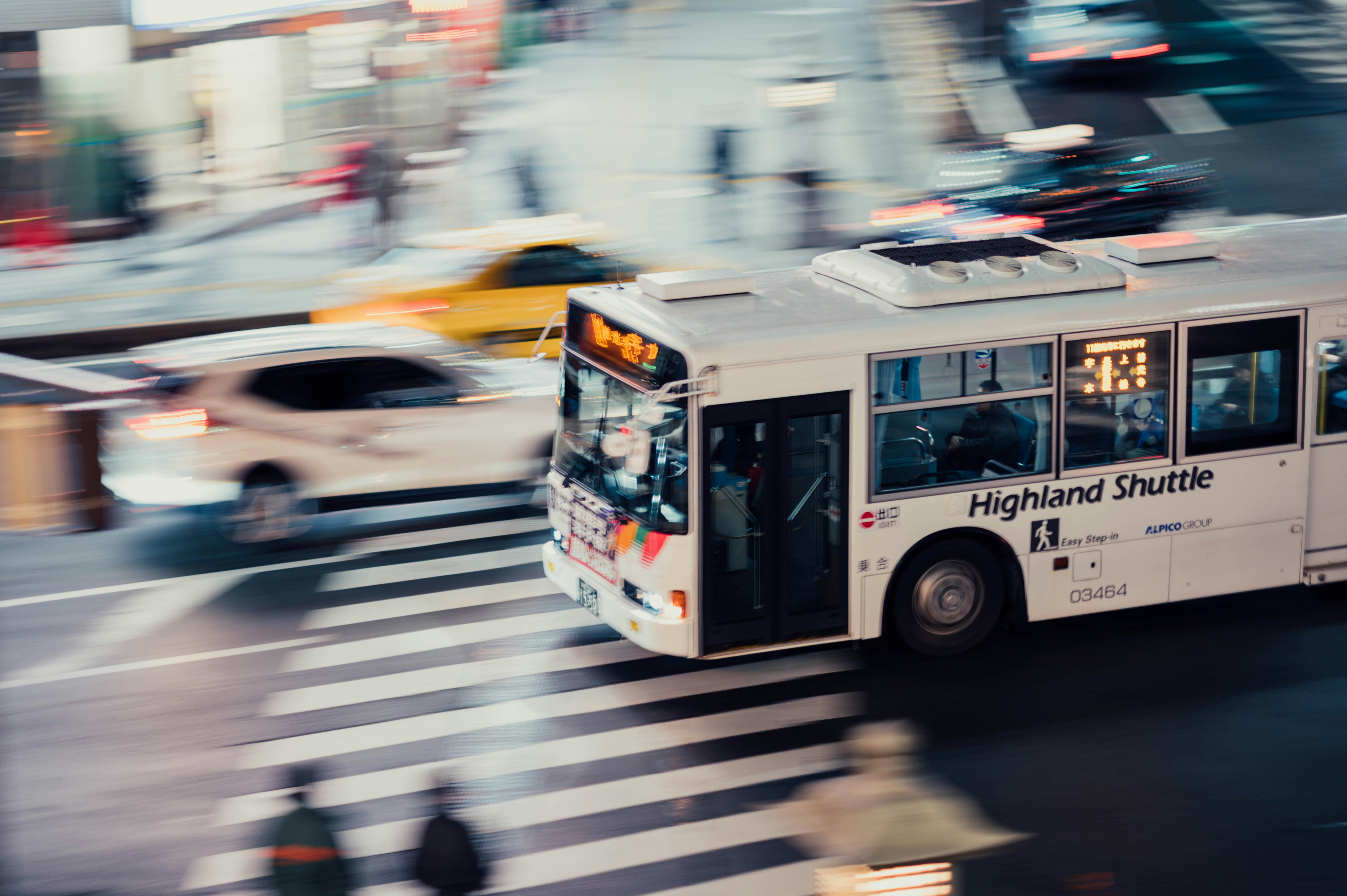
A full bus is equal to dozens of fewer cars on the road. Well-designed, affordable, interconnected public transport that runs on a frequent schedule is the most effective alternative to private vehicles when it comes to traveling longer urban distances. Cities like Vienna, Zurich, and Amsterdam prove that when public transport is good, people use it. The key is not to force people to give up their cars, but to make the alternatives so attractive that cars become unnecessary.
4. Car sharing: when a car makes sense
On certain occasions the car remains the most practical option: in poorly connected rural areas, when moving heavy loads, working nights, or for families with specific needs. In these cases, car sharing – carpool platforms, by-the-hour rental cars or vehicles shared among neighbors – reduces the number of cars on the road and divides the costs between various users. Car sharing is also an example of the circular economy applied to mobility.
5. Remote working and the 15-minute city
Reducing the need to travel is also a form of sustainable mobility. When remote working is an option, it eliminates unnecessary trips. The concept of the 15-minute city – where work, shopping, leisure, and basic services are all accessible within a 15-minute walk or bike ride – reimagines urban planning through a local lens. Living close to what we need is the best mobility infrastructure that exists.
6. Villages and rural areas: the remaining challenge
Sustainable mobility cannot be an exclusively urban privilege. In many villages and rural areas, cars remain a necessity due a lack of viable alternatives. On-demand transport, shared minibus services, better rail connections, and support for electric transport options are much-needed measures to ensure a fair transition that doesn’t leave those living outside of large urban areas behind.
7. The electric car: a necessary but insufficient transition
The electric car reduces local emissions and is part of the solution, but does not singlehandedly solve problems related to traffic congestion, public space or a sedentary lifestyle. Transitioning to electric mobility is necessary, especially in public transport and urban delivery services, but it must go hand in hand with a deeper change in our transportation culture. Fewer cars, even if electric, are still better than more cars.
8. Cities headed in the right direction: inspiring examples
Pontevedra eliminated traffic from its city centre decades ago, turning it into one of Spain’s most livable cities. Paris is rapidly transforming its streets into bike lanes and pedestrian areas. Bogotá has one of the world’s largest network of cycle lanes. Oslo has reduced traffic fatalities to almost zero. These examples prove than change is possible where there is political and civic will.
Better mobility equals a better life
Giving up the car isn’t a sacrifice – it allows us to regain time, health, money, and public space. It means breathing better, moving more, and reconnecting with our surroundings. Sustainable mobility doesn’t ask us to live worse lives but invites us to live differently, more meaningfully and with a smaller footprint. The cities of the future are being built today. And getting around them is done on foot, bikes or public transport that finally works.